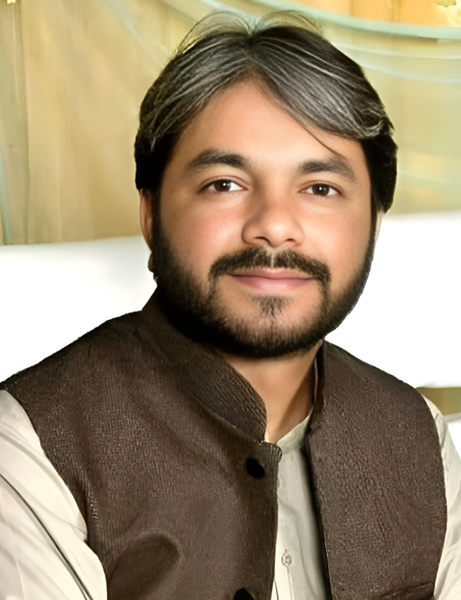
Dilawar Bashir
Dilawar Bashir, known by his pen name Dilawar Ali Aazar, is a distinguished contemporary Urdu poet whose work reflects a deep engagement with the ghazal, naat, and salam traditions. Over the past decade, he has published an impressive sequence of books that chart his evolving poetic voice. His first collection, Paani (2013), was followed by Maakhaz (2016), a ghazal anthology that earned him the prestigious Baba Gurro Nanak Award. In 2019, he published Naqsh, a collection of naat poetry that received the Seerat Award. He continued to expand his oeuvre with Keemiya (2020), Sayyedi (2021)—which also won the Baba Gurro Nanak Award—Bahater (2022), and most recently Abjad (2024), a refined addition to his ghazal work. Alongside these major titles, Aazar’s poetry has been published in curated collections across Pakistan, India, and Jammu & Kashmir. These volumes include Soraj Mukhi Ka Phool from Rekhta Publications in India, Ankhoun Main Raat Kat Gae from My Book Publications in India, Timsaal Garr from Awaaz Publications in Pakistan, and Saat Daryaao’n Ka Paani from Tafheem Publications in Jammu & Kashmir. The reach of these editions has introduced his voice to wider regional and international audiences. Aazar’s poetry has inspired extensive academic inquiry, resulting in several MA, MPhil, and BS dissertations. Among them are Paani: Dilawar Ali Aazar Ka Tajziyaati Mutalea (MA Urdu, 2013), Dilawar Ali Aazar ki Shaairi ka Tehqeeqi‑o‑Tanqeedi Mutalea (MPhil 2015–17, University of Lahore), Dilawar Ali Aazar ki Shaairi ki Jamaliyat (MPhil 2017–20, Islamia University Bahawalpur), Maakhaz — Majmua‑e‑Kalaam Dilawar Ali Aazar ka Tehqeeqi‑o‑Tozeehi Jaiza (MA 2017–19, GC University Faisalabad), and the BS Urdu thesis Dilawar Ali Aazar ki Shaairi mein Imagery — Soraj Mukhi Ka Phool ke Tanazur mein (2024, Govt. Postgraduate College Haripur). With a steadily expanding readership, multiple award-winning works, and sustained scholarly attention, Dilawar Ali Aazar has emerged as an important voice in modern Urdu poetry. His writing, known for its emotional resonance, lyrical craftsmanship, and thematic depth, continues to strengthen his standing in literary circles across Pakistan and beyond.