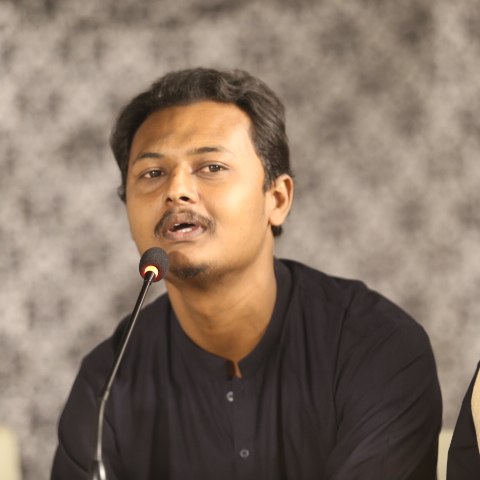
Abdur Rehman Momin
Abdur Rehman Momin is a promising young poet and Urdu literature enthusiast from Karachi. Coming from a literary family, he began writing poetry in 2011 and quickly gained recognition among emerging poets. Although he does not restrict himself to any single genre, he most often expresses himself through the ghazal. He draws inspiration from Mirza Ghalib and Allama Iqbal. Momin holds a master’s degree in Urdu literature from the University of Karachi and has hosted over 100 episodes of the literary program Adab Adeeb on VOSA TV. He served as the chief editor of the children’s magazine Monthly Sathee from 2019 to 2022. He is currently working as a curriculum design specialist for Urdu at TCF and is involved in interpreting Allama Iqbal’s poetry to make it accessible and relatable for children.
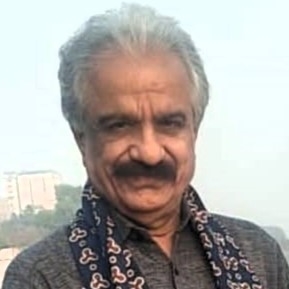
Adal Soomro
Dr Abdul Karim, popularly known by his literary name Adal Soomro, is an eminent poet and prose writer, born on 15 August 1953 in Sukkur. He earned his Ph.D. in Sindhi Literature in 1999 and served as Professor and Chairman of the Department of Sindhi at Shah Abdul Latif University until 14 August 2013. His first poem was published in 1969, and by 2019 he had completed 50 years of literary work. He has published 17 books of poetry and prose, compiled and edited 20 books, and contributed 18 books of children’s literature under a USAID program. Over 200 of his literary papers have been published. He has participated in about 2,000 programs as a guest speaker and poet, and more than 200 of his works have been recorded for TV and radio. Adal Soomro has earned great acclaim among Pakistani writers and has been associated with many literary organizations. He served twice as Secretary General of Sindhi Adabi Sangat. His poetry is included in primary, secondary, and master’s level Sindhi curricula and has been translated into English, Urdu, and Punjabi. In addition to numerous awards and honors from literary organizations, he is the recipient of the Tamgha-e-Imtiaz (2010), Best University Teacher Award (2006) by HEC, Institute of Sindhology Awards (1982, 1984, 2016), Sindhi Language Authority Awards (1993, 2016, 2019), Shah Abdul Latif Award (2016), and Mirza Kaleech Baig Award (2019) by the Pakistan Academy of Letters. In the words of the great poet Shaikh Ayaz: ‘Adal Soomro has introduced new trends in his poetry. He is versatile in his thoughts and modernist in themes.’
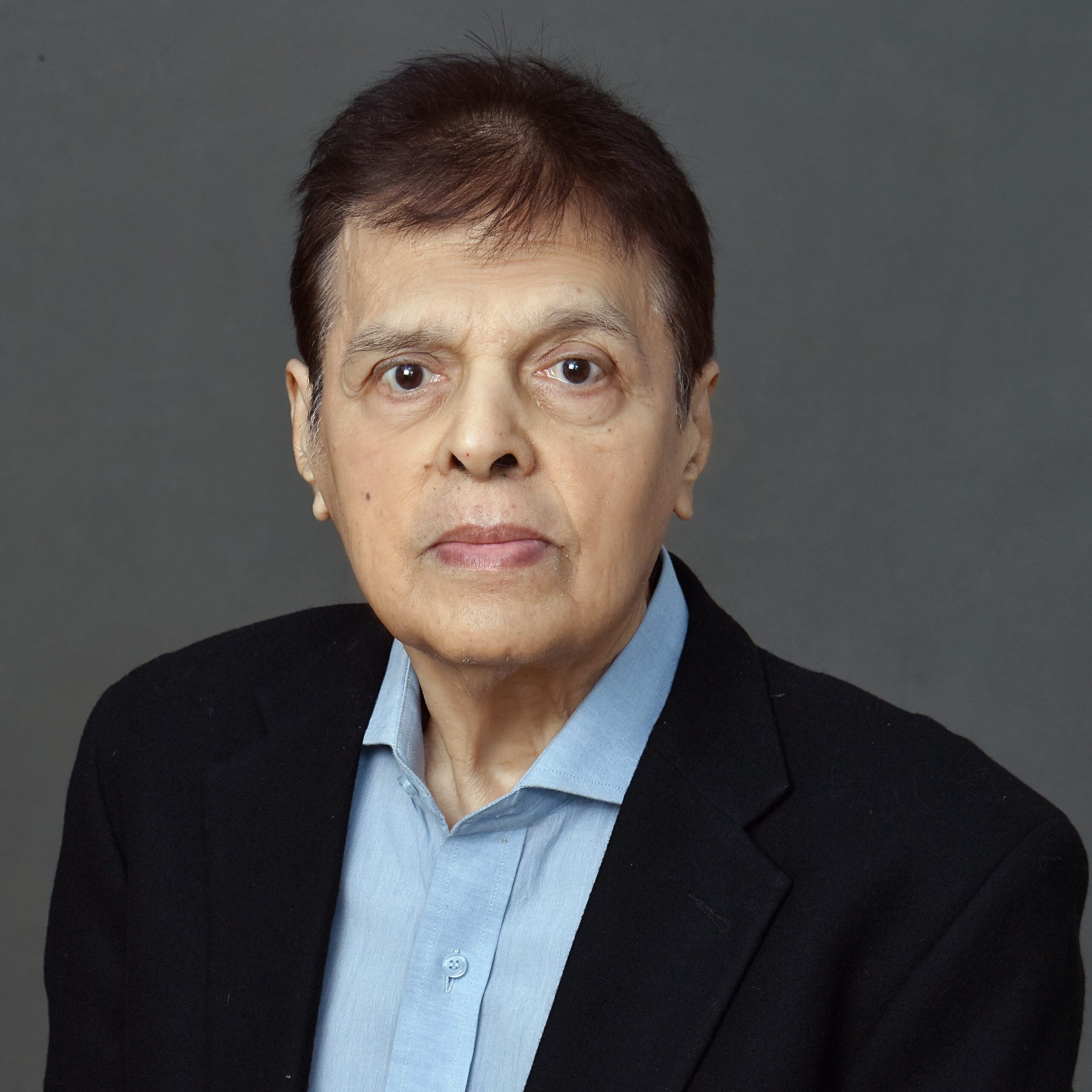
Adrian A. Husain
Adrian A. Husain was educated in England and Switzerland. He read for his BA (Hons.) in English Literature at New College, Oxford. He received a PhD for a thesis on Shakespeare and Machiavelli from the University of East Anglia and authored the critically acclaimed Politics and Genre in Hamlet (OUP, 2004). He is a winner of the prestigious Guinness Poetry Prize. A selection of his poems was published under the title Desert Album as part of Pakistan’s Jubilee Series in English (OUP, 1997). His first collection of sonnets, Italian Window, was published in 2017. His second book of sonnets, Knife of the Tide, was published in September 2025. His novel The Dreamwork of Lisa D was published very recently and will be launched at KLF 2026.
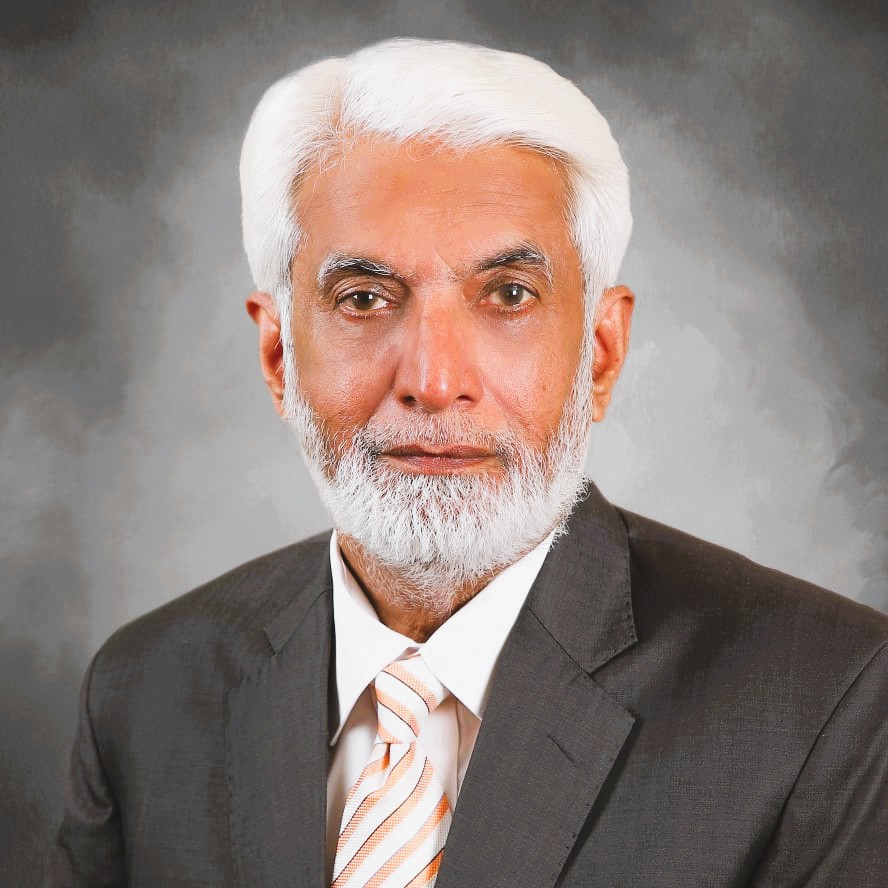
Afzal Ahmed
Afzal Ahmed was born on 27 August 1957 in Lahore. Although he never played cricket himself, the sport has been his lifelong passion and a prism through which he has viewed history, culture, and the world around him. Over the past five decades, Afzal has emerged as one of Pakistan’s foremost private collectors of cricket memorabilia. His meticulously assembled archive includes autographed books, rare brochures, signed programmes, photographs, and a wide range of cherished artefacts that document the evolving story of the game. He contributed material and assisted with research for Wounded Tigers: A History of Cricket in Pakistan by Peter Oborne, and later collaborated on White on Green, a joint project by Richard Heller and Peter Oborne. Now retired after a long career in banking, Afzal lives in Karachi with his family. His book represents both a deeply personal journey and a heartfelt tribute to the rich and enduring legacy of Pakistan cricket.
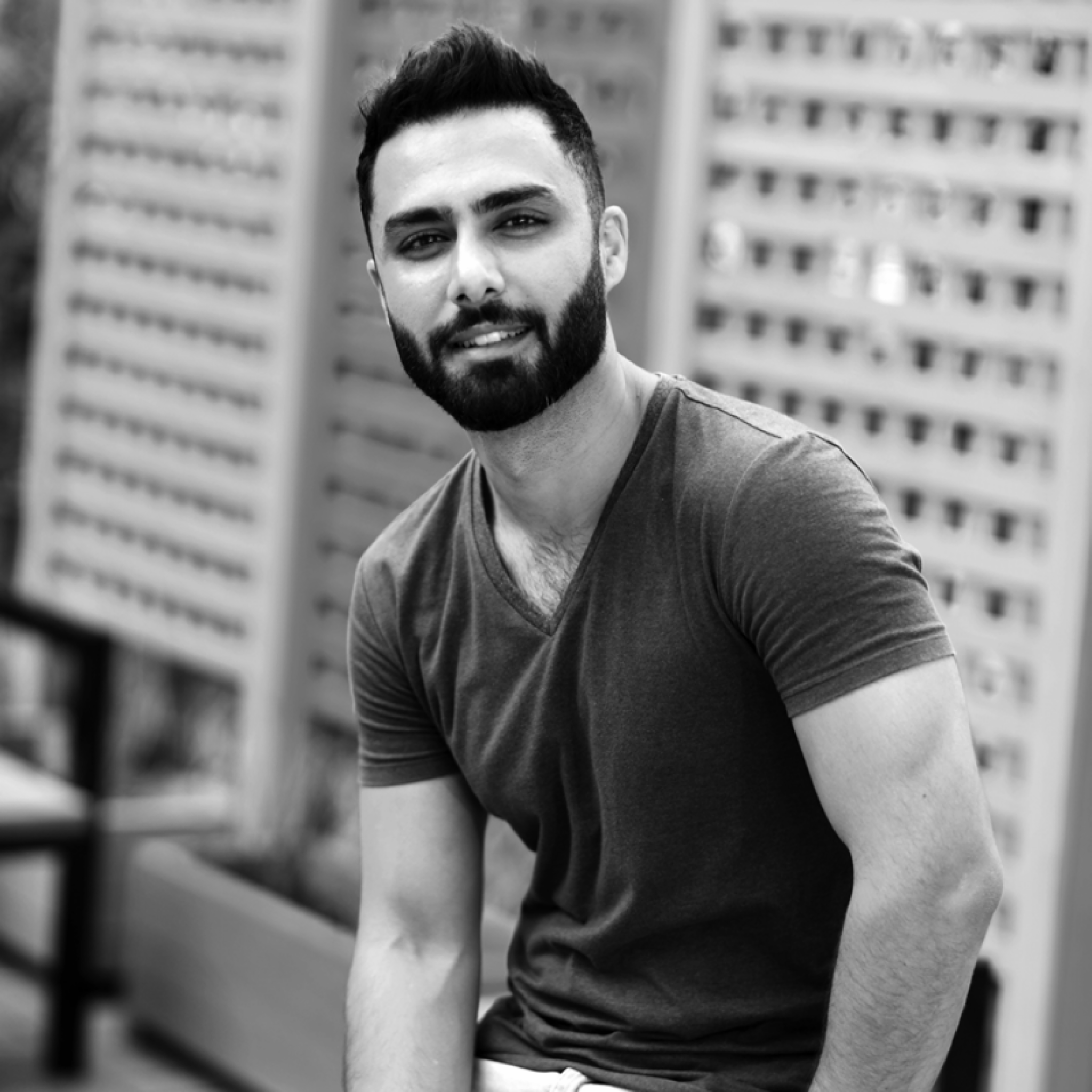
Ahmed Ali Akbar
Ahmed Ali Akbar is a Pakistani film-television-theatre actor, singer, and former national level tennis player. He marked his television debut at the age of 13; he made his theatre debut in 2008 and received critical appraisal for his work in Grease the musical. Ahmed has given some stellar performances in his career, so far. He has won the Lux Style Award in the Best Film Actor category for his work in Laal Kabootar and also bagged an international award for the same category at Washington DC South Asian Film Festival. Following his superhit drama, Ehd-e-Wafa (2019), the actor was seen in and as Parizaad (2021). The feel-good series has captured the attention, imagination, and TRPs of audiences around the globe through a chameleon-like characterization by Ahmed Ali’s brilliant portrayal of much beloved fictional character.

Aina Asif
Aina Asif is a Pakistani actress and model known for her versatile performances on leading TV channels including Geo, ARY, Hum, and Aan TV. She made her debut in 2021 as Milli in the Ramzan play Hum Tum and rose to prominence with her lead role in Mayi Ri on ARY, a drama acclaimed for addressing social issues. Her notable works include Jannat Say Agay, Baby Baji, Aitraf, Pinjra, Pehchan, and Pehli Si Mohabbat, establishing her as one of the rising stars of Pakistan’s entertainment industry.
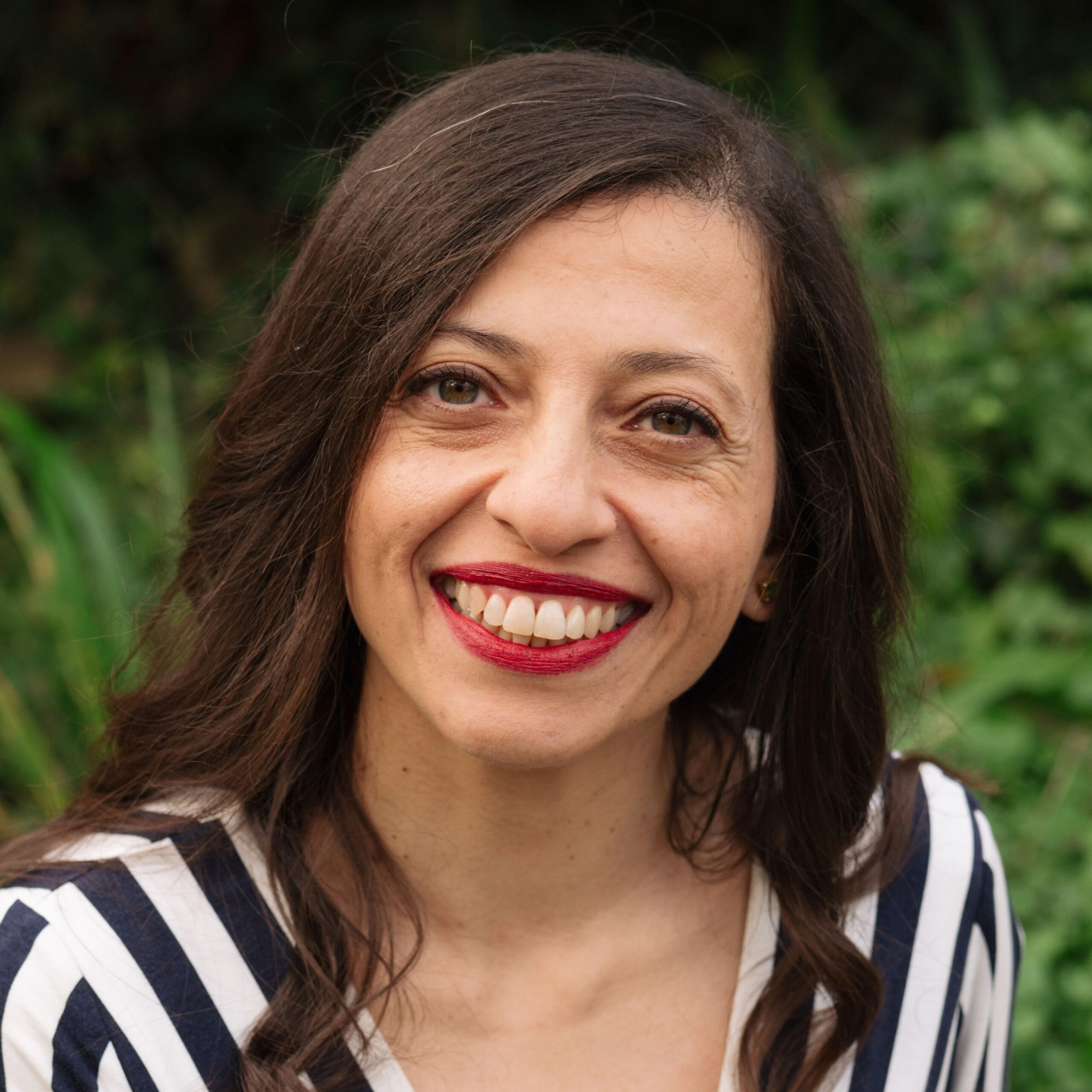
Aisha Hassan
Aisha Hassan is an award-winning writer living and working in London. A graduate of the University of Oxford’s prestigious Creative Writing Master’s program and a Curtis Brown Creative alumna, Aisha’s play Pickled Mangoes was performed at Soho Theatre, and her poetry has appeared in Under the Radar and Campus magazines. Her debut novel, When the Fireflies Dance, has been longlisted for the Bridport Novel Award and Hachette’s Mo Siewcharran Prize, and shortlisted for the London Writers Award. Inspired by a true story, When the Fireflies Dance is a mesmerizing tale of love, brotherhood, resilience, and redemption, appealing to fans of modern classics such as The Kite Runner and The Beekeeper of Aleppo.
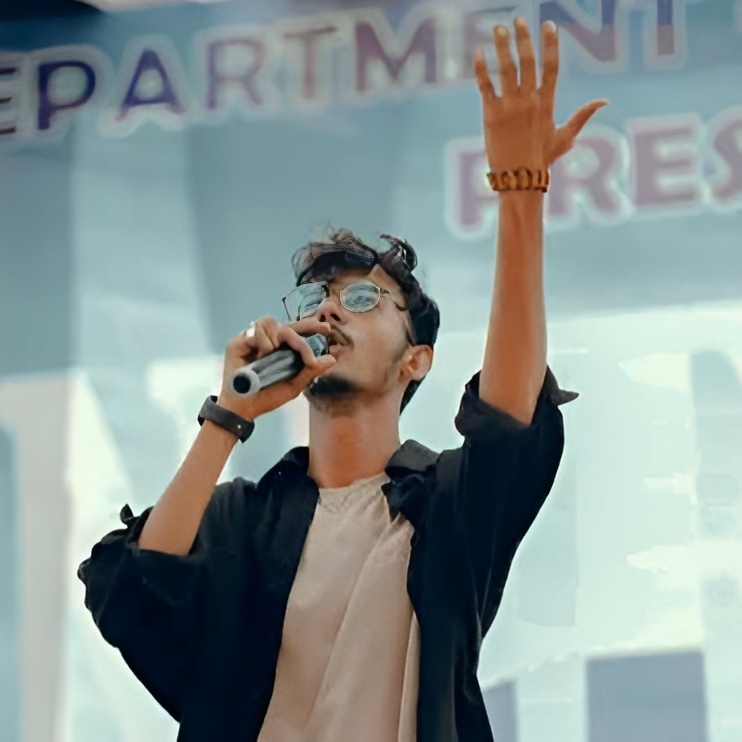
Ali Akbar Soomro
Ali Akbar Soomro is a rapper and artist from Lyari, Karachi, known for presenting real stories from his community through honest and powerful lyrics. His music reflects everyday struggles, hopes, and social realities. Alongside his artistic work, he is an HR professional and contributes to disability inclusion initiatives. He has created music for documentary films and cricket leagues in Pakistan. Ali Akbar Soomro is also the founder of Azmelyari, an organization focused on empowering youth and society. Through his music and social projects, he continues to represent the voice, spirit, and resilience of his generation.
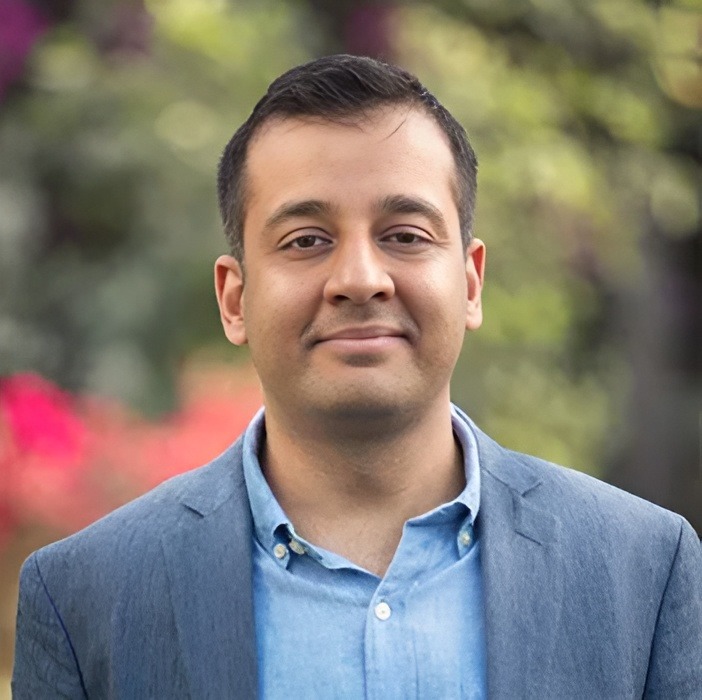
Ali Anwerzada
Ali Anwerzada is the Co‑founder and Managing Director of The Ivy School and the Founder and Director of Cedar College. With a deep interest in the long‑term economic impact of early childhood education, he focuses on how high‑quality early interventions can shape future educational attainment and employment outcomes. Through Ivy, Ali aims to introduce research‑driven, developmentally sound teaching practices that nurture healthier learning environments today and contribute to a stronger, more equitable future. He holds a Master’s in Public Policy from the University of Chicago, and an MBA and undergraduate degree from the Lahore University of Management Sciences (LUMS).
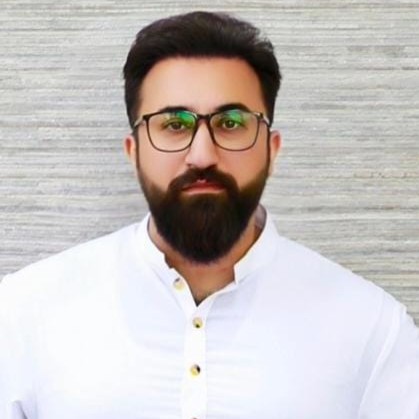
Ali Mazhar
Ali Mazhar is a Lahore-based literary voice and co-founder of Ain Adab. Immersed in the rhythms of Urdu, he brings literature to life through storytelling, dramatic readings, and poetry recitals known for emotional depth and precise diction. A seasoned media and communication professional with over two decades of experience and an MPhil in Communication Studies, he also teaches writing and visual storytelling, mentoring young voices while serving language as a thoughtful interpreter and advocate.
Aliya Iqbal-Naqvi
Aliya Iqbal-Naqvi teaches history in the Department of Social Sciences & Liberal Arts at the Institute of Business Administration, Karachi, where she also oversees the undergraduate thesis research program. She previously headed the Liberal Arts program at the Indus Valley School of Art and Architecture. Aliya holds a bachelor’s and a master’s degree from Harvard University in Cambridge, Massachusetts. Her research interests include South Asian history and Islamic studies, and her professional work focuses on developing locally contextualized humanities curricula for Pakistan. She also serves on the boards of the Arts Council of Pakistan, Karachi, Greenstar Social Marketing Pakistan, the Education Trust Nasra Schools, and the Karachi Conference Foundation.
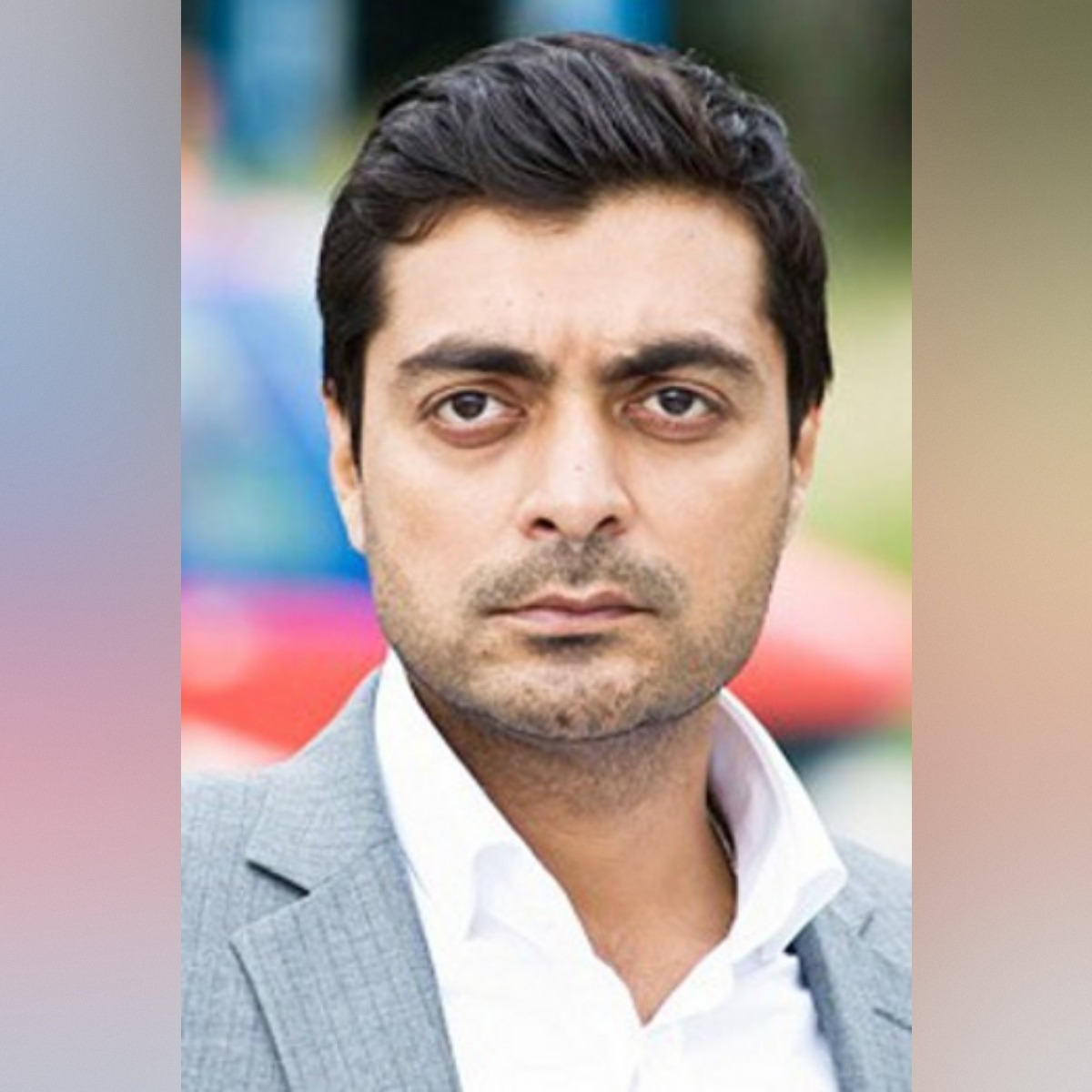
Alyy Khan
Alyy Khan is a British‑Pakistani actor whose career spans Hollywood, Bollywood, and Pakistani film and television. Born on 6 December 1968 in Karachi, he spent his early years between Pakistan, the United Kingdom, and India, eventually receiving his schooling at Bombay Scottish School in Mumbai. His formal training includes studying drama under Hima Devi—affiliated with Trinity College London—at Hima Kala Kendra, as well as earning a diploma in film and television production from Pimlico Arts and Media College in London. Khan began his acting career in the early 1990s with Indian television, later expanding into theatre, Pakistani dramas, and international cinema. He is widely recognized for his roles in major films such as A Mighty Heart (2007), Traitor (2008), Don 2 (2011), Actor in Law (2016), and Mogul Mowgli (2020). His television work includes notable appearances in The Bill, Strike Back, Indian Summers, Pakeezah, and internationally acclaimed series like Netflix’s The Serpent (2020) and Apple TV’s Shantaram (2022). Beyond acting, Khan has hosted the cross‑border culinary reality show Foodistan and has also directed theatre, most notably staging the play Aapki Soniya in 2013. His multilingual fluency and cross‑cultural experience have enabled him to build a distinctive, internationally respected body of work across multiple entertainment industries.
Amar Pirzado
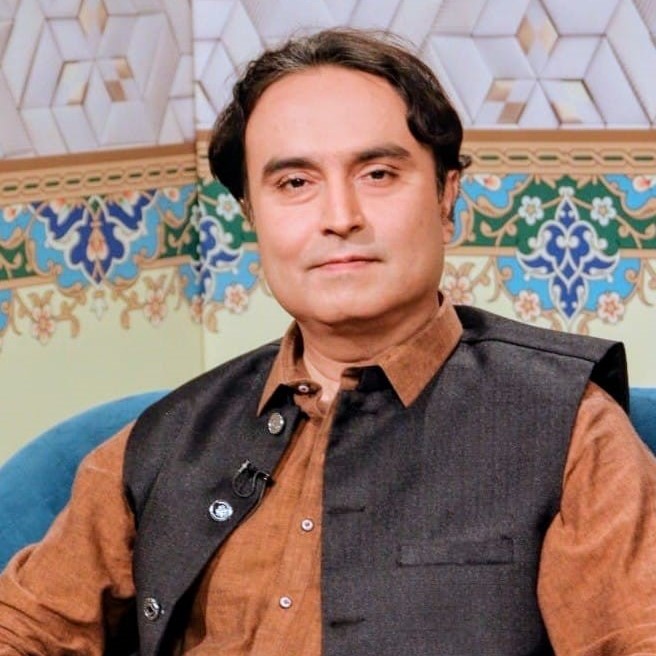
Amar Pirzado, a poet and writer proficient in Sindhi and Urdu, is an accomplished media anchor and columnist. He is celebrated for his feminist, romantic, and socially bold poetry. He has authored two poetry collections, Ishq and Fana, along with a prose work on Anwer Pirzado’s life titled Baba Anwer Pirzado. In 2025, his book of columns, Soch B Kharko Aahe, was published. Currently, he hosts a program on PTV Home called Rehaan, featuring interviews with celebrities in both Sindhi and Urdu. He previously hosted the acclaimed literary and art program Daat Anokhi on Dharti TV. From 2011 to 2012, he served as Secretary of Sindhi Adabi Sangat. Amar is also a key figure in the Anwer Pirzado Academy, a platform he co-founded, which has published over twenty books. Having organized the Anwer Pirzado Festival for three consecutive years in Balhreji, he plans to release a collection of his poetry in Sindhi and Urdu in 2026. In addition to his literary work, Amar is actively involved in social initiatives related to education and health.
Amber Rahim Shamsi
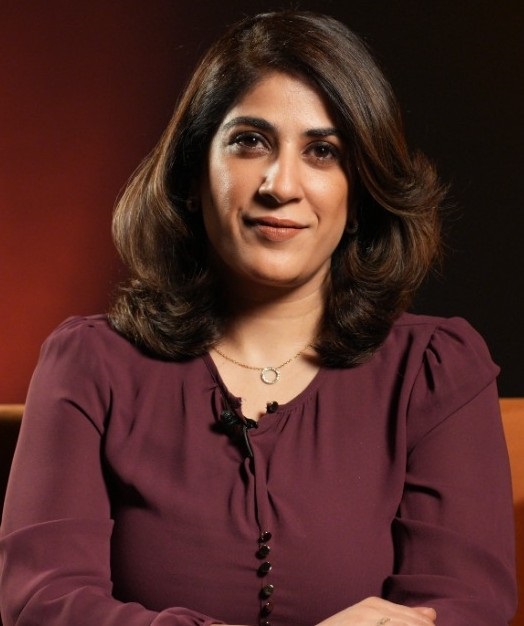
Amber Rahim Shamsi is the Pakistan Editor at Nukta and an award-winning multimedia journalist with two decades of experience across digital, print, and broadcast media. She previously served as Director at the Centre for Excellence in Journalism (IBA), where she expanded partnerships and launched UNDP’s iVerify Pakistan fact-checking initiative. Her career includes anchoring and reporting roles at Samaa TV, Hum News, Dawn News, and earlier, reporting and editing at the Herald magazine. She worked at the BBC World Service (2010–2016) as a bilingual journalist breaking major English and Urdu stories. Her writing and commentary have appeared in Dawn, Al Jazeera, Arab News and on international outlets including CNN, BBC, Al-Jazeera, VOA and NPR.
Amin Hashwani
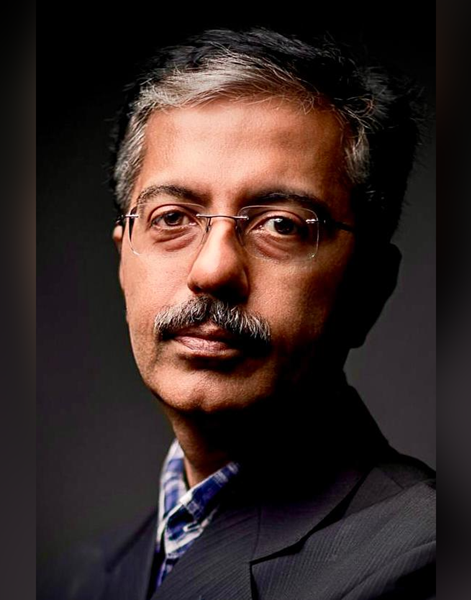
Amin Hashwani is a businessman, social activist, and poet. Over the years, Amin has undertaken initiatives and established social organizations in the fields of education, health, culture, youth development, and peacebuilding between nations and societies. The NGOs founded by him operate over 40 schools, 4 vocational training centres, community sports arenas, mental health services, and nationwide centres for persons with disabilities, providing financial inclusion, vocational training, and schooling. He has helped influence policy for a more inclusive society and created opportunities for underserved communities. He has also received an honorary doctorate and the Tamgha-e-Imtiaz for his services.
Ammar Aziz
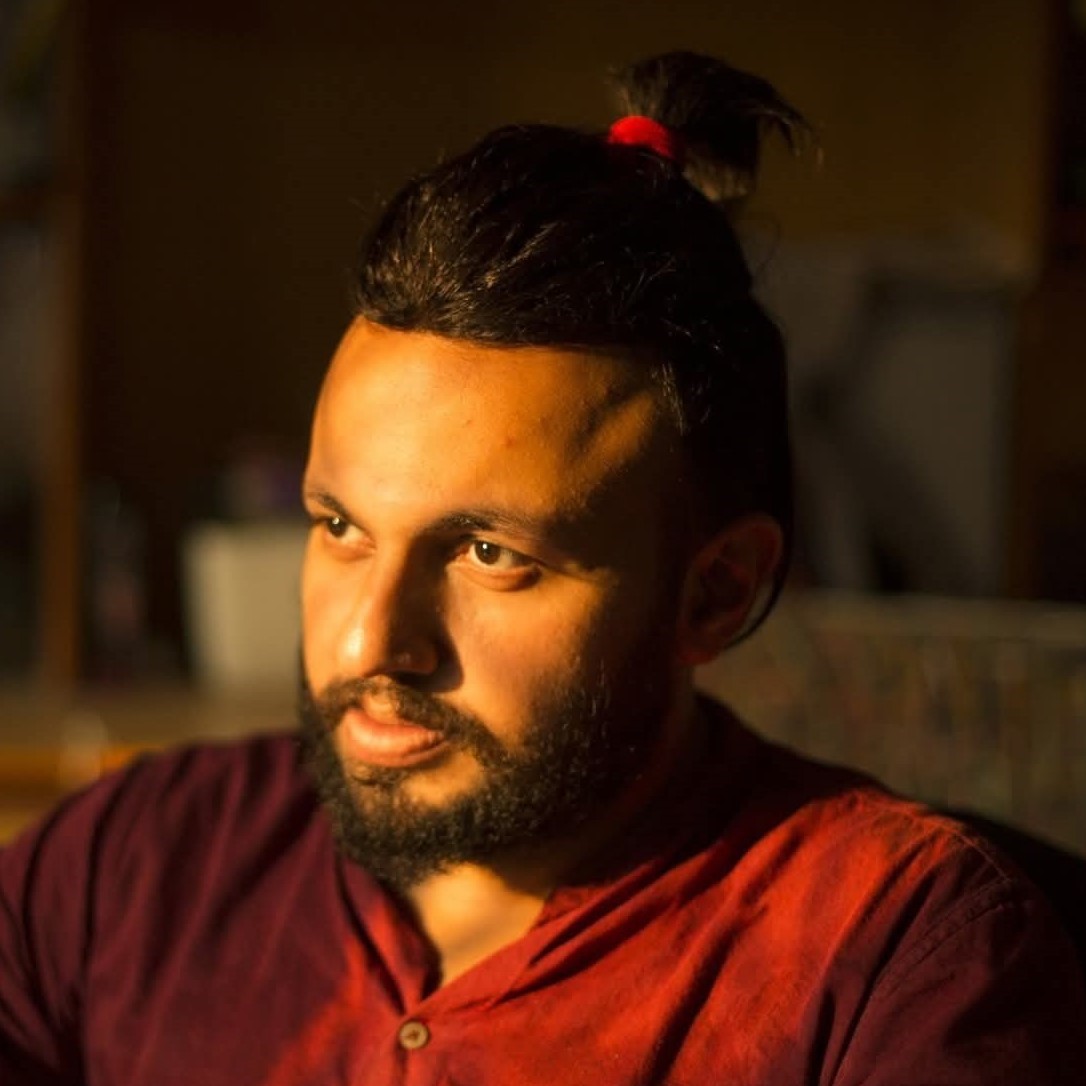
Ammar Aziz is a bilingual poet, literary translator, and multi-award-winning filmmaker. His debut poetry collection, The Missing Prayer, was published simultaneously in Pakistan and India in 2025 to wide critical acclaim. His poetry has appeared in leading literary journals and has been widely anthologized, including in Penguin’s Greening the Earth and The Red River Book of Erotic Poetry. He has participated in major international literature and art festivals, and his poems have been translated into several languages, including Russian, Spanish, Bangla, Tamil, and Kannada. As a filmmaker, Aziz has screened his work in over a hundred countries. His feature-length documentaries A Walnut Tree (IDFA, Amsterdam, 2015) and Discount Workers (One World, Prague, 2020) have received numerous international awards, including the FIPRESCI Award, the Grand Prix at the Moscow International Film Festival, the Ram Bahadur Award at Film Southasia, and the Jean Rouch International Award, among others. His films have been acquired by Al Jazeera and other global broadcasters and widely covered by international media. Ammar lives in Lahore, where he is a visiting faculty member at Beaconhouse National University, co-founder of the non-profit SAMAAJ, and founding curator of ZQ Gallery. He was awarded the prestigious Berlinale Footprints at the Berlin International Film Festival for an animation-based child abuse prevention initiative produced by SAMAAJ. He has recently completed his third feature film and is currently working on a micro-fiction project, an English ghazal collection, and the first official English translation of Urdu poet Jaun Elia—a project he began as an artist-in-residence at the Akademie Schloss Solitude in Germany.
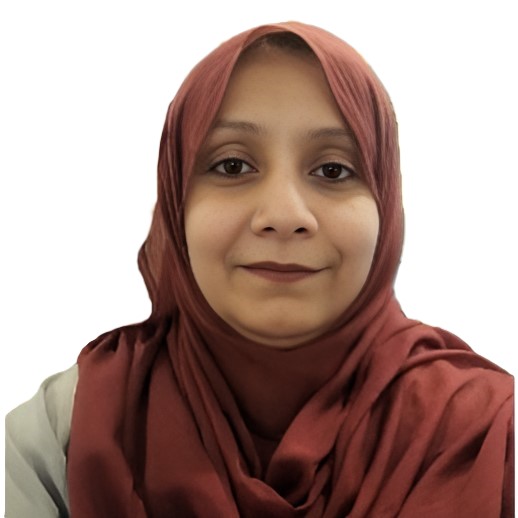
Amna Hussain
Amna Hussain has over 22 years of experience working in various public and private sector organizations as an Early Childhood Education (ECE) expert. She holds an M.Ed. in Early Childhood Education and an MPhil in Teacher Education from the University of Karachi. She has served as an ECCE Coordinator and as a B.Ed. and ADE lecturer at the Notre Dame Institute of Education. She has also worked as an Early Childhood Care and Education (ECCE) Consultant with the School Education and Literacy Department (SELD), UNICEF, and Oxford University Press (OUP). In addition, she has been working as a Programme Manager for ECCE. Ms. Amna is the author of First Steps to Early Years Maths (published by OUP) and The Art Lab (published by Stallion), and she is a co-author of the ECCE Provincial Curriculum 2018. She is currently associated with the HHS School System as the Quality Enhancement Cell (QEC) Academic Coordinator for the Pre-Primary Section.

Anita M. Weiss
Anita M. Weiss received her doctorate in sociology from UC Berkeley and is now Professor Emerita of Global Studies at the University of Oregon, having retired in August 2023 after 36 years at the University of Oregon. She was recently named Distinguished Honorary Professor of Sociology at Quaid-i-Azam University. She has published extensively on social development, gender issues, and political Islam in Pakistan. Her eight books include the most recent, Countering Violent Extremism in Pakistan: Local Actions, Local Voices (Oxford University Press, 2020). Her current book project, Khuda ke Piyares: Finding Faith and Community in Local Shrines in Urban Rawalpindi, Pakistan, is in preparation.
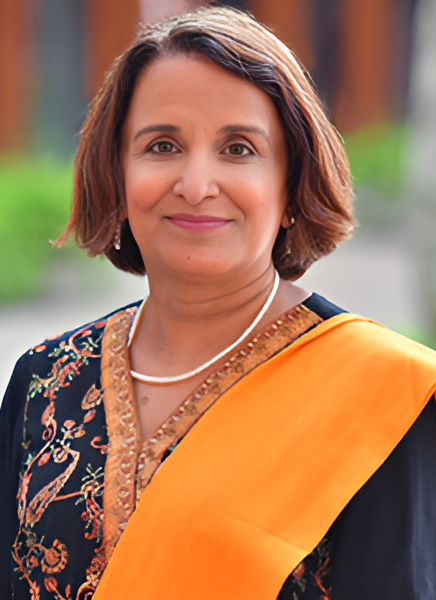
Anjum Halai
Dr. Anjum Halai brings extensive and deep‑rooted experience in the higher education sector in Pakistan and internationally. She holds a doctoral degree from Oxford University, UK, and a master’s degree from the Aga Khan University, Pakistan. She has served as a research fellow at the University of Sussex, UK, and as an adjunct professor at the University of Alberta, Canada. Dr. Halai is an elected Fellow of the prestigious World Academy of Arts and Sciences and has also served as an elected Vice President of the influential International Commission of Mathematical Instruction. Her research and education programmes are highly acclaimed and widely used in educational initiatives, especially for women and girls in remote communities such as Northern Pakistan and interior Sindh. She has published several books and over a hundred scholarly papers in esteemed international journals. Her books are housed in more than 1,000 libraries globally (Source: OCLC WorldCat). Her most recent publication, Teaching and Teacher Education in Pakistan: Historical and Contemporary Perspectives, serves as an important reference text in higher education programmes in Education. She has taught and supervised a large number of students who now hold significant leadership positions in education systems in Pakistan and abroad, thereby extending the economic and social impact of her work. Dr. Halai has demonstrated strong leadership in building higher education institutions. She has served on the steering committee of the highly impactful Higher Education Development Project of the Higher Education Commission (HEC), supporting key interventions to improve the quality of higher education in Pakistan. She also sits on the National Accreditation Council for Teacher Education, the highest national body for teacher education in Pakistan. Professor Halai is an active member of the global education community. She regularly delivers invited keynote lectures and seminars at international forums and is a member of several high‑profile international professional bodies, including the Comparative and International Education Society, the American Educational Research Association, and the Taskforce on Inclusion and Equity in the Commonwealth Association of Universities. She currently serves as Vice Provost at the Aga Khan University (AKU) in Pakistan. As the founding dean of the Faculty of Arts and Sciences at AKU, she played a critical role in developing cutting‑edge curricula for the undergraduate programme. Most recently, she developed AKU LEADS, an innovative online/hybrid micro‑credentials programme designed to provide multiple learning pathways for underserved communities and to support the re‑skilling and up‑skilling of early‑career professionals.

Anoushey Ashraf
Anoushey Ashraf started off as a Video Jockey in 2002 and has done fashion modeling, acting, and hosting shows globally. Recently, she has started a podcast. She gained fame as one of the pioneering VJs for Indus Music in 2002. From being a VJ, she graduated to an appearance in a PTV television serial directed by Saira Kazmi. She eventually became one of the main faces of MTV when it first launched in Pakistan.
Aquila Ismail
Aquila Ismail is a Karachi-based author and development worker. Her novel Of Martyrs and Marigolds, published in 2012, is a seminal work chronicling the history of the 1971 creation of Bangladesh from the ashes of East Pakistan. She has written extensively on literature, women’s issues, and Karachi’s development concerns for leading Pakistani newspapers and magazines. Since 2013, following the assassination of her sister, Perween Rahman, Aquila has led the Karachi-based development NGO, Orangi Pilot Project (OPP). Her published works also include translations of Urdu short stories by Asad Muhammad Khan (Harvest of Anger and Other Stories, It All Began with a Cat) and prose writings by Fehmida Riaz (Godavari, Reflections in a Cracked Mirror, and Zindabahar Lane). She has edited and authored several non-fiction books, including The Microcredit Programme of the Orangi Charitable Trust. Recently, she has published two volumes from the six-part series Legacy of Perween Rahman: In Quest of Water for the Poor and Karachi Floods: The Anthropocene Imprint. An electrical engineer by profession, Aquila Ismail is a retired Associate Professor from her alma mater, NED University of Engineering and Technology.
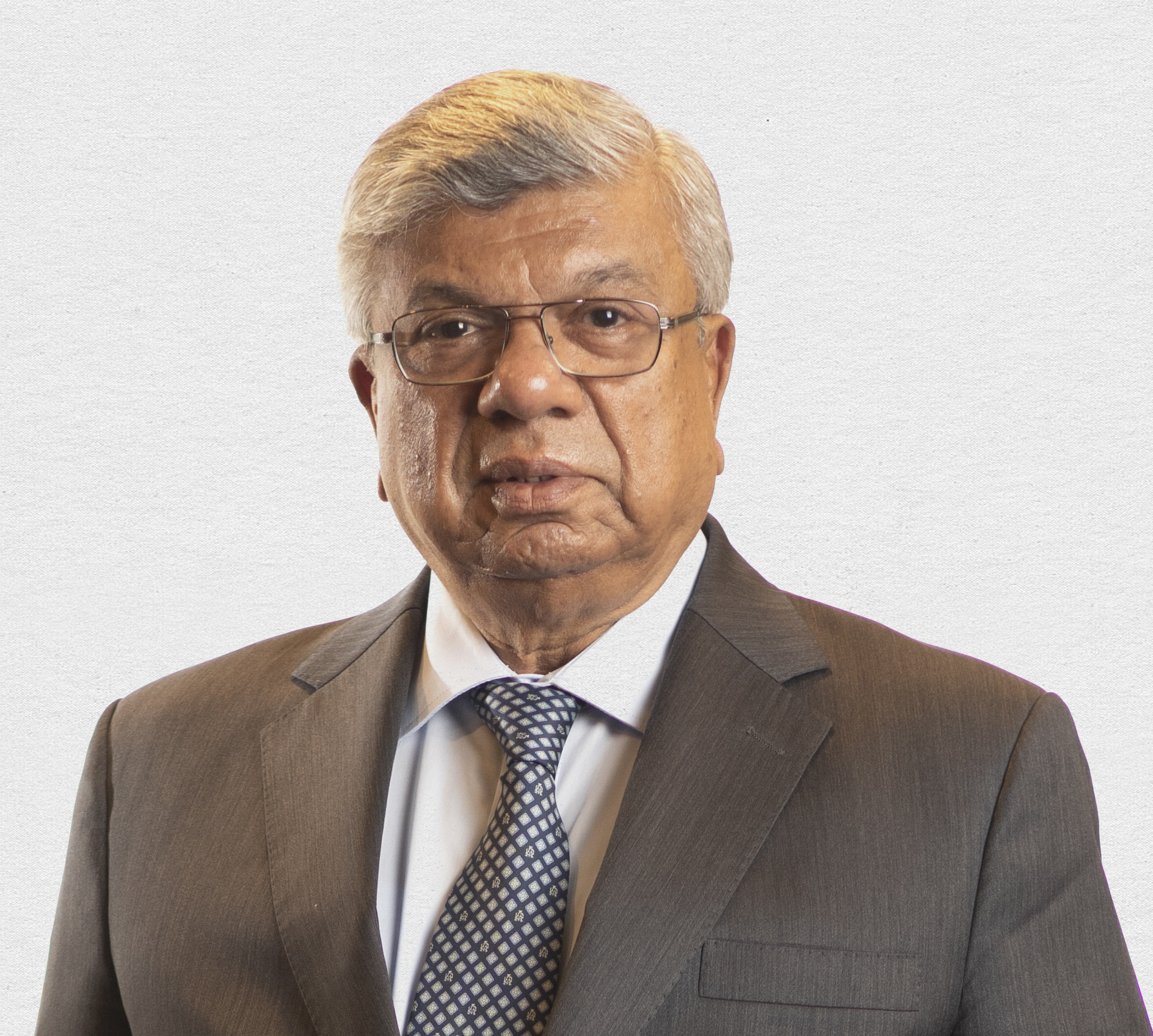
Arif Habib
Arif Habib is the Chairman of Arif Habib Group and Chief Executive of Arif Habib Corporation Limited, the holding company of Arif Habib Group. He is also the Chairman of Fatima Fertilizer Company Limited, Aisha Steel Mills Limited, Javedan Corporation Limited (the owner of Naya Nazimabad) and Sachal Energy Development (Pvt) Limited and Arif Habib Dolmen REIT Management Limited. Arif Habib remained the elected President / Chairman of Karachi Stock Exchange for six times in the past and was a Founding Member and Chairman of the Central Depository Company of Pakistan Limited. He has served as a Member of the Privatisation Commission, Board of Investment, Tariff Reforms Commission and Securities & Exchange Ordinance Review Committee. He has been a member of the Prime Minister’s Economic Advisory Council (EAC) and the Think-Tank constituted by the Prime Minister on COVID-19 related economic issues. He has also remained a member of the Prime Minister’s Task Force on attracting Foreign Direct Investment (FDI) and a member of Advisory Committee of Planning Commission. Arif Habib participates significantly in welfare activities. He remains one of the directors of Pakistan Centre for Philanthropy (PCP), Habib University Foundation, Karachi Education Initiative (KSBL), Arif Habib Foundation and Naya Nazimabad Foundation as well as trustee of Memon Health & Education Foundation (MMI).
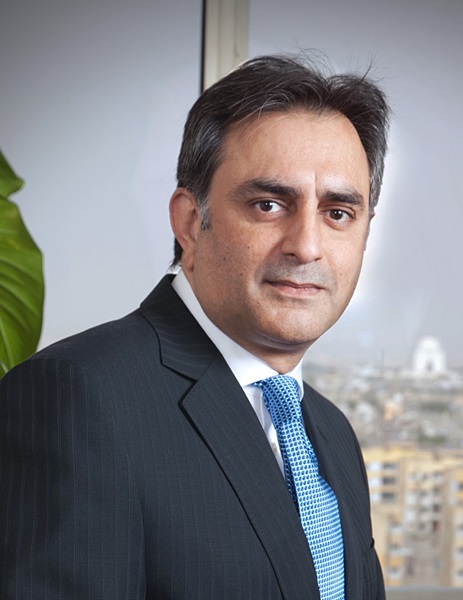
Arshad Saeed Husain
Arshad Saeed Husain has been heading Oxford University Press, Pakistan since February 2018. Oxford University Press is a department of the University of Oxford and is committed to the dissemination of knowledge by publishing works that further research, scholarship, and education.
Arshad is a seasoned corporate executive with over 30 years of broad-based commercial experience with leading multinational companies. Prior to joining OUP, Arshad served as the Managing Director of Abbott Laboratories Pakistan Limited. Earlier, he was also associated with Syngenta Pakistan Limited as Managing Director and with PT Syngenta, Indonesia as President Director.
Arshad has also served as the President of the American Business Council and as Chairman of the Pharma Bureau of the OICCI. He was also a founding member of the Swiss Business Council and Chairman of CropLife Pakistan.
Arshad is an alumnus of Aitchison College and the London School of Economics & Political Science, where he specialized in International Trade & Development.
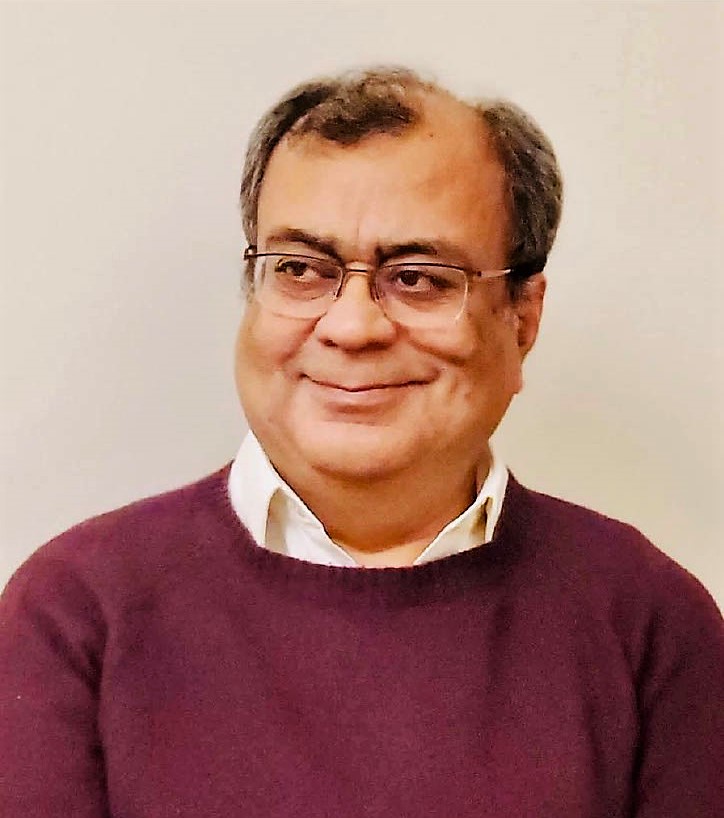
Arshad Waheed
Arshad Waheed is a Pakistani novelist, translator, and literary critic who writes in both English and Urdu, with a body of work that bridges contemporary fiction, translation, and critical discourse. He is the author of the award‑winning English novel Other Days (Best English Novel, Pakistan Academy of Letters, 2022) and the acclaimed Urdu novel Gumaan. His major Urdu translations include Milan Kundera’s The Art of the Novel and Immortality, as well as Gabriel García Márquez’s Love in the Time of Cholera, which received the Parveen Shakir Trust Award. A prolific essayist and columnist since the 1990s, Waheed has contributed extensively to national literary journals and newspapers, served as guest editor of Pakistani Literature (Pakistan Academy of Letters), hosted the television talk show Art With World, and conducted creative writing workshops.
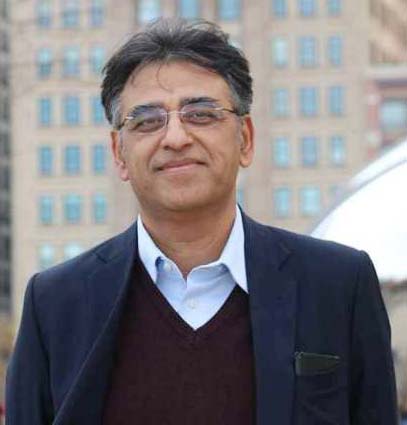
Asad Umar
Asad Umar is a Pakistani former business executive and political leader. He earned a B.Com and an MBA from IBA Karachi before beginning his career at HSBC and later joining Exxon/Engro in 1985. Rising swiftly, he became CEO of Engro Polymer in 1997 and President & CEO of Engro Corporation in 2004. He retired in 2012 as one of Pakistan’s highest‑paid CEOs and received the Sitara‑i‑Imtiaz. He entered politics in 2012, serving in the National Assembly (2013–2023) and as Finance Minister and later Planning Minister (2018–2022).
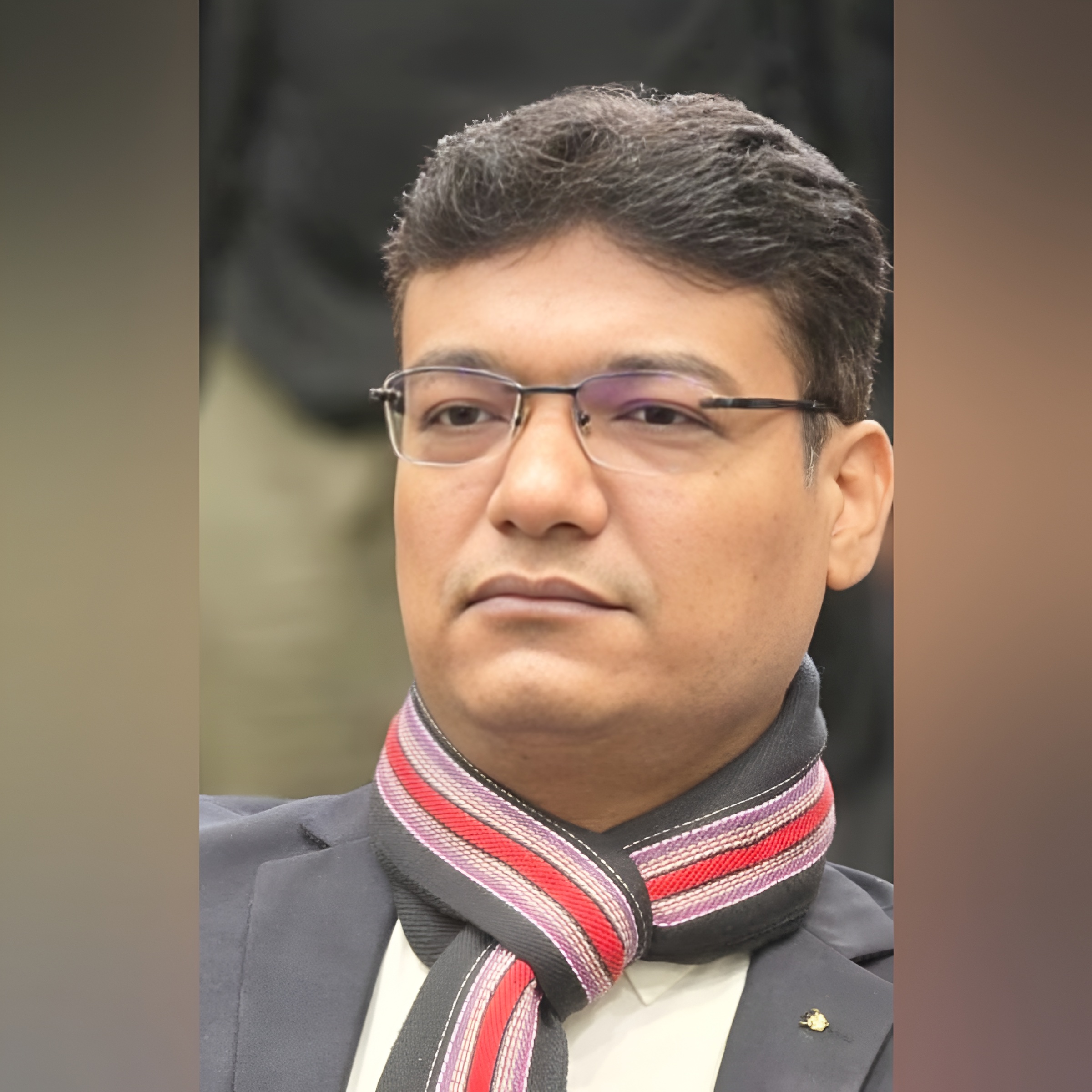
Asghar Ali Dashti
Dr Asghar Ali Dashti is an Assistant Professor of International Relations at the Federal Urdu University of Arts, Science & Technology (FUUAST), Karachi. He has served as Head of Department, holds a PhD on Pakistan–US military relations, and is active in research, editing, and human rights work.

Asghar Nadeem Syed
Asghar Nadeem Syed is a renowned playwright, poet, novelist, and teacher of film and theatre. He completed his master’s degree in Urdu from the University of Punjab, Lahore, and earned his PhD from Bahauddin Zakariya University, Multan. Syed has made significant contributions to Pakistani television, with popular dramas such as ‘Chand Grehan,’ ‘Nijaat,’ ‘Ghulam Gardish,’ and ‘Piyaas.’ He is the author of ‘Tooti Hui Tanab Udhar’ (2019) and has recently published a novel titled ‘Dasht-e-Imkaan.’ Throughout his career, Syed has received numerous accolades, including the Pride of Performance Award by the President of Pakistan in 2006 and the Best Writer Nigar Award for his drama ‘Pyas’ in 1989. He has also served in various academic roles, including as head of the Department of Television, Film, and Theatre at Beaconhouse National University in Lahore. Currently, he is the Dean of Languages at the University of Lahore (UOL).

Atabik Mohsin
Atabik Mohsin is a Karachi‑born Pakistani actor and model who began his career in 2019 and made his acting debut in the drama Bharaas (2020). He later appeared in Pardes and gained international recognition as the first Pakistani actor to play a leading role in a Turkish series, Koyu Beyaz, portraying Ferhan. Currently pursuing an LLB at LUMS, he continues to expand his career across television and international projects.

Atif Badar
Atif Badar is a masterful thespian, educator, theatre director, acting coach, drama therapist, storyteller, dastan-go, and children’s writer, with a deep passion for literature, storytelling, and theatre for children, youth, and elders. He is also a voiceover and dubbing artist, as well as a culinary expert. Atif has been working with the Pakistan Learning Festival (PLF) with heart and soul from 2013 to the present. In 2025, Idara-e-Taleem-o-Aagahi selected him as an ambassador for the Pakistan Learning Festival. He is an exceptionally brilliant and versatile artist with a wealth of experience. Atif’s career is a testament to his multifaceted talents. His journey began in 1993 when he started his acting career with Tehrik-e-Niswan. Since 2010, Atif has been serving as a theatre and creative movement teacher in well‑established schools across Karachi. He also worked as a theatre/drama teacher from 2017 to 2022, and for two years he taught film acting at the Visual Media Department of the Indus Valley School of Art and Architecture. His tenure includes four years as an actor with the Katha Theatre Group. As an educator, he has directed and conceptualised more than 135 long and short theatre plays over 16 years of teaching. He has also written 35 short theatre plays, as well as numerous songs and poems for children. One of his poems, written for children’s confidence‑building, was published in the Urdu magazine Santra. Four of his theatre plays have earned the distinction of Best Play Awards. Atif has also been working as a thespian for the Karachi Literature Festival since 2019. In addition, he worked with Oxford University Press as a storyteller. He taught theatre and drama for two years to children with Down syndrome, autism, and other disabilities at the SRSC Rehabilitation Centre. He has also served many times as a storyteller and motivational speaker for child cancer patients at Aga Khan Hospital. In 2025, he conducted a drama workshop for the IBA Literary Society at the IBA Festival. A few years ago, Atif received a PLF Award for his outstanding work with the Pakistan Learning Festival. Two years ago, he also received a Best Teacher Award. Recently, he wrote and directed a short theatre play for NAPA. As an actor, he appeared in the film Ramchand Pakistani (2007) and performed in many television plays. As a culinary expert, his authentic recipes have been published in well‑known Pakistani magazines and newspapers. He has also appeared as a culinary expert on PTV and Masala TV.
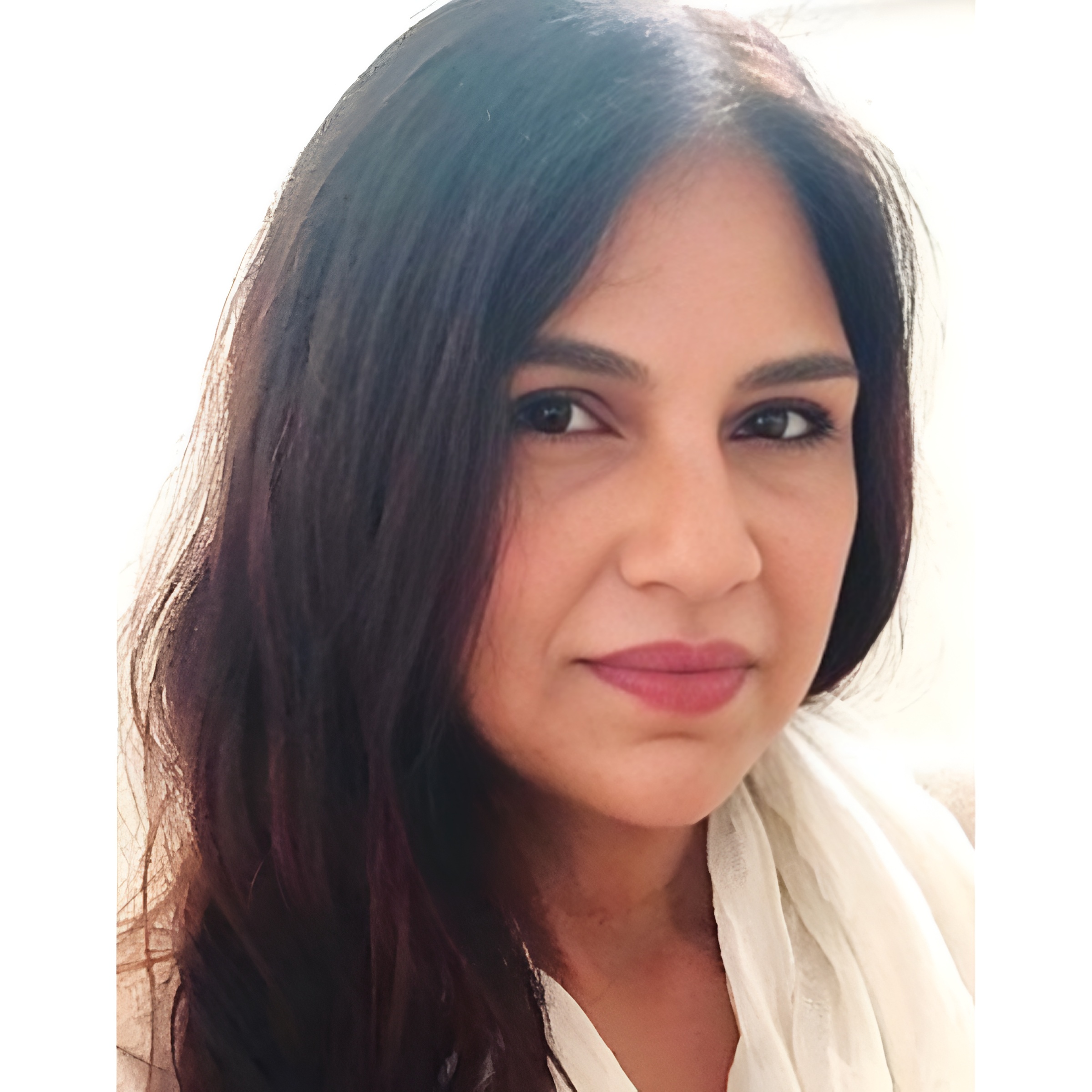
Atiya Khan
Atiya Khan is a filmmaker, media professional, and cultural commentator whose work explores Sufism, spirituality, and interfaith understanding. With a career spanning television, film, and documentary production, she has played a pioneering role in presenting moderate Islamic and Sufi narratives through mainstream media in Pakistan. Her award-winning documentaries, including The Qalandar Code, examine Islamic mysticism, sacred traditions, and the role of love and consciousness in spiritual awakening.
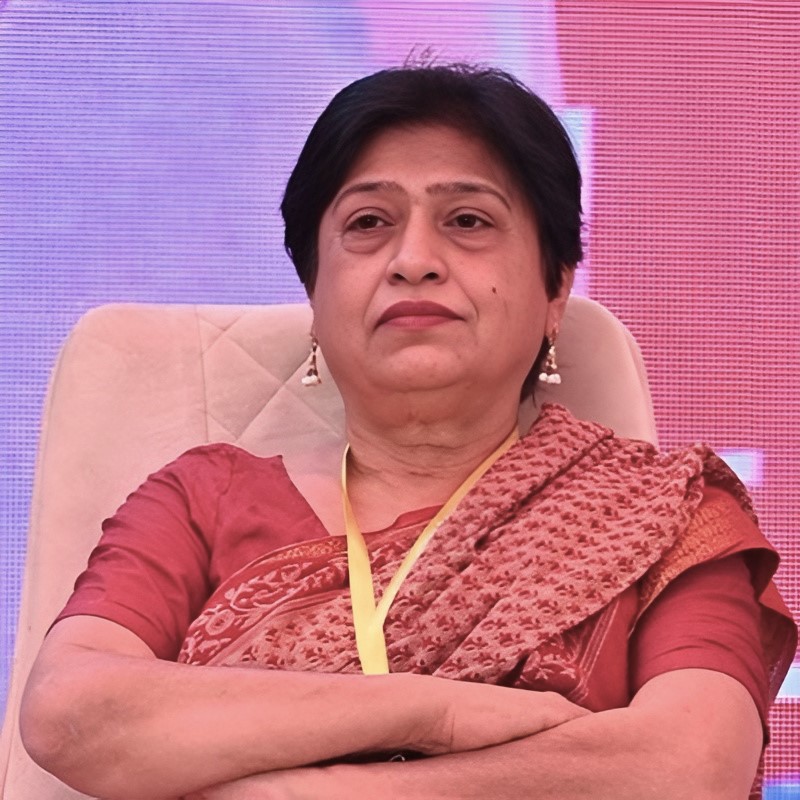
Attiya Dawood
Attiya Dawood is a celebrated Sindhi poet, writer, and activist. Through her writings, she sheds light on the oppression of women in Pakistani society under the guise of tradition. Her poems have been translated into English, Urdu, and German. She has published several books, with the latest being ‘Sindhi Adab: Aik Mukhtasar Tareekh’ (2019). Attiya Dawood is also the recipient of the Sindh Adeeb Award from Akhil Bharat Sindhi Boli Ain Sahit Sabha, India.
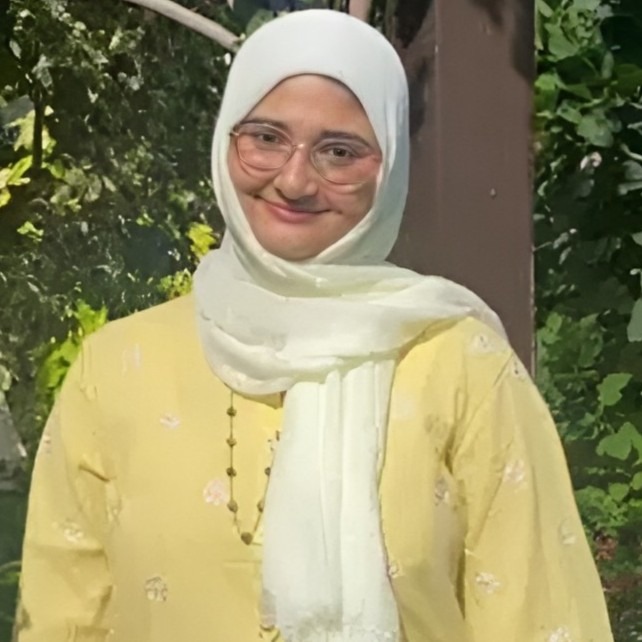
Ayesha Faisal Malik
Ayesha Faisal Malik is a poet and writer from Karachi, Pakistan. She is currently pursuing a joint major in Economics and Mathematics at the Institute of Business Administration (IBA), Karachi. A finalist for the inaugural National Youth Poet Laureate, an avid chess enthusiast, and a seeker of religious knowledge, she hopes to continue inspiring meaningful change through her work.
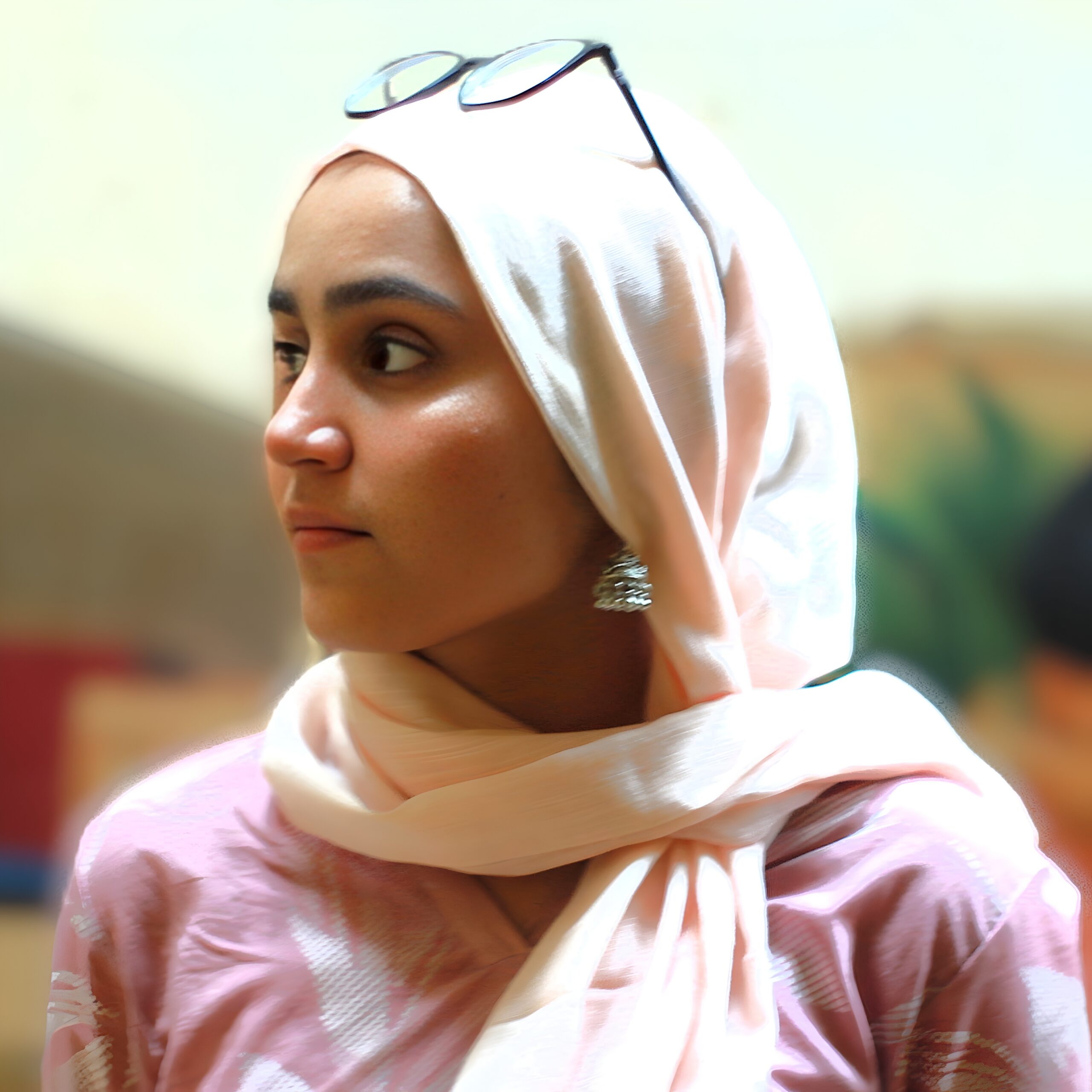
Ayesha Owais
Ayesha Owais is a writer from Karachi, Pakistan. A finalist for the inaugural Pakistan Youth Poet Laureate award in English, her work appears in the YPL anthology Jashn, with poems published or forthcoming in The Mudroom, Lakeer Magazine, and Whale Road Review. She participated in the LUMS Young Writers’ Workshop in 2024, where she was mentored in comedic prose.
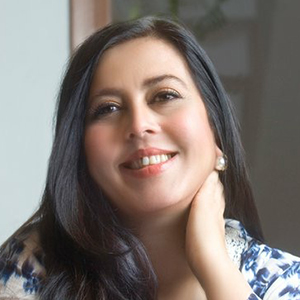
Ayesha Tammy Haq
Ayesha Tammy Haq is a Barrister-at-Law and, for 13 years, a media personality. She has practiced law in the UK, Pakistan, the Philippines and the USA and has worked on several international projects. A member of the Vision 2020 think tank of the Government of Pakistan, she has worked on policy and governance matters. She hosted 24Seven on Business Plus, where she has interviewed presidents, prime ministers, political leaders and policymakers. She writes opinion pieces for several publications and has hosted a radio show. She has been the CEO of Fashion Pakistan and organized Pakistan’s first ever fashion week in 2009. At present, she heads Pharma Bureau, the association of the research-based multinational pharmaceutical companies operating in Pakistan.
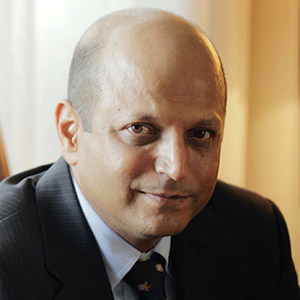
Azhar Abbas
Azhar Abbas is a senior journalist, media professional, and the current Managing Director of Geo News, Karachi. He is the author of Army, Democracy and People (1988) and has also served as a correspondent for NBC and CNBC. In 2001, he joined the core team that launched Geo News, becoming its first Director News. In 2007, he helped launch Dawn News as Director News & Current Affairs before eventually returning to Geo News. In recognition of his services to journalism, he was awarded the Hilal‑e‑Imtiaz, Pakistan’s second-highest civilian honour.
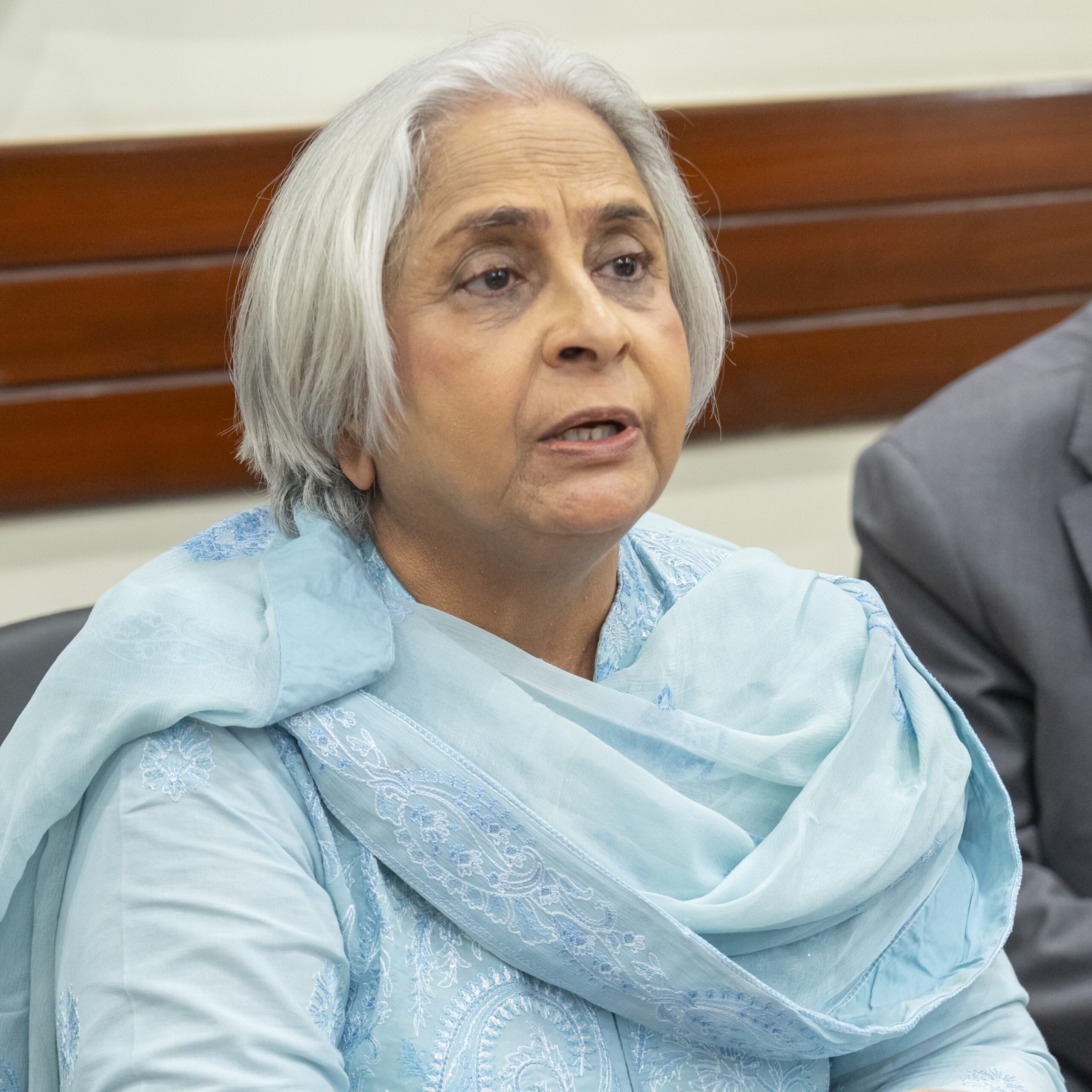
Azra Fazal Pechuho
Dr. Azra Fazal Pechuho is a prominent Pakistani politician who serves as the Minister of Health and Population Welfare in the province of Sindh and She is also currently serving as the chancellor of Shaheed Zulfiqar Ali Bhutto Institute of Science and Technology (SZABIST) She is known for her dedication to public health and population welfare issues in the region. Dr. Pechuho has a background in medicine and has been actively involved in healthcare policy and advocacy throughout her career. Dr. Pechuho holds a medical degree from the Dow Medical College, Karachi, and has an international Master’s degree. She has extensive experience in healthcare management and has worked in various healthcare settings, including hospitals, clinics, and public health organizations. As the Minister of Health and Population Welfare in Sindh, Dr. Pechuho has been instrumental in implementing and overseeing healthcare policies and programs aimed at improving public health outcomes and addressing population welfare issues in the province. She has been a vocal advocate for healthcare access, disease prevention, and health education, particularly for vulnerable populations, including women, children, and marginalized communities. Dr. Pechuho has also been actively involved in efforts to combat infectious diseases, such as HIV/AIDS, tuberculosis, and polio, and has worked towards strengthening the healthcare system in Sindh to provide quality healthcare services to all citizens. She has been recognized for her contributions to public health and has received several awards for her outstanding work in the field of healthcare. With her medical expertise and passion for public health, Dr. Azra Fazal Pechuho continues to play a crucial role in shaping healthcare policies and programs in Sindh to improve the health and well- being of its citizens.
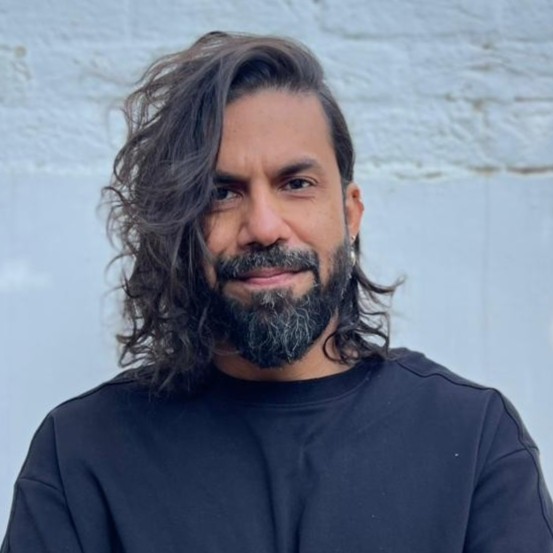
Babar N. Sheikh
Babar N. Sheikh is an award‑winning filmmaker, performance and multimedia artist, noise performer, and academic whose practice spans more than two decades across film, sound, and installation. His work delves into themes of urban memory, devotion, and the intangible heritage of South Asia, exploring the intersections of ritual, craft, and contemporary media. He is particularly known for his long‑term research and creative project Sufi Karachi, which investigates the symbols, narratives, and devotional practices embedded within the city’s spiritual landscape. His recent exhibition Patched Cloak (2026) showcased audio‑visual works developed through extensive fieldwork in Karachi’s dargahs, culminating in the launch of his first book, Sufi Karachi: Symbols, Rituals and Narratives. His multidisciplinary collaborations and sound‑based explorations, including projects such as Ritual Sounds of Karachi’s Lived Sufi Culture, further highlight his commitment to documenting and re‑imagining the city’s sacred sonic ecologies.

Baela Raza Jamil
Baela Raza Jamil, CEO of Idara-e-Taleem-o-Aagahi (ITA), is the 2024 Asia Education Medalist conferred by T4 Education and the founder of the Pakistan Learning Festival for children and teachers. A former Technical Advisor to the Ministry of Education, she is a passionate advocate for children’s learning, promoting cutting‑edge learning solutions and life skills for girls and the most vulnerable groups. ITA has published children’s literature and promotes interactive and innovative mobile libraries. A leading public policy advocate, Baela is a champion for the right to education (Article 25A), Early Childhood Care and Education (ECCE), gender equality, climate change action, skills development, and livelihoods. She has worked on the frontlines of emergencies. Through the Annual Status of Education Report (ASER) Pakistan, she drives the ‘assessment to action’ foundational learning movement, also known as Teaching at the Right Level, across the country. Valued by many as a force with formidable institutional memory on education systems in Pakistan, she is committed to education as an inclusive public good and a service for all. Baela serves as an advisor and sits on the boards of multiple organizations, representing Pakistan nationally and on global platforms such as the Yidan Prize Foundation, the International Bureau of Education (IBE) UNESCO, the People’s Action for Learning Network (PAL Network), the Learning Generation Initiative (LGI), the Punjab Social Protection Authority, and the Sanjan Nagar Public Education Trust (SPNET), a laboratory of quality education for the poorest communities offering IB PYP solutions. She is currently a member of the Chief Minister’s Advisory Committee on Education and a co‑opted member of the Prime Minister’s National Task Force on the National Education Emergency.
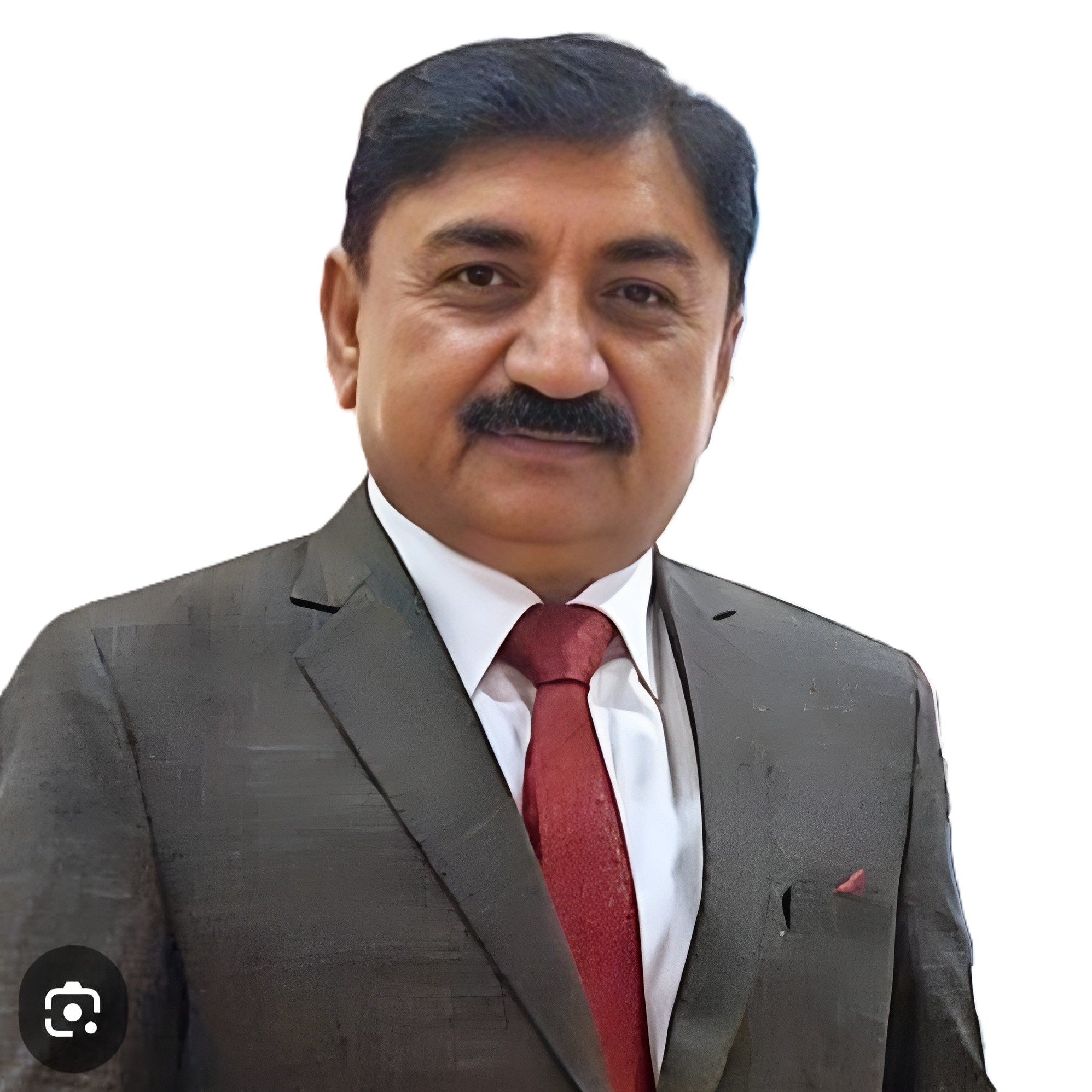
Bakhshan Maheranvi
Bakhshan Maheranvi is a distinguished Sindhi poet, celebrated radio and television compere, seasoned stage announcer, documentary producer, voice‑over artist, and occasional singer. Widely regarded as a pioneering figure in the promotion of literary and cultural festivals in Sindh, his multifaceted contributions have shaped the region’s cultural and media landscape. Born on 18 October 1964 in Sanghar District, he completed his early education locally, graduated from Sindh Agriculture University, Tando Jam, and later earned a Master’s degree in Sindhi Literature from the University of Sindh, Jamshoro—an academic training that deeply informed his creative and intellectual development. During his student years, Maheranvi played a leading role in Sindhi Adabi Sangat, Sanghar, where he organized major literary and cultural events, including the Sanghar Cultural Festival and the renowned mushaira Rang Rati Saanjh. His professional association with Radio Pakistan Hyderabad began in the early 1980s, marking the start of a nearly twenty‑five‑year broadcasting career. Known for his refined diction, tonal warmth, and engaging presence, he hosted many popular programs, including Surahi Saanjh, Sugandh, and Subeh‑e‑Mehran. Poetry remains central to his identity. Encouraged by leading poets such as Hassan Dars and Mazhar Laghari, his work attained prominence when Shaikh Ayaz described it as “timeless” in the preface to Deeya Deeya Laat Asaan. His celebrated collection Iltja (2011) and widely quoted poems such as “Asaan Ja Dard Sufi Hin” reflect his emotional depth and modern sensibility. Maheranvi later contributed to Sindhi television, where his program Kaakay Ji Kachehri on Sindh TV became one of the channel’s most beloved cultural shows.
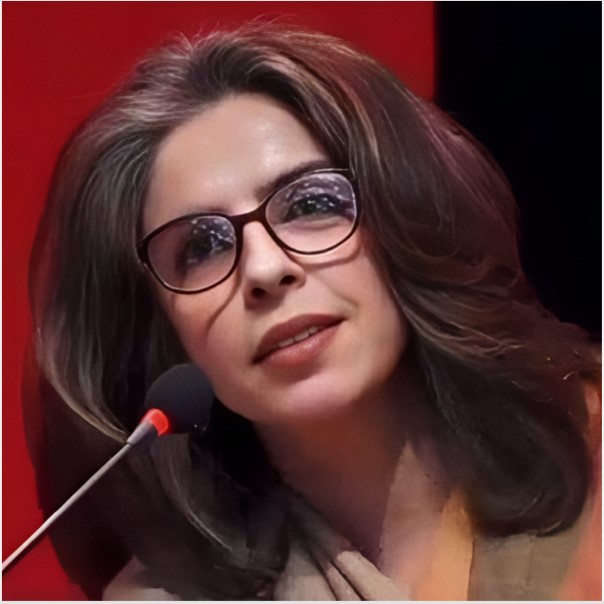
Bee Gul
Bee Gul is an award-winning Pakistani writer and director whose work moves fluidly between theatre, television, and film, engaging deeply with questions of gender, intimacy, power, and moral ambiguity. In television, she has written some of the most critically acclaimed dramas of recent years, including Talkhiyaan, Pehchaan, Kaun Qamar Ara, Firdous ki Dozakh, Dar Si Jaati Hai Sila, Working Women, Raqeeb Se, and her most recent serial, Ek Aur Pakeezah. Her writing has been recognized with the Best Telefilm Writer Award (HUM Telefilm Awards, 2015) and the LUX Style Awards for Best TV Writer and Best Drama Writer (2019). Her theatre works—Bedroom Conversations, Marney Sey Pehlay Janat, Pandra Minute Aur, and Badal Gaye Ho—are noted for their intimacy, formal risk, and originality, placing her among the few distinctive contemporary playwrights in Pakistan. In film, she has written Laloolal.com and Intezar. Her short film Jamun Ka Darakht (The Java Plum Tree) won Best Film and Best Script at the Cannes World Film Festival 2024. She has also created the web series The Pink Shirt (SXSW Sydney 2023) and Teen Tara. Bee Gul teaches at the National College of Arts, Lahore, and serves as Project Head of Khan Academy Urdu (Pakistan Chapter).
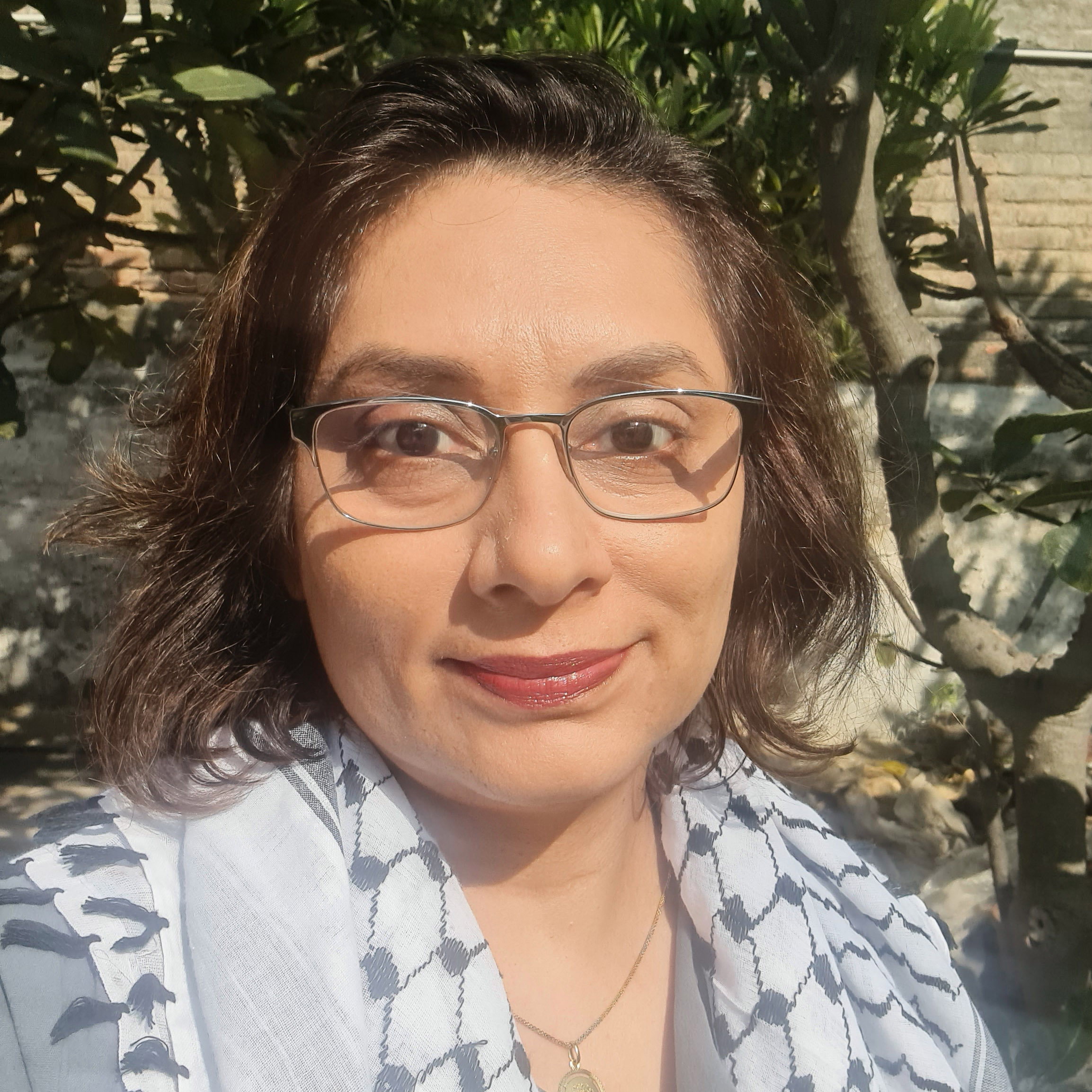
Bina Shah
Bina Shah is a writer of English fiction and essays. Educated at Harvard University and Wellesley College, she is the author of six novels and two collections of short stories. She has been a regular contributor to The New York Times, The Huffington Post, Al Jazeera, Dawn, The Independent, and The Guardian. In 2022, Bina was awarded the rank of Chevalier in the Order of Arts and Letters by the French Ministry of Culture for her literary achievements and her feminist work. Her most recent novel, The Monsoon War, won the Getz English Fiction Prize at the 2025 Karachi Literature Festival. She is currently teaching expository writing at the Aga Khan University’s Faculty of Arts and Sciences.

Christie Marie Lauder
Christie Marie Lauder is the Assistant Dean of the School of Arts and Humanities, as well as the Program Director of the Communications and Design Department at Habib University, where she teaches creative writing, film theory, and journalism. Formerly, she served as the Director of the Centre for Excellence in Journalism at IBA. Her work has appeared in The Express Tribune, Persephone Magazine, Peauxdunque Review, Jezebel, and Refinery29, among other outlets. She has also served on the board of the Salam Award, promoting speculative fiction writing within the Pakistani diaspora. She writes frequently about the intersections of pop culture and gender, genre cinema, and adaptation.
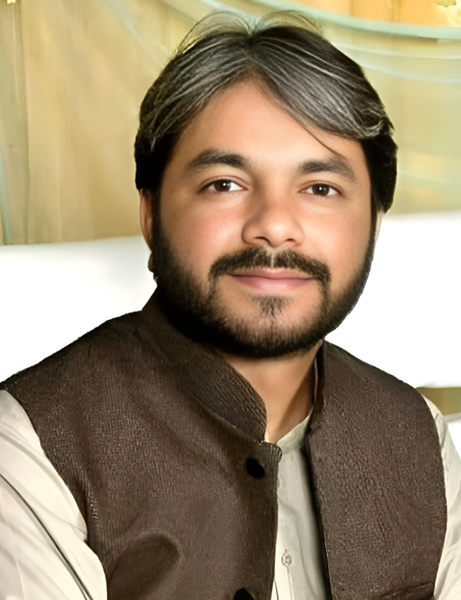
Dilawar Bashir
Dilawar Bashir, known by his pen name Dilawar Ali Aazar, is a distinguished contemporary Urdu poet whose work reflects a deep engagement with the ghazal, naat, and salam traditions. Over the past decade, he has published an impressive sequence of books that chart his evolving poetic voice. His first collection, Paani (2013), was followed by Maakhaz (2016), a ghazal anthology that earned him the prestigious Baba Gurro Nanak Award. In 2019, he published Naqsh, a collection of naat poetry that received the Seerat Award. He continued to expand his oeuvre with Keemiya (2020), Sayyedi (2021)—which also won the Baba Gurro Nanak Award—Bahater (2022), and most recently Abjad (2024), a refined addition to his ghazal work. Alongside these major titles, Aazar’s poetry has been published in curated collections across Pakistan, India, and Jammu & Kashmir. These volumes include Soraj Mukhi Ka Phool from Rekhta Publications in India, Ankhoun Main Raat Kat Gae from My Book Publications in India, Timsaal Garr from Awaaz Publications in Pakistan, and Saat Daryaao’n Ka Paani from Tafheem Publications in Jammu & Kashmir. The reach of these editions has introduced his voice to wider regional and international audiences. Aazar’s poetry has inspired extensive academic inquiry, resulting in several MA, MPhil, and BS dissertations. Among them are Paani: Dilawar Ali Aazar Ka Tajziyaati Mutalea (MA Urdu, 2013), Dilawar Ali Aazar ki Shaairi ka Tehqeeqi‑o‑Tanqeedi Mutalea (MPhil 2015–17, University of Lahore), Dilawar Ali Aazar ki Shaairi ki Jamaliyat (MPhil 2017–20, Islamia University Bahawalpur), Maakhaz — Majmua‑e‑Kalaam Dilawar Ali Aazar ka Tehqeeqi‑o‑Tozeehi Jaiza (MA 2017–19, GC University Faisalabad), and the BS Urdu thesis Dilawar Ali Aazar ki Shaairi mein Imagery — Soraj Mukhi Ka Phool ke Tanazur mein (2024, Govt. Postgraduate College Haripur). With a steadily expanding readership, multiple award-winning works, and sustained scholarly attention, Dilawar Ali Aazar has emerged as an important voice in modern Urdu poetry. His writing, known for its emotional resonance, lyrical craftsmanship, and thematic depth, continues to strengthen his standing in literary circles across Pakistan and beyond.
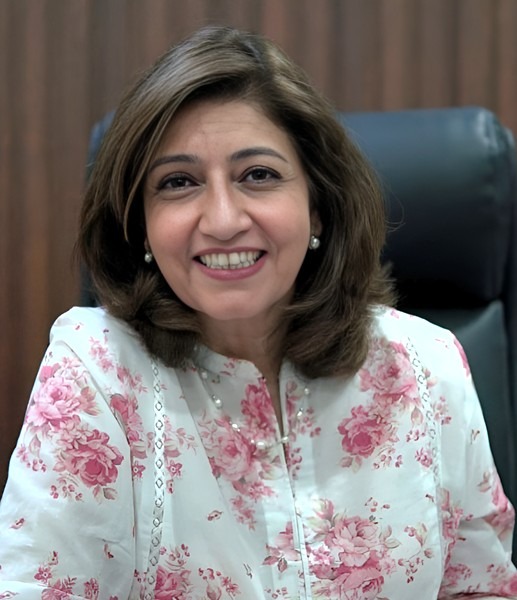
Dr. Huma Baqai
Dr. Huma Baqai is the Rector of the Millennium Institute of Technology and Entrepreneurship (MiTE) in Karachi and a distinguished scholar with over 25 years of academic and professional experience. Formerly Associate Professor at IBA Karachi, she has authored three books and over 40 research publications. A media contributor for more than two decades, she is also a certified corporate trainer with 15 years of experience and serves on multiple advisory and governance boards.

Erica Robin
Erica Robin is a Pakistani fashion model, public figure, and First Miss Universe Pakistan 2023. She has represented Pakistan on international platforms, using fashion and storytelling as tools to challenge stereotypes and amplify South Asian representation globally. With a strong presence in fashion, media, and social discourse, Erica actively engages in conversations around visibility, identity, and cultural expression in contemporary Pakistan.
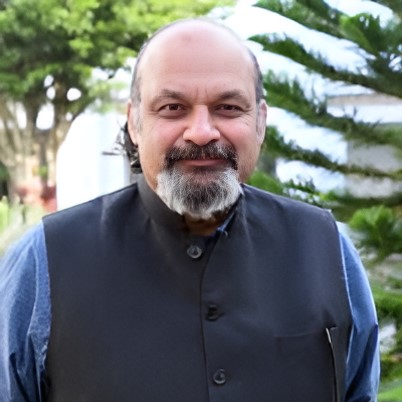
Faisal Bari
Dr. Faisal Bari is an economist with over twenty-five years of research and teaching experience in the areas of economics of education, philosophy of education, social protection, industrial organization, microeconomics, game theory, and economic development. He is an associate professor of economics and education (joint appointment) at the Lahore University of Management Sciences (LUMS), Lahore, Pakistan. He served as the Dean of the School of Education at LUMS from 2020 to 2023. Currently, he is the CEO and Senior Research Fellow at the Institute of Development and Economic Alternatives (IDEAS) since January 2024. Prior to this, he held the position of CEO at IDEAS from 2015 to 2020, was the Executive Director of the Mahbub ul Haq Human Development Centre from 2004 to 2006, and served as a Visiting Assistant Professor of Economics at Yale University, New Haven, from 2000 to 2001. A Rhodes Scholar (Pakistan-1988), Dr. Bari has a BA (Honours) from Oxford and a doctorate from McGill University. His research has been published in numerous journals and books. He is a regular columnist for the daily Dawn, Pakistan. He is the author of the book Educational Conundrums of Pakistan (Aks Publications, 2024).
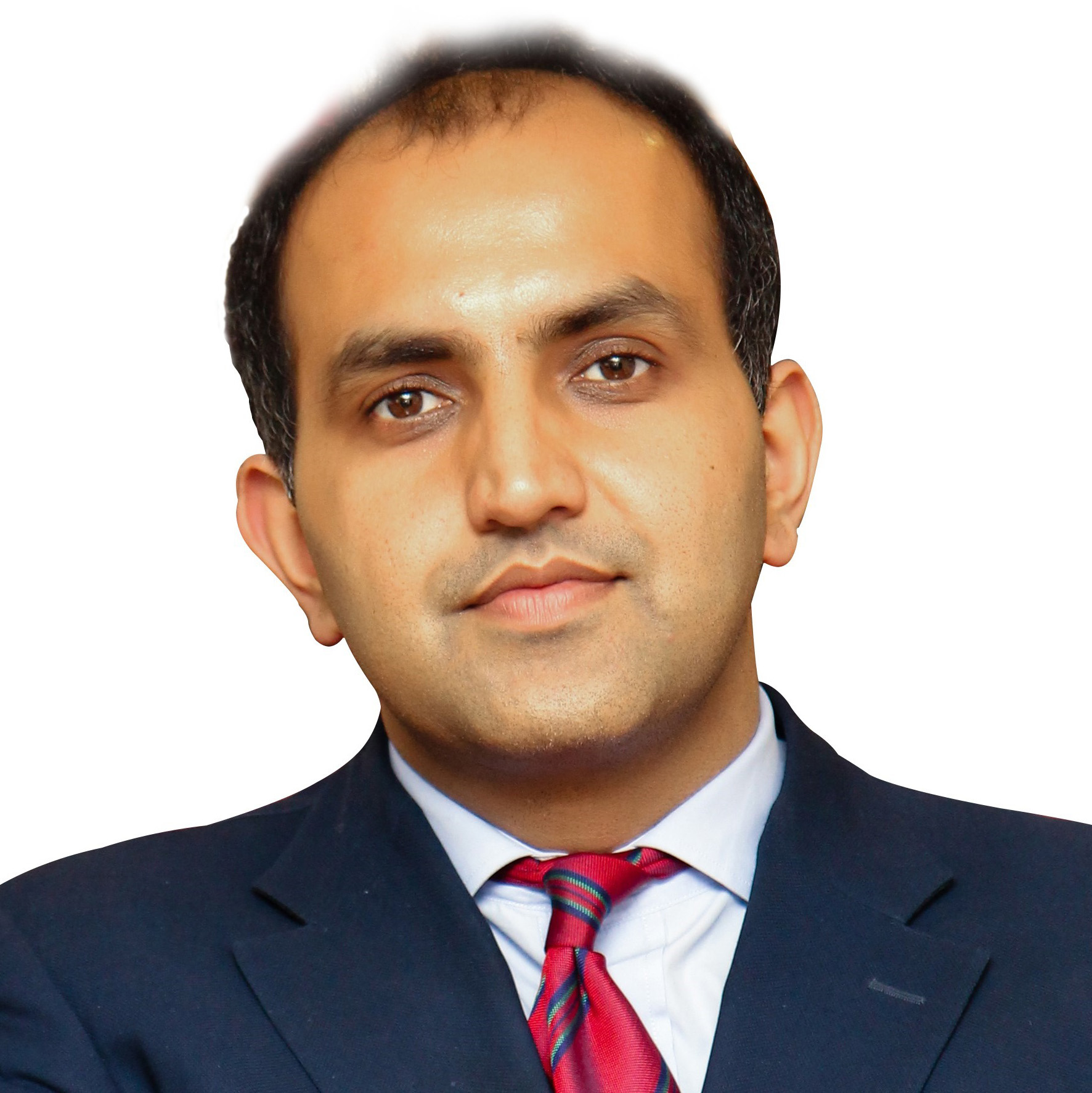
Faisal Mushtaq
Dr. Chaudhry Faisal Mushtaq, TI, is a distinguished education reformer, public intellectual, and social entrepreneur whose thought leadership has significantly shaped Pakistan’s contemporary education and knowledge landscape. As Founder and Chief Executive of the Roots Millennium Education Group and The Millennium Universal College (TMUC), and Founder Trustee & President of the Millennium Institute of Technology & Entrepreneurship (MiTE), he has established globally benchmarked institutions that integrate education, technology, entrepreneurship, and critical inquiry, nurturing generations of globally engaged learners. A recipient of Pakistan’s prestigious Tamgha‑i‑Imtiaz, Dr. Mushtaq has served in public office and contributed to national policy platforms, including the National Curriculum Council, influencing reforms in curriculum, pedagogy, and learning outcomes. Through the Change in Education Foundation, he has led the transformation of more than 200 government schools in underserved communities, aligning education reform with the United Nations Sustainable Development Goals. Internationally recognised—including being named among the 500 Most Influential Muslims of the World—Dr. Mushtaq is also a National Book Ambassador and a passionate advocate for literacy, intellectual discourse, and the written word as pillars of cultural resilience, civic consciousness, and national development.
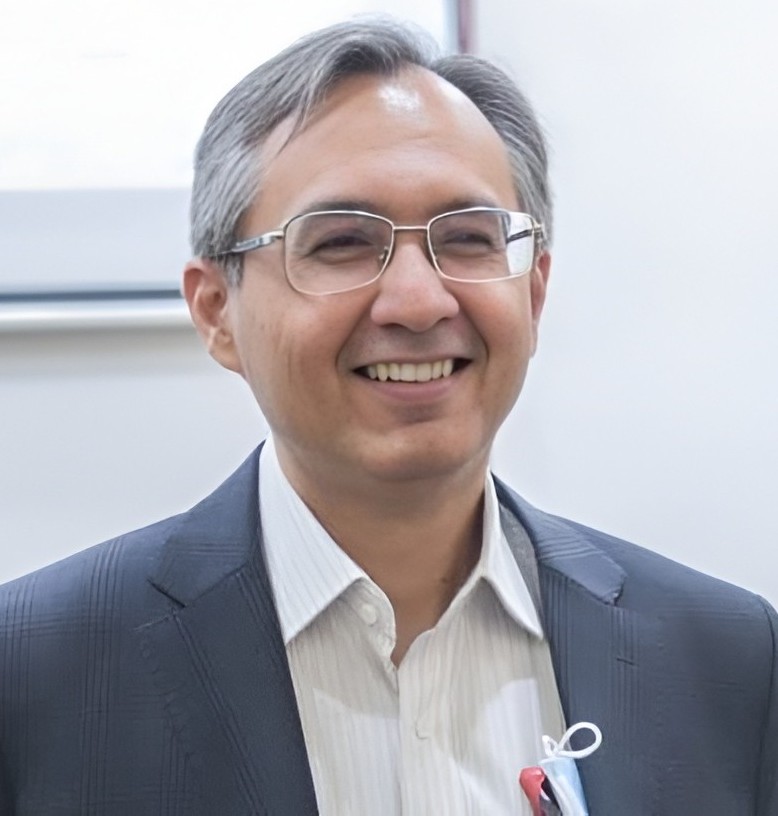
Faisal Nazir
Dr Faisal Nazir is an Assistant Professor of English in the Department of English at the University of Karachi, where he teaches Literary Theory and Criticism, Postcolonial Literature, World Literature, and Literary Pedagogy. He is the author of Orientalism Post 9/11: Pakistani Anglophone Fiction in an Age of Terror (2020), a critically acclaimed book that critiques postcolonial theory and literature for adopting orientalist frameworks in representing religious identities. He has contributed chapters to The Routledge Companion to Pakistani Anglophone Writing (2019), Narratives of Trauma in South Asian Literature (2023), and Literature and the War on Terror (2023). His publications include critical essays in local and international journals, as well as poetry published in national and local anthologies.
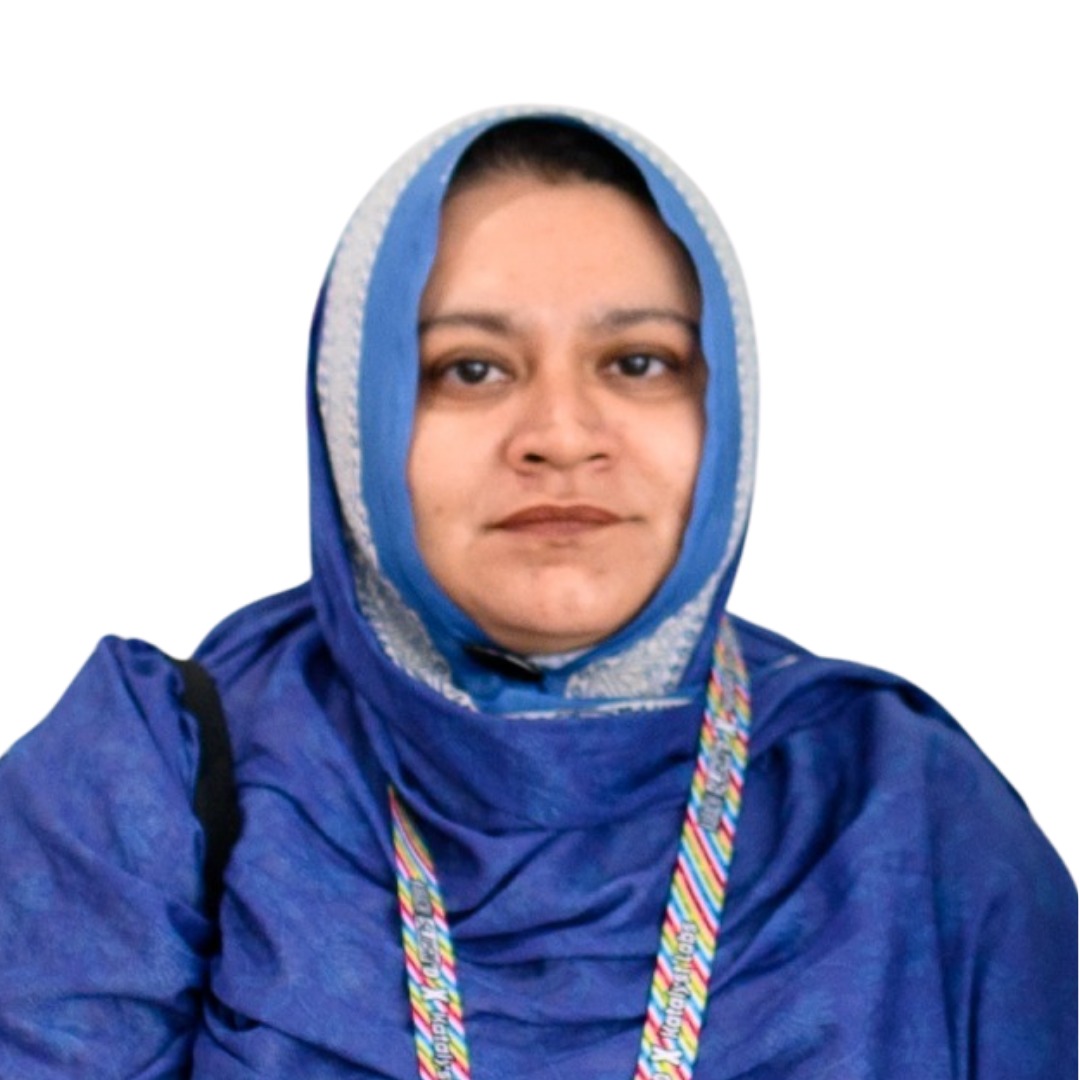
FAIZA YOUSUF
Faiza Yousuf is a seasoned software engineer with over 16 years of experience in architecting products, programs, and high-performing teams. A serial founder and multi-award-winning community leader, Faiza is dedicated to driving women’s economic empowerment and gender parity within the global tech ecosystem. She is the founder of WomenInTechPK and co-founder of both CodeGirls and CaterpillHERs. Recognized as an Expert-Vetted (Top 1%) Product and Agile Consultant on Upwork, Faiza has been featured in numerous global brand campaigns. Her leadership extends to multiple university and community advisory boards, including her role as a Board Trustee for Destination Imagination, Inc. An IVLP Fellow and graduate of the WomenX and AKU-WLA programs, she is a prolific international speaker and writer whose work has been featured in premier publications worldwide.
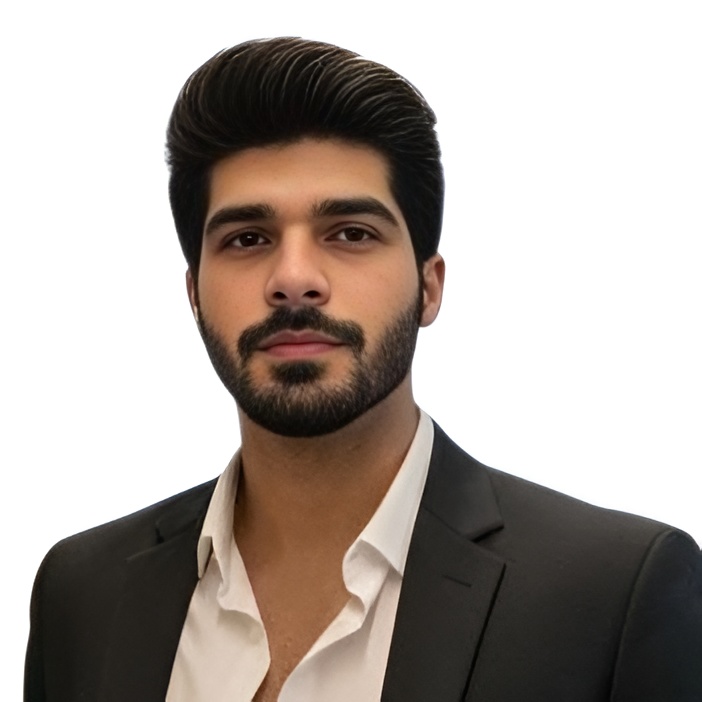
Farhan Ashraf
Farhan Ashraf is an AI/ML Engineer specializing in OCR and computer vision, with hands-on experience in text extraction, video analysis, and real-time visual intelligence. He has developed and deployed advanced systems that transform visual data into meaningful insights.
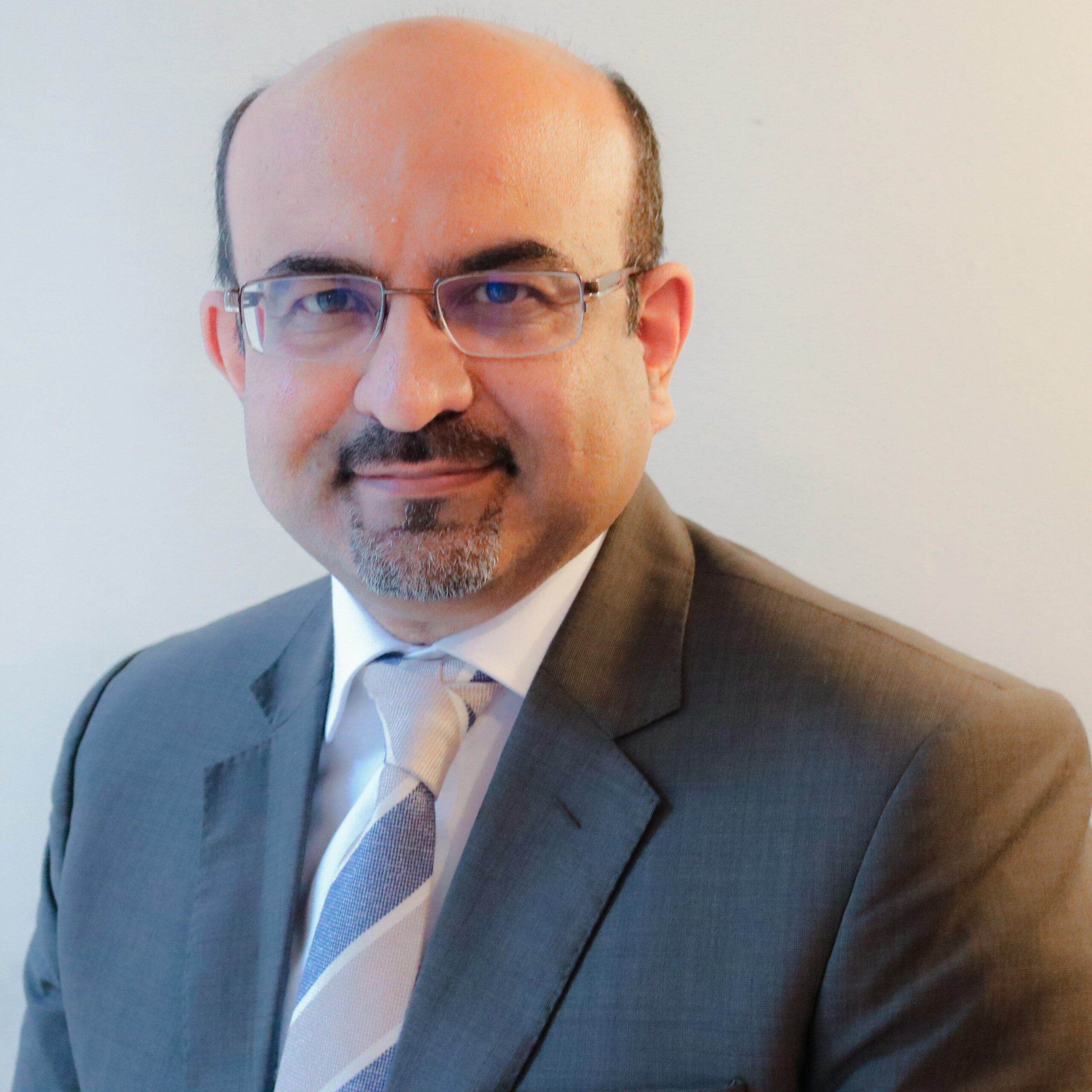
Farid Panjwani
Professor Farid Panjwani is the Dean of the Institute for Educational Development at Aga Khan University. He is also a faculty member at the Institute of Education, University College London, where he previously worked full-time as the founding director of a research center before moving to Pakistan in 2021. Professor Panjwani holds a DPhil in Philosophy of Education from the University of Oxford. He has published widely in the areas of philosophy of education, citizenship, teacher education, imagination, religious education, hermeneutics, and Islamic Studies. His current research focuses on the lived experiences of students from minority religious backgrounds in Pakistan and the relationship between economics and academic freedom. He has worked on several educational projects around the world and has served as a consultant to numerous research projects and organizations, including the International Baccalaureate, the Adyan Foundation in Lebanon, the Islamic Religious Council in Singapore, the Aga Khan Academies, and the Government of Punjab, Pakistan. In 2016, Farid was appointed to the Commission on Religious Education in the UK, which was tasked with developing policy recommendations for the future of religious education in the country. He is also extensively involved in voluntary work, serving both at the grassroots level and on the governing bodies of various organizations.
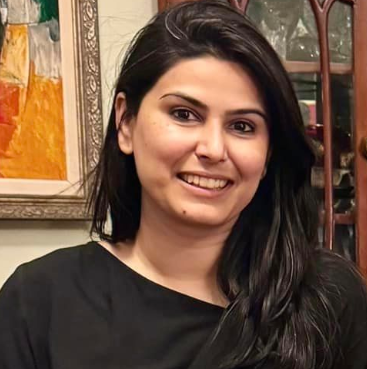
Farieha Aziz
Farieha Aziz is a Karachi-based journalist and a recipient of the All Pakistan Newspaper Society (APNS) Award for Best Investigative Report (2007–2008). She is the co‑founder of Bolo Bhi, a civil society organisation working on advocacy, policy, and research in the areas of digital rights, gender, and civic responsibility. She regularly conducts awareness trainings on digital safety, the cybercrime law, and anti‑harassment policies. She also provides assistance to women seeking legal recourse against harassment and gender‑based violence, both offline and online. Farieha has researched and written extensively on the right to freedom of expression, press freedom, and laws such as the Prevention of Electronic Crimes Act (PECA) 2016, particularly their impact on women. She has been a petitioner in various public‑interest cases, including the challenge to the two‑finger test—which was struck down as unconstitutional by the Lahore High Court—and has also assisted courts as an amicus curiae.
Fatima Dar
Dr Fatima Rehan Dar is a senior professional in the fields of teacher education, English language education, curriculum development, capacity development, quality assurance, and research. She holds a PhD in Education from the School of Education and Cognitive Sciences, Asia e University, Malaysia; an M.A. in Curriculum and Teaching from Columbia University, USA; and an M.A. in English from Government College University, Lahore (Pakistan). Over a career spanning 30 years, she has successfully bridged the theory–practice divide by serving as a university professor, a technical advisor in the development sector, and a consultant with government institutions. Her national and international talks at seminars and conferences, as well as her publications, address contemporary issues in education, English language teaching, multilingual education, and curriculum development. At present, Dr Dar works as the CEO and Managing Partner of Oak Consulting, an education-reform-focused consultancy firm.
Fazil Jamili
With over 35 years of experience across digital media, television, and print journalism, Fazil Jamili is a seasoned professional and a prominent voice in the South Asian media landscape. He currently serves as the Senior Digital Editor at Interlink Multi Media (Jang Geo Media Group) and holds the prestigious role of President of the Karachi Press Club, where he champions leadership and the welfare of the journalistic community. Beyond his editorial management expertise, Jamili is a celebrated published poet and political commentator whose work bridges the gap between literature and social advocacy. Through his multifaceted career, Jamili continues to inspire through a unique blend of incisive analysis, creative expression, and a lifelong commitment to fostering harmony.
Framji Minwalla
Before retiring from institutional teaching, Dr Framji Minwalla taught undergraduates for thirty years across three continents. In Pakistan, he served as Program Director for Communication & Design at Habib University; as Chair of the Department of Social Sciences & Liberal Arts at the Institute of Business Administration (IBA), Karachi, where he implemented a transdisciplinary major in Social Sciences that he helped design; and as Head of the Department of Media Sciences at SZABIST, Karachi, where he revised the undergraduate curriculum and developed graduate-level programs in Film & Television Production and Media Studies. Before returning to Pakistan, he taught at a range of colleges and universities in the United States, including Yale University, Vassar College, Dartmouth College, The George Washington University, New York University, and Fordham University. In addition, he taught as part of an intensive summer theater workshop in Northern Ireland at the University of Ulster, Coleraine, and twice led Dartmouth’s Foreign Study in Theater Program at the London Academy of Music and Dramatic Art. He has published extensively in academic journals, and his research interests include Performance Literature and History; Visual and Cultural Studies; Theater and Politics; Television and Film; Communication and Media Studies; and all forms of theory—linguistic, political, feminist, queer, dramatic, visual, postcolonial, aesthetic, literary, and otherwise. Dr Minwalla earned a B.A. (1987) from the University of Michigan, Ann Arbor, and both a Master of Fine Arts (MFA, 1991) and a Doctor of Fine Arts (DFA, 2000) from the Yale School of Drama.
Ghazi Salahuddin
Ghazi Salahuddin is a senior journalist who writes a weekly column for ‘The News.’ Before becoming the launch editor of ‘The News’ in Karachi in February 1991, he served at ‘Dawn’ in various significant positions, including News Editor. During the martial law of General Ziaul Haq, his column ‘Karachi Diary’ was a leading voice of dissent. He has also been associated with electronic media and was on the panel of PTV’s ‘Kasauti’ quiz show. In recent years, he hosted a program on books on Geo TV. Mr. Salahuddin is also a social activist and human rights defender. He is a recipient of the President’s Pride of Performance Award in journalism and was presented with the Bibliophile of the Year Award 2011 by the National Book Foundation.
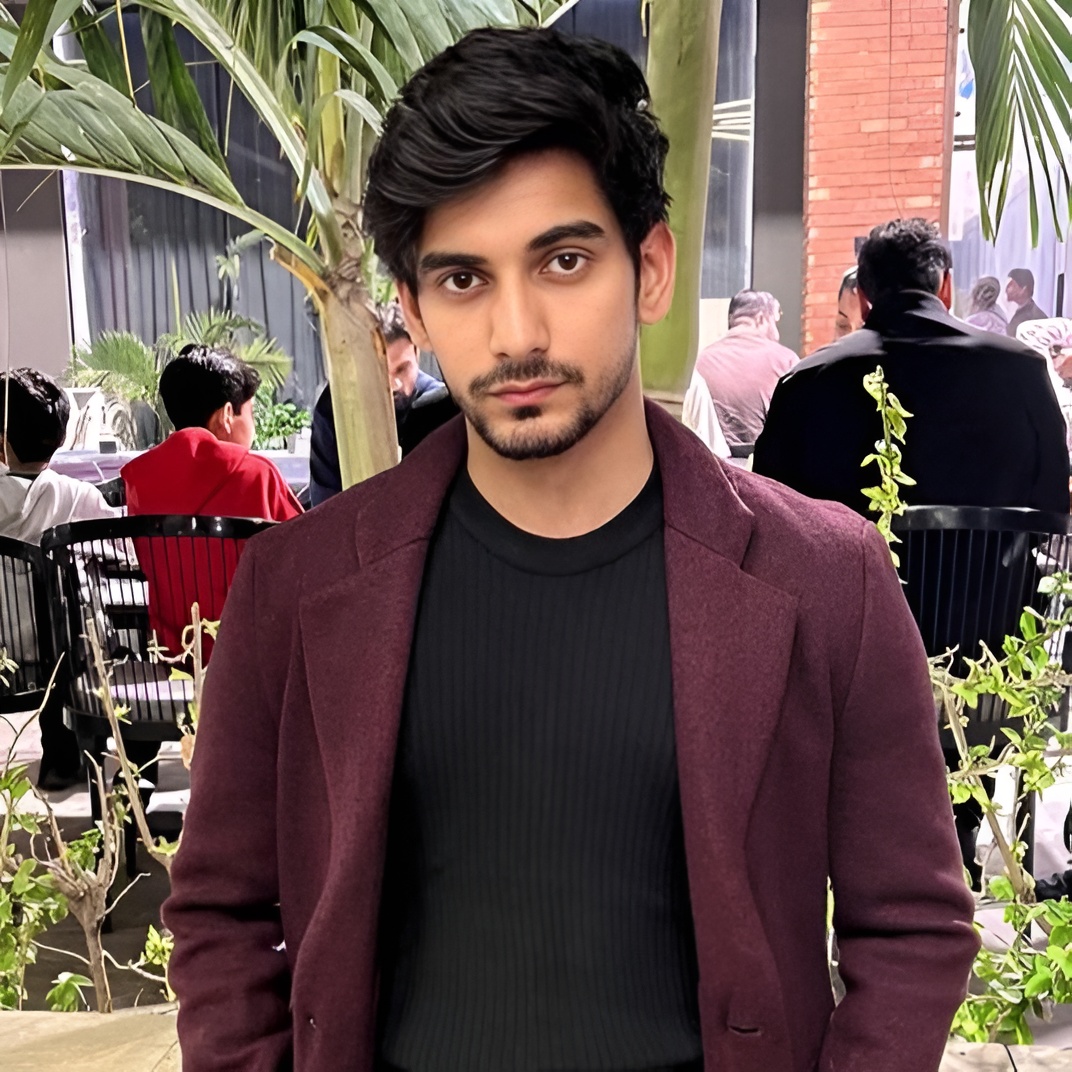
Hammad Rana
Hammad Rana is a Software Engineering student at IOBM, born and raised in Lyari—a community once defined by gang wars and despair. Growing up, he witnessed the harsh realities around him, and like many of his peers, he could easily have fallen into the same destructive patterns. However, guided by the belief that “education is the greatest weapon,” and supported by Kiran Foundation, he was able to shift his perspective and adopt a more positive outlook on life. Today, Hammad is committed to giving back to his community, demonstrating that with education and determination, meaningful change is not only possible but achievable.
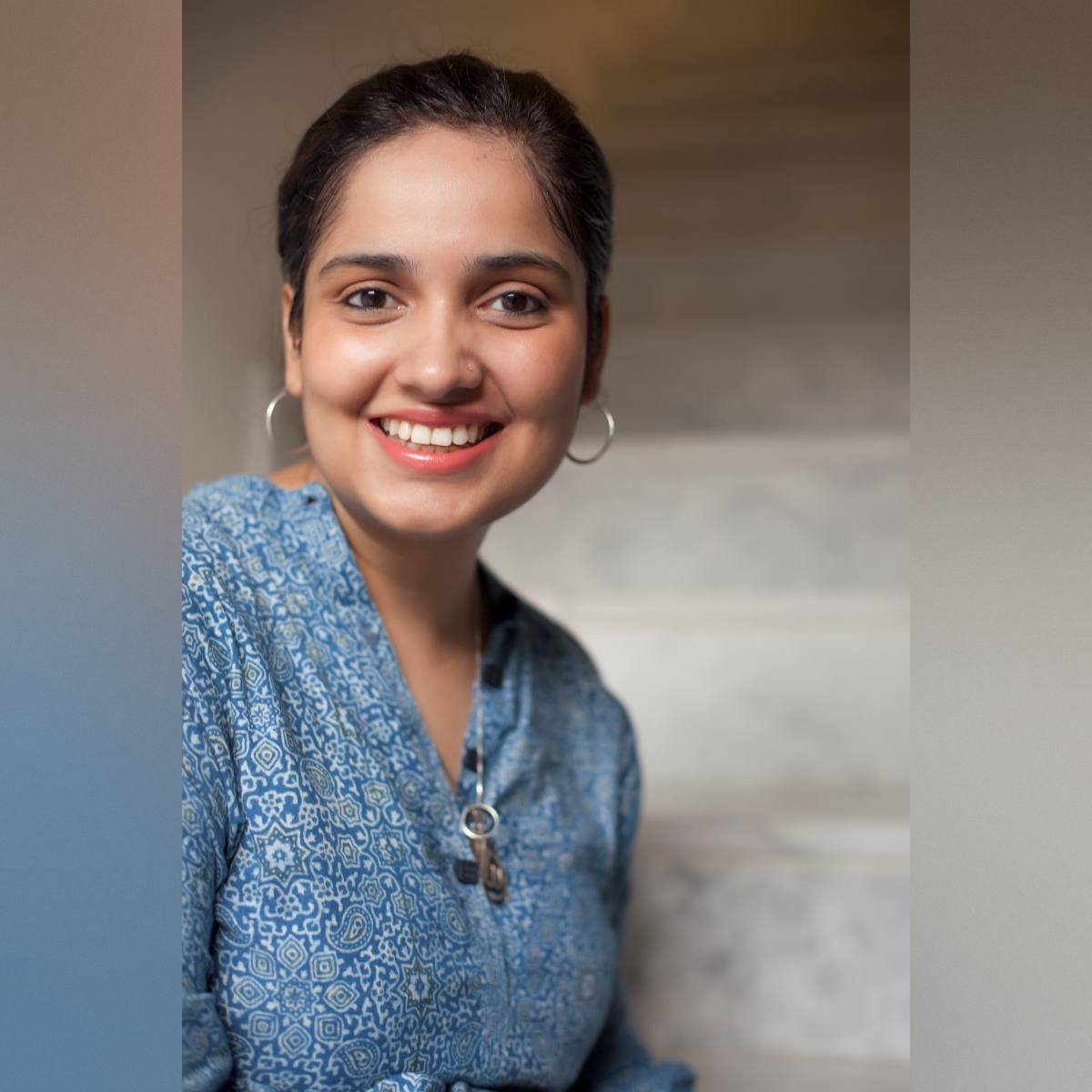
Hareem S. Bari
Hareem S. Bari is a finance professional, women’s health advocate, and public health specialist with an MSc in Global Public Health and Social Justice from Brunel University, London. She is an International Board Certified Lactation Consultant (IBCLC) and the Founder of Lactnation, a platform that supports thousands of mothers through multilingual, culturally sensitive breastfeeding and postpartum guidance. Combining hands-on clinical work with program development, Hareem creates practical, community-focused solutions to improve maternal and infant well-being. She also leverages her distinguished background in finance to strengthen and sustain the impact of these health initiatives.
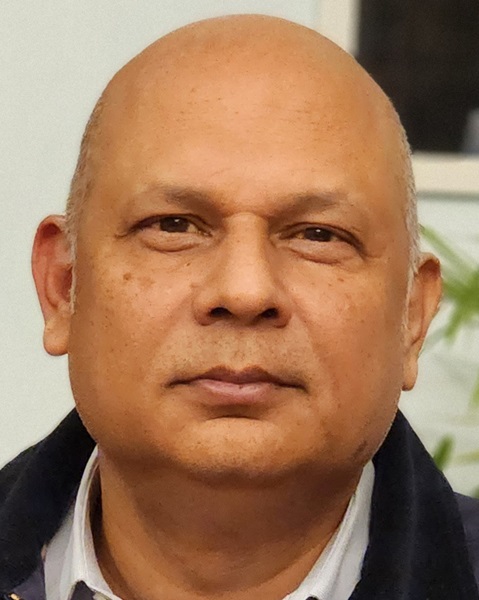
Harris Khalique
Harris Khalique is a poet and author in English, Urdu and Punjabi with ten collections of poetry, two books of nonfiction and several hundred articles, columns and papers published in Pakistan and abroad. He has co-edited a volume of essays and guest-edited a literary journal. Khalique has also been a seasoned broadcaster. His work is composed to music and dance and translated into several international languages besides being anthologised by Oxford University Press, Penguin US, University of Georgia Press, W.W. Norton, Kitaab, Maktaba-e-Daniyal, Folio Books and others. He has delivered keynote addresses and lectures at conferences and universities across many countries. He is a recipient of Pakistan’s prestigious Presidential Pride of Performance Award and the UBL Literary Excellence Award. He is also a University of Iowa Honorary Fellow in Writing. After working closely with labour, community development and other civil rights movements for decades across Pakistan, South Asia and Europe, he now serves as the secretary-general of the independent Human Rights Commission of Pakistan besides managing DARE, an education research programme, run by Oxford Policy Management. Khalique graduated in mechanical engineering from N.E.D. University of Engineering and Technology, Karachi, and earned a master’s degree in development management from the London School of Economics and Political Science.
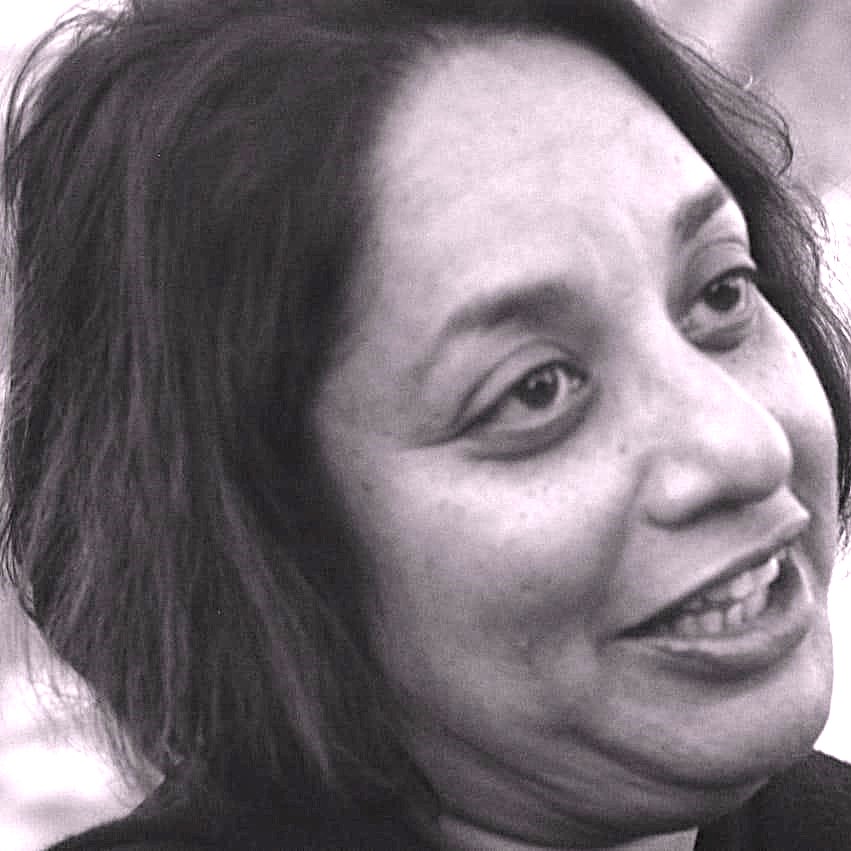
Hoori Noorani
Hoori Noorani runs the Karachi-based publishing house Maktaba-e-Danyal, which she inherited from her late father, Malik Noorani. Following her early education in Karachi, her love for literature and linguistics led her to pursue a master’s degree in philology, with a major in Russian and world literature, at the People’s Friendship University in Moscow. After graduating in 1983, she returned to Karachi and briefly taught Russian at the Russian Cultural Centre before joining her father’s publishing business. Maktaba-e-Danyal is known for publishing renowned authors such as Mushtaq Ahmed Yousufi, Syed Sibte Hassan, Faiz Ahmed Faiz, Iftikhar Arif, Fehmida Riaz, Habib Jalib, and many others, as well as works by authors from India. Currently, the publishing house is working on a series of Urdu translations of world literature and books by Pakistani authors writing in English. Ms. Noorani is also a trained classical dancer and has translated Henrich Borovik’s famous play Interview in Buenos Aires from Russian into Urdu.
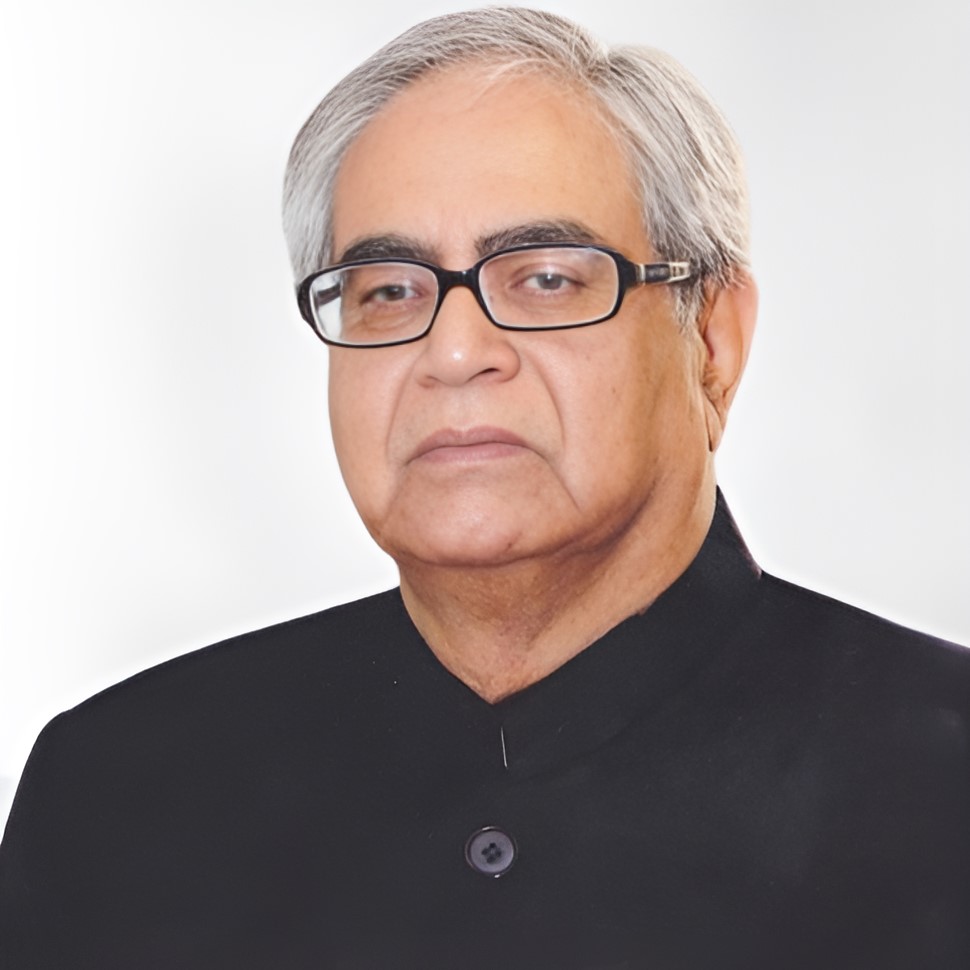
Iftikhar Arif
Iftikhar Arif is a distinguished Urdu poet, scholar, and literary figure who has made significant contributions to the literary landscape of Pakistan. Throughout his career, Arif has held several prestigious positions, including Chairman of the Pakistan Academy of Letters, the National Language Authority, and the National Book Foundation. He also served as President of the ECO Cultural Institute in Tehran, Iran, and led the National Language Promotion Department within the National History and Literary Heritage Division in Islamabad. Additionally, he was Director General of the Pakistani Scholars and Writers Foundation and worked as a senior producer and script editor at the Pakistan Television Corporation. His appearances on various literary programs, including those on Pakistan Television, BBC Television, and BBC Radio, have further established his presence in cultural discourse. Arif’s literary works include notable titles such as Mehr-e-Do-Neem, The Twelfth Man, and Harf-e-Baryab. His latest poetry collection, Baagh–i-Gul-i–Surkh, reflects his ongoing engagement with Urdu literature. His poetry is widely published and has been translated into several languages, reflecting his influence beyond Urdu-speaking audiences. His literary achievements have been recognized with numerous awards, including the Nishan-e-Imtiaz in 2023, the Hilal-e-Imtiaz in 2005, and the Sitara-e-Imtiaz in 1999, along with the Pride of Performance Award in 1990. In addition to his literary accomplishments, Iftikhar Arif is actively involved in academic and cultural organizations. He has been a member of the Executive Committee of Allama Iqbal Open University, served as President of the Third World Writers Association (UK), and was a member of the Afro-Asian Writers’ Union. His extensive career and dedication to the arts have made him a prominent figure in both national and international literary circles.
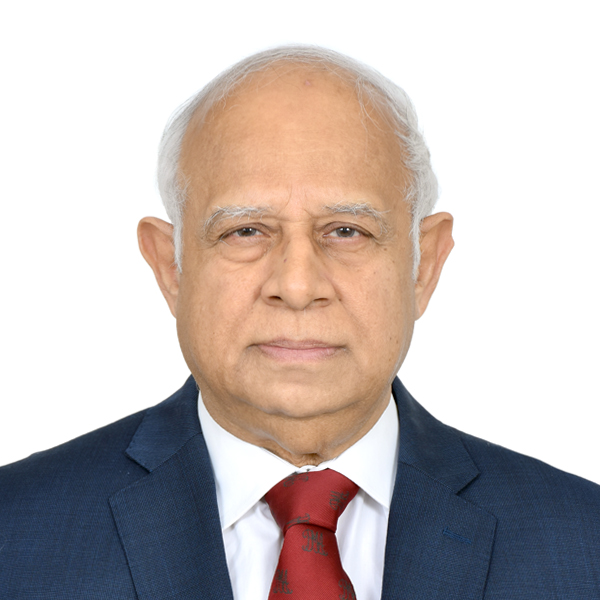
Ikram Sehgal
Ikram Sehgal, the first Pakistani POW to escape from India in 1971, was given battlefield promotion to the rank of Major on December 13, 1971, while commanding a rifle company in the Thar Desert. An expert on Pakistan-Bangladesh relations, he is the author of the slogan ‘Two Countries, one Nation’ and the advocate of Greater Bangladesh in the form of ‘Association of Eastern States of South Asia’ (AESSA) concept for the last 30 years. He is a regular speaker at various defence institutions and international think tanks worldwide. As Chairman, Ikram Sehgal oversees two major private security companies in the Pathfinder Group’s Security Services Division (SSD) Security & Management Services (Pvt) Ltd and Wackenhut Pakistan (Pvt) Ltd as well as leading IT firms in the Financial Services and Technology Division (FSTD). Among them Virtual Remittance Gateway (VRG), recognized by the World Economic Forum’s (WEF) ‘Edison Alliance’, ranked third globally for ‘digital financial inclusion’ with more than 13.5 million Asaan Mobile Accounts (AMA) presently in Pakistan. For more than 20 years, Ikram Sehgal has hosted the Pakistan Breakfast at the WEF Annual Meeting in Davos for Heads of State and other prominent figures. Formerly Chairman of the Karachi Council of Foreign Affairs, he is now its Patron-in-Chief KCFR. He serves on WEF’s Board of ‘Partnering Against Corruption Initiative’ (PACI) and was part of its Global Agenda Council (GAC) for Counterterrorism. He has been Co-Chairman of the Pakistan Committee of the ‘Swiss Asian Chamber of Commerce’, Geneva, and now SwissCham ASIA as well as Director of the former EastWest Institute USA for over 20 years. He is on the Executive Council of Pakistan Newspapers Editors (CPNE) and Vice Chairman of the Board of Management (BOM) Quaid-i-Azam House Museum. He served on the Board of Directors of Bank Alfalah for 16 years and was elected Chairman of K-Electric in January 2019. He is also a Director at the Business Advisory Board (BAB) of International Organization for Migration (IOM), Geneva for a dozen years. Ikram Sehgal regularly contributes weekly articles on the OP-ED page for The Nation, Nawa-i-Waqt, The News, and Daily Jang and also contributed frequently to Daily Times, Express Tribune, Daily Express, and others. For some time, he was the anchor of TOUGHTALK on ARY TV and till recently he frequently appeared as a ‘Defence and Security Analyst’.
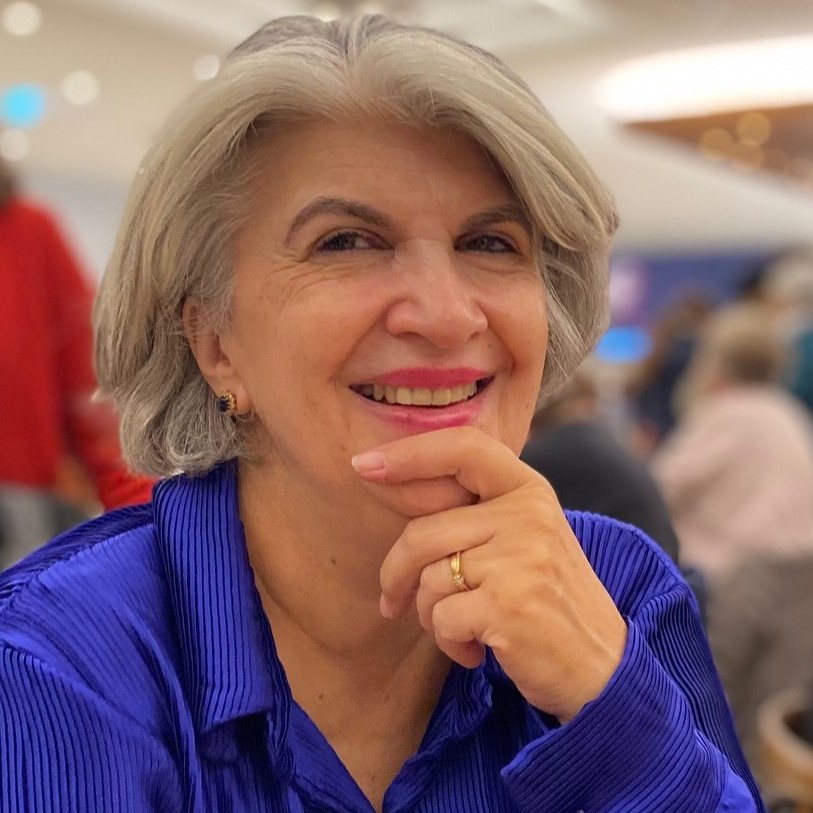
Ilona Yusuf
Ilona Yusuf is a poet, editor, designer, and printmaker. Her first poetry collection, Picture This, was published by Alhamra Publishing in 2001. Since then, her work has appeared in numerous local and international journals—both online and in print—including The Atlanta Review, The Chicago Quarterly Review, Papercuts, The Aleph Review, Sugar Mule, and The Missing Slate. Over her career, she has edited for three literary journals: The Alhamra Literary Review; Vallum’s Special Pakistan Issue (2011); and, since 2017, she has served as Associate Editor of The Aleph Review, an annual Pakistani art and literature journal publishing local and international voices. She has also written widely on art, artists, and writers for several local arts and features magazines, and contributed numerous essays on Pakistani English poetry to international publications as well as to OUP’s Pakistan’s Radioactive Decade. Her most recent editorial work is Poetry in English from Pakistan: A 21st Century Anthology for Alhamra Publishing. Since the early 2000s, she has curated poetry readings featuring her own and others’ work and has moderated sessions at literary festivals both within Pakistan—particularly in Karachi and Lahore—and abroad. After a long hiatus, she is currently exploring the creation of artist’s books that combine text and image.
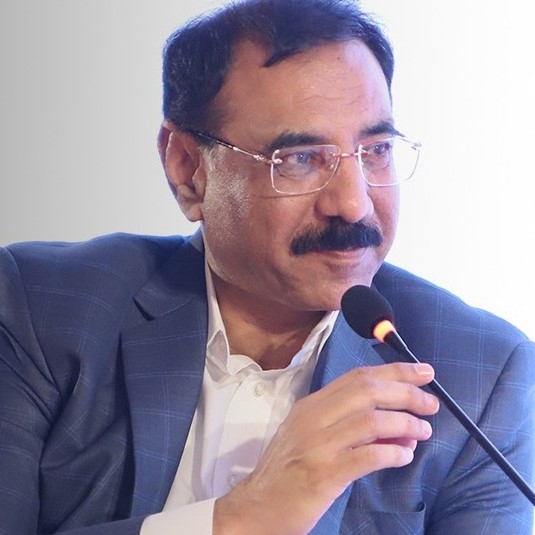
Inaam Nadeem
Inaam Nadeem is a distinguished Urdu poet, translator, and editor. He began his literary journey as a poet, but his sustained and wide-ranging work in literary translation has firmly placed him among the foremost translators in contemporary Urdu literature. He has more than fifteen books to his credit, including two poetry collections—Dar-e-Khwaab and Tasveer Mein Chalta Aadmi—as well as numerous translations of major works of world literature into Urdu. Among his recent and most significant contributions are the complete Urdu translation of all short stories by Nobel Prize–winning author Gabriel García Márquez and the Urdu translation of Honoré de Balzac’s celebrated novel A Woman at Thirty. These works have been widely noted for their literary fluency and cultural sensitivity, further consolidating his standing as a major voice in Urdu translation. As an editor, Inaam Nadeem has compiled and curated several important literary volumes, including an anthology on Asif Farrukhi, selected short stories of Zakiya Mashhadi, the collected works of Akbar Masoom, and a notable selection of Urdu prose poems. He has also translated the short stories of renowned Hindi writer Bhisham Sahni, a work that was shortlisted for the UBL Literature Award. His literary contributions have been recognized with several prestigious honors, including the Aks-e-Khushboo Award for Dar-e-Khwaab, the UBL Literary Award in 2021 for Aaina Si Zindagi, and the Dr. Jameel Jalibi Award in 2024 for Dukhtar-e-Rumi. Inaam Nadeem is actively engaged in teaching and is based in Karachi.
Iqbal Khursheed
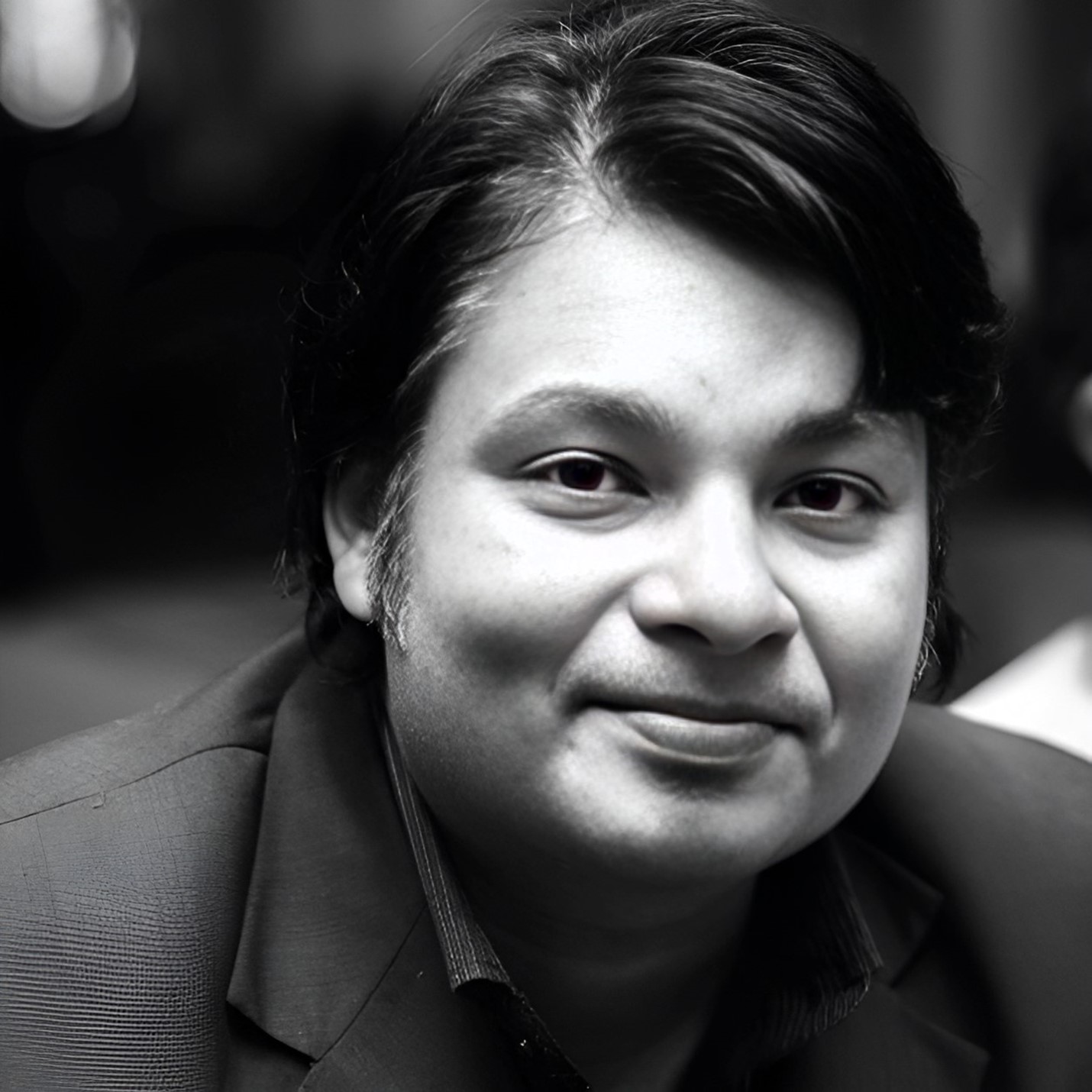
Iqbal Khursheed is a distinguished Urdu fiction writer, journalist, interviewer, columnist, vlogger, and film critic. He is currently associated with Geo News, Pakistan, and has previously worked with several reputable newspapers and media organizations throughout his professional career. Having conducted over 800 interviews with national and international personalities, he has firmly established himself as a prominent voice in Pakistani journalism. His short story collection, Chinal Aur Degar Afsanay, received critical acclaim and wide readership immediately upon publication, quickly becoming the talk of the town in literary circles. His two novels, Tikon ki Chauthi Jeht and Gard Ka Tofan, were also well received by both critics and readers. Tikon ki Chauthi Jeht was published in India, and its Hindi translation is expected to be released soon. The novel was further recognized when it was shortlisted for the UBL Award in the fiction category. His bestselling book, Fiction Se Mukalma, features in-depth interviews with sixteen leading fiction writers and has generated considerable discussion and admiration within literary circles. Iqbal Khursheed has also successfully experimented with journalistic stories and flash fiction under the title One Minute Story, which are regularly published on the editorial page of Jang, one of the largest Urdu newspapers in Pakistan. He serves as the editor of the prestigious literary journal Ijra and is the co-author of Sab Se Badi Jung, an important work documenting the journalistic movement in Pakistan. Born into a middle-class family, he holds master’s degrees in mass communication, English, and International Relations. Currently based in Karachi, he continues to contribute actively to Pakistan’s literary and journalistic landscape.
Irfan Siddiqui
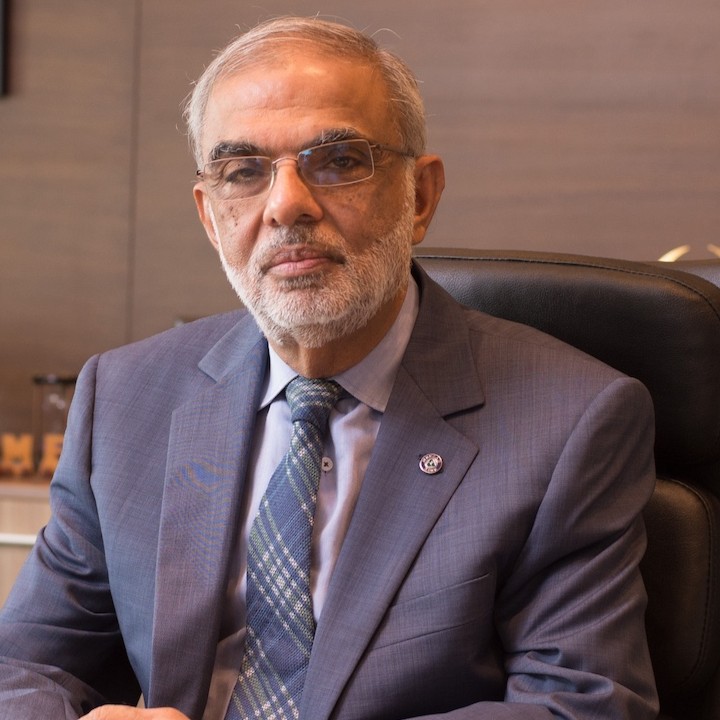
Irfan Siddiqui served as the founding President and CEO of Meezan Bank from 1997 to 2025. He completed his articles with Coopers & Lybrand, London (1975–1979), and qualified as a Chartered Accountant from the Institute of Chartered Accountants in England and Wales. His distinguished career includes several senior management roles, including Chief Executive Officer of Al Meezan Investment Bank Limited, General Manager of Pakistan Kuwait Investment Company, Chairman of Al Meezan Investment Management, Advisor to the Managing Director at the Kuwait Investment Authority, Manager of Finance and Operations at the Abu Dhabi Investment Company, and Senior Business Analyst at Exxon Chemical (Pakistan) Ltd.
Ishaque Khamosh
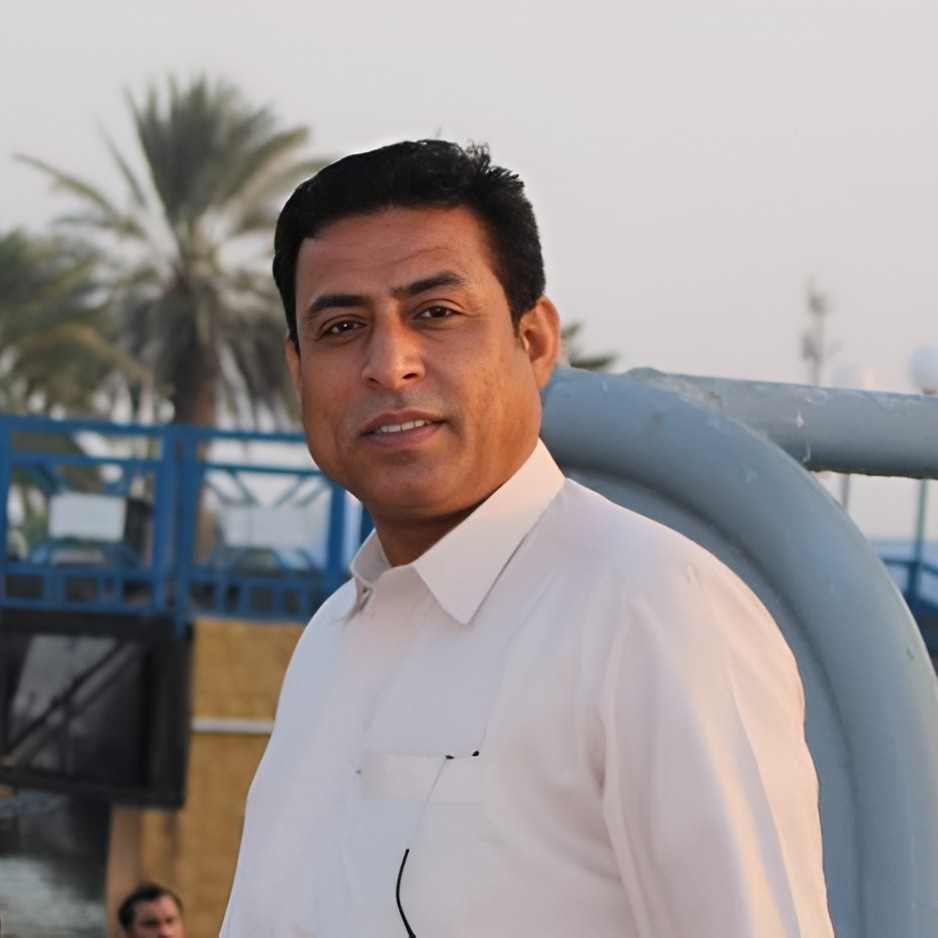
Ishaque Khamosh is a poet, writer, and the author of six Balochi poetry books. He has compiled a Balochi–Urdu–English dictionary, hosts television programmes, and moderates literary events. He is a Member of the Arts Council of Pakistan, Karachi, and serves as Press Secretary of the Balochi Music Promoters Society.
Ishrat Husain
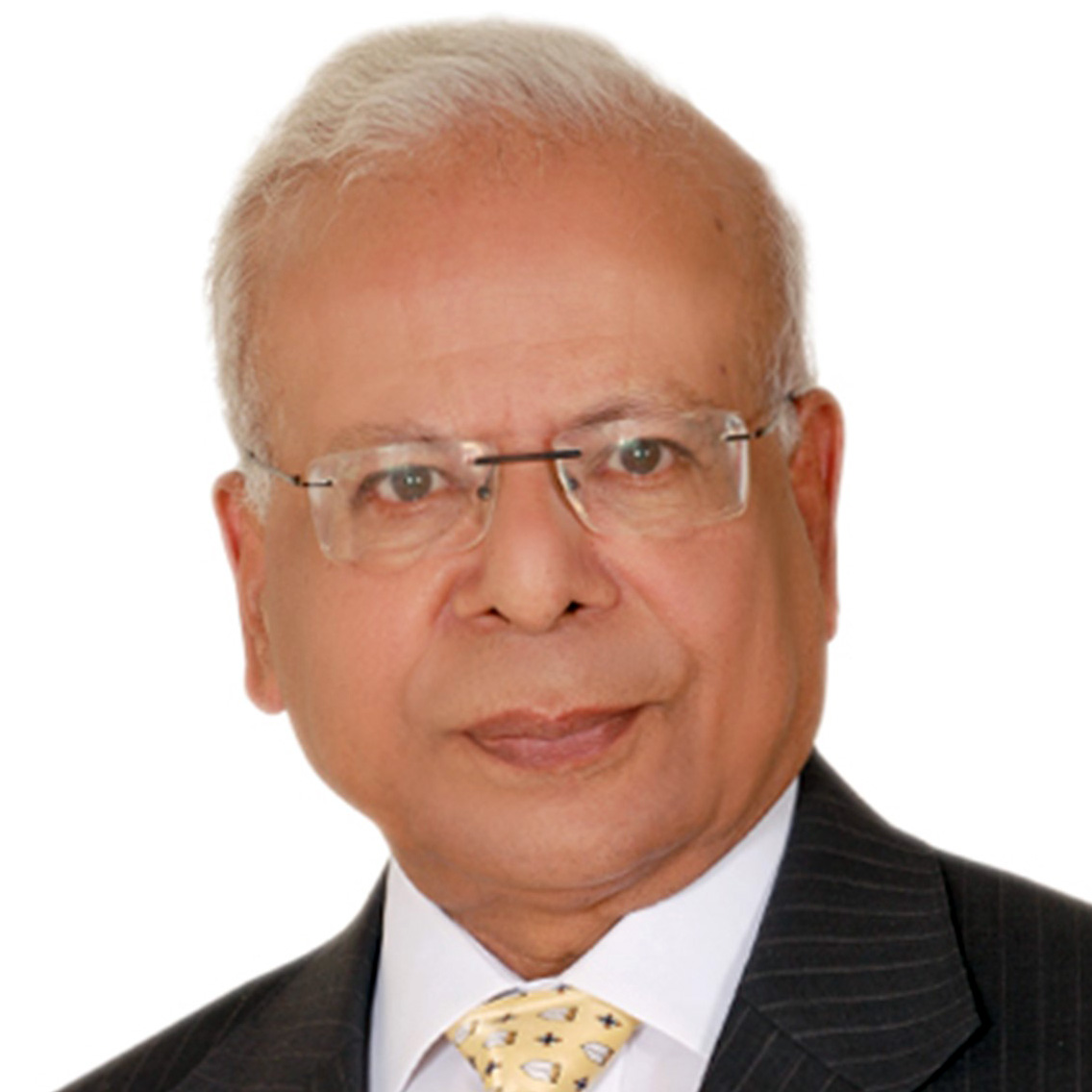
Dr Ishrat Husain is a Professor Emeritus and Chairman of the Centre for Excellence in Islamic Finance at IBA Karachi. Until recently, he held the position of Advisor to the Prime Minister on Institutional Reforms with the status of Federal Minister. Previously, he served as the Dean and Director of IBA, Chairman of the National Commission for Government Reforms, and as the Governor of the State Bank of Pakistan. During his distinguished career at the World Bank spanning over two decades from 1979 to 1999, Dr Husain held various key positions. These included serving as the Resident Representative to Nigeria, heading the Bank’s Debt and International Finance Division, acting as the Chief Economist for Africa, and later as the Chief Economist for the East Asia and Pacific Region. He subsequently became the Bank’s Director of the Poverty and Social Department and later the Country Director for Central Asian Republics. In recognition of his meritorious services, Dr Husain was honoured with the highest civilian award of Nishan-e-Imtiaz in 2016 and the Hilal-e-Imtiaz by the President of Pakistan in 2003. The Banker Magazine of London named him the Central Bank Governor of the Year for Asia in 2005, and he received the Asian Banker Lifetime Achievement Award in 2006. Dr Husain has maintained an active scholarly interest, authoring two dozen books and monographs, over 40 articles in refereed journals, and 34 chapters in books. His notable contributions include ‘Governing the Ungovernable’ and ‘The Economy of an Elitist State.’ As a frequent speaker, he has participated in more than 150 international conferences and seminars since 2006. He has also chaired or served on the boards of several research institutes, philanthropic organizations, and cultural organizations. Ishrat Husain earned a master’s degree in development economics from Williams College and a Doctorate in Economics from Boston University in 1978. He is a graduate of the Executive Development Program jointly sponsored by Harvard, Stanford, and INSEAD.

James Neish
International broadcast journalist James Neish is a news anchor with Asia One News and a former BBC journalist. He is a seasoned host and moderator with a strong track record of interviewing leading international writers. He recently hosted events at the Gibraltar Literary Festival. Since moving to Pakistan in August, he has been blown away by the warmth and hospitality of its people. He is delighted to be joining KLF as a moderator and is looking forward to engaging, thoughtful conversations—almost as much as he enjoys the wonderful Pakistani food.
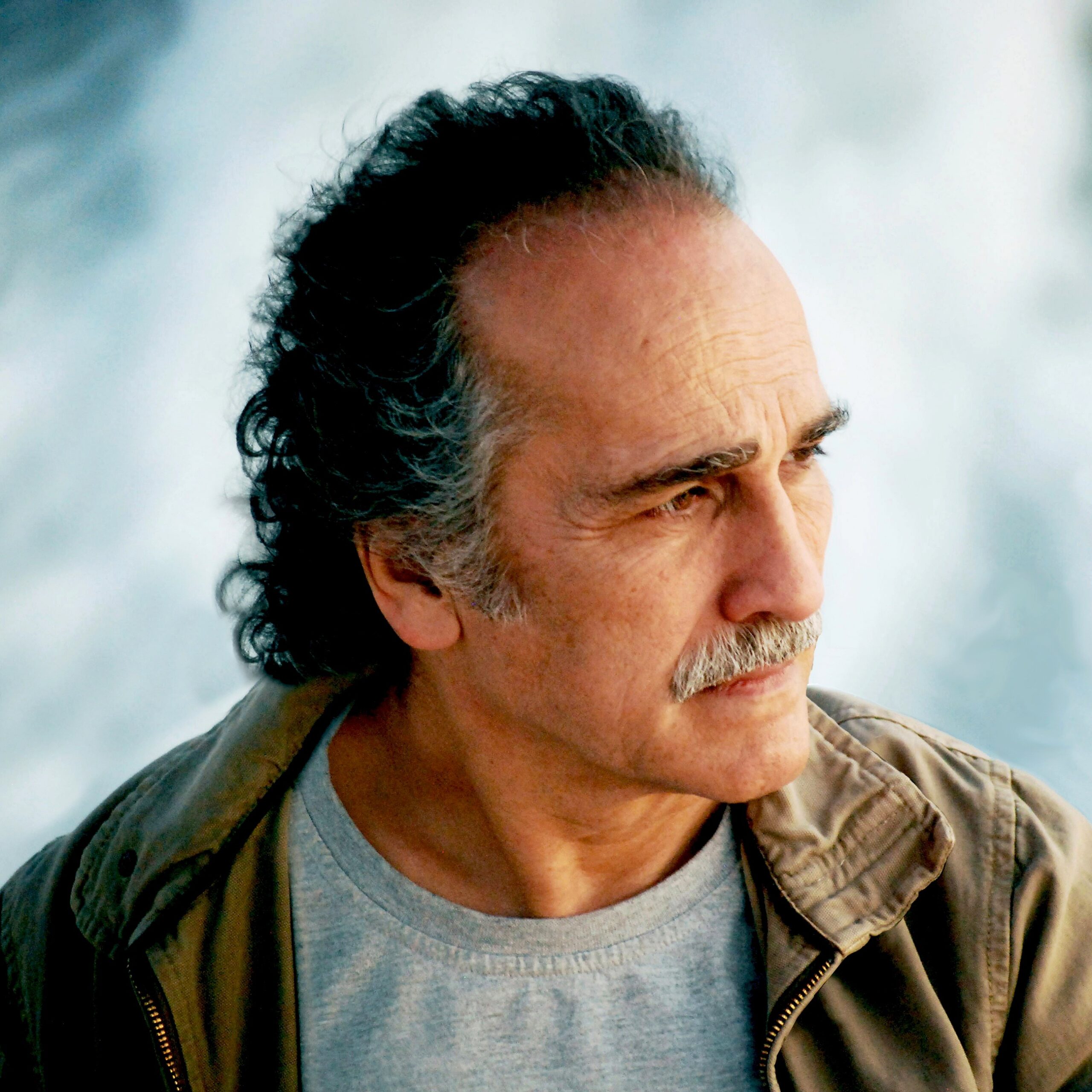
Jamil Dehlavi
Jamil Dehlavi is an independent filmmaker whose career spans over five decades. After reading law at Oxford, he was called to the Bar at Lincoln’s Inn but chose instead to pursue filmmaking, later studying at Columbia University in New York. There, he developed a distinctive symbolic style that weaves together the personal, the political, and the mystical. He has written, produced, and directed numerous internationally acclaimed feature films and documentaries, including Towers of Silence, The Blood of Hussain, Born of Fire, Immaculate Conception, Jinnah, Infinite Justice, Godforsaken, and Seven Lucky Gods. His work has been distributed worldwide and has received multiple awards at international film festivals. A measure of his significance is the British Film Institute’s decision to honour him with a retrospective in 2018.
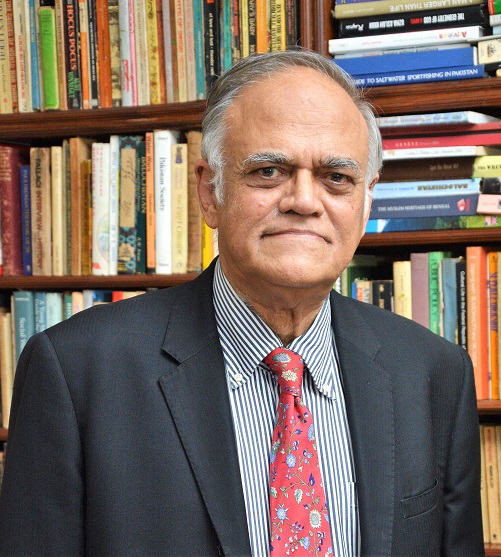
Javed Jabbar
Javed Jabbar is an award-winning writer and filmmaker, policy analyst, former senator and federal minister, with a special interest in voluntary work, communications, environment, education, national and international affairs. In 2021, he wrote and produced the 110-minute documentary film ‘Separation of East Pakistan: The Untold Story’ (www.1971Untoldstory.com) which has so far been viewed by over 500,000 viewers across the world. In 2009, as the producer of ‘Ramchand Pakistani’, he won the Lux Award for the Best Cinema Film of 2008, a film that also won international awards. In 2022, he served as Chairman of the Steering Committee to re-record the National Anthem of Pakistan for the first time after its original recording in 1954. The re-recording and its video have been highly praised. He has to his credit 19 books, including anthologies, and one screenplay. Three political memoirs released in 2021-22 on his work with Benazir Bhutto, Farooq Leghari, Meraj Khalid, and Pervez Musharraf (published by Paramount Books in Pakistan) have been widely lauded and became best-sellers on Amazon/Kindle. The third edition of his book, Pakistan—Unique Origins; Unique Destiny? was published in 2017, along with its Urdu and Sindhi language translations. His anthology of selected writings, Pathways won the UBL Literary Award for the Best Non-Fiction English book at the 9th KLF (2018). Three versions of his book What is Pakistaniat? are prescribed in the curriculum of several education and training institutions. In voluntary work, he is the founder and/or chairman of several leading public service organizations. Details at www.javedjabbar.net
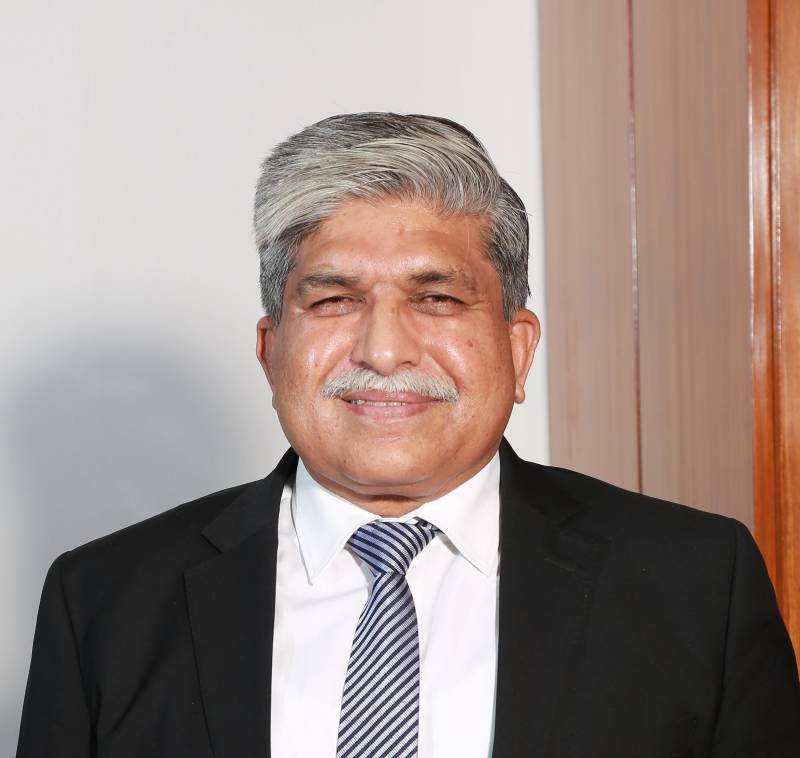
Javed Zia
Ambassador Lieutenant General Javed Zia (Retd.) is a distinguished former senior officer of the Pakistan Army, renowned for his leadership, strategic clarity, and people‑centric approach throughout a 40‑year military career. He held several pivotal appointments, including Commander Southern Command, Director General Rangers Sindh, Deputy Chief of General Staff, and Adjutant General. His tenure in Balochistan earned wide praise for promoting dialogue, trust‑building, and constructive civil‑military engagement during a sensitive period in the province’s history, leading many to regard him as an ‘intellectual general’ known for his measured and responsible approach. After retiring from the Army, Lt.-Gen. Zia continued to serve Pakistan in significant civilian and diplomatic roles. He was appointed Chairman of Sui Southern Gas Company (SSGC) in 2017 and previously held leadership positions at Askari Bank, the Army Welfare Trust, DHA Islamabad, and policy committees of the Fauji Foundation. From 2014 to 2016, he served as Pakistan’s Ambassador to Libya, where he led the evacuation of nearly 8,000 Pakistanis during the conflict—one of the largest and most effective humanitarian operations undertaken by a Pakistani foreign mission. He is a graduate of premier institutions including Command & Staff College Quetta, the U.S. Infantry School at Fort Benning, and the National Defence University, Islamabad. He holds master’s degrees in political science and strategic studies and has been awarded the Hilal‑e‑Imtiaz (Military).

Jeff Koehler
Jeff Koehler writes about art, culture, and food, and is the author of ten books. His most recent title, Matisse in Morocco (Pegasus, 2025), was selected by the Wall Street Journal as one of its “12 Books to Read: The Best Reviews of August” and was the Art Newspaper’s June Book Club pick. It has been praised as “a revealing look at an iconic painter” (Kirkus Reviews) and “a masterful study” (The Arts Fuse). His other works include The Spanish Mediterranean Islands Cookbook and The North African Cookbook (Phaidon), the latter a Le Monde and FNAC Christmas recommendation; Where the Wild Coffee Grows (Bloomsbury), a New York Times Book Review Editors’ Choice; and Darjeeling, winner of the IACP Literary Food Writing Award. His debut, La Paella, remains a perennial bestseller. Koehler’s books have received a James Beard Award, IACP awards, and multiple Gourmand “Best in the World” recognitions. They have been featured in year‑end best‑of lists by the New York Times, Wall Street Journal, National Geographic Traveller, NPR, Science, Nature, and others. Reviewers have described him as “a natural writer and storyteller” (Seattle Times) who “weaves an absorbing narrative” (New York Times Book Review). His writing has appeared in major outlets including the Washington Post, NPR, Wall Street Journal, Saveur, Food & Wine, Vogue Arabia, and the Times Literary Supplement. Born north of Seattle, Koehler studied at Gonzaga University and earned a master’s degree from King’s College London and RADA. He lives between Barcelona, Menorca, and North Africa with his family.
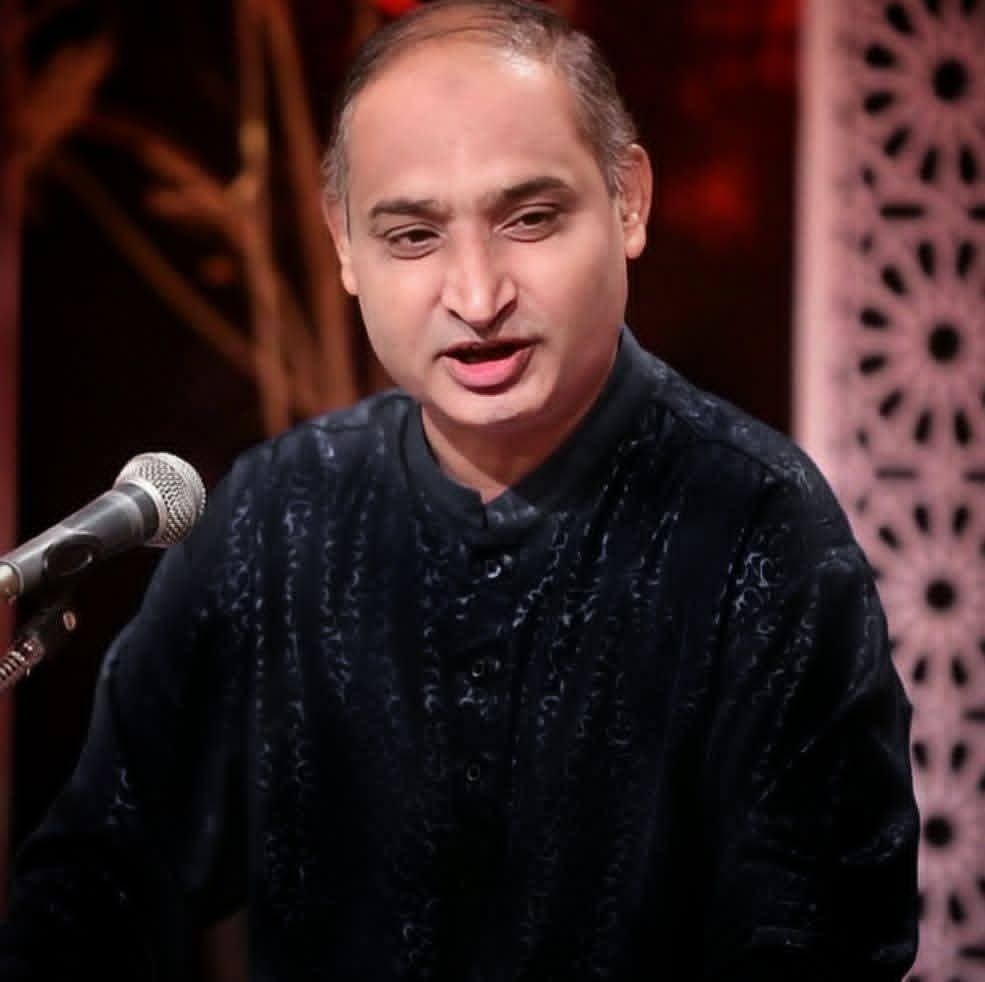
Kashif Hussain Ghayer
Kashif Hussain Ghayer is a contemporary Urdu poet from Nawabshah, Sindh, born on 12 March 1979 and now based in Karachi. Writing under the pen name Ghayer, he is best known for his ghazals that blend classical tradition with modern sensibilities. His first poetry collection, Raste Ghar Nahin Jane Detay (2009), earned him recognition in literary circles, and his work is admired for its fresh imagery, emotional depth, and lyrical expression. Ghayer is regarded as part of the new generation of Urdu poets carrying forward the ghazal form with innovation and passion.
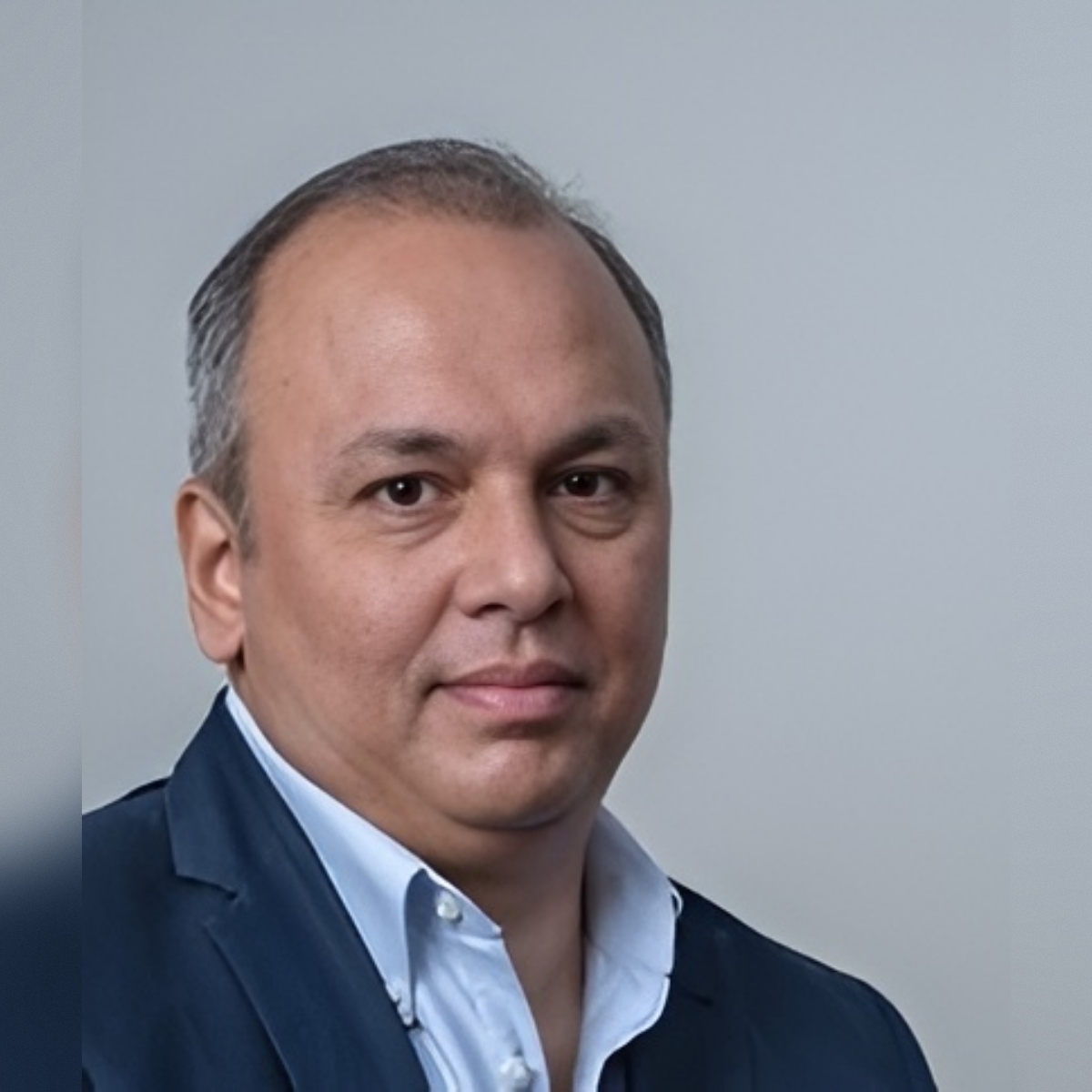
Kazim Saeed
Kazim Saeed is a leading development professional whose contributions span multiple disciplines—energy, where he served as an international advisor to the World Bank; agriculture, as CEO of the Pakistan Agricultural Coalition; and education, as Chairman of Idara-e-Taleem-o-Aagahi. His award-winning book Dou Pakistan: Har Pakistani Gharanay Tak Khushhaali presents a comprehensive strategy for delivering prosperity to every Pakistani household. Kazim Saeed holds a bachelor’s degree in electrical engineering and in the History and Philosophy of Science from Cornell University (USA), and a master’s degree in public Affairs from Princeton University (USA).
KG Stanx
Formed in 2020, KG Stanx is a powerhouse rap trio from Gizri, Pakistan, featuring Affo, Shobi, and Bablay—three artists who embody grit both on and off the mic. Since breaking out with their debut track “Sab Ko Salam Mera,” the group has steadily carved out a place in Pakistan’s hip‑hop scene while balancing demanding day jobs: Affo and Bablay as professional chefs, and Shobi at a well‑known play café. Their remarkable journey is captured in the raw and compelling documentary W.R.A.P., directed by Saba Karim Khan. The film offers an intimate and unfiltered look at their relentless hustle, the sacrifices behind the scenes, and the reality of pursuing hip‑hop dreams against all odds. From the streets of Gizri to the big screen, KG Stanx represents authenticity, perseverance, and the unstoppable spirit of Pakistani rap.
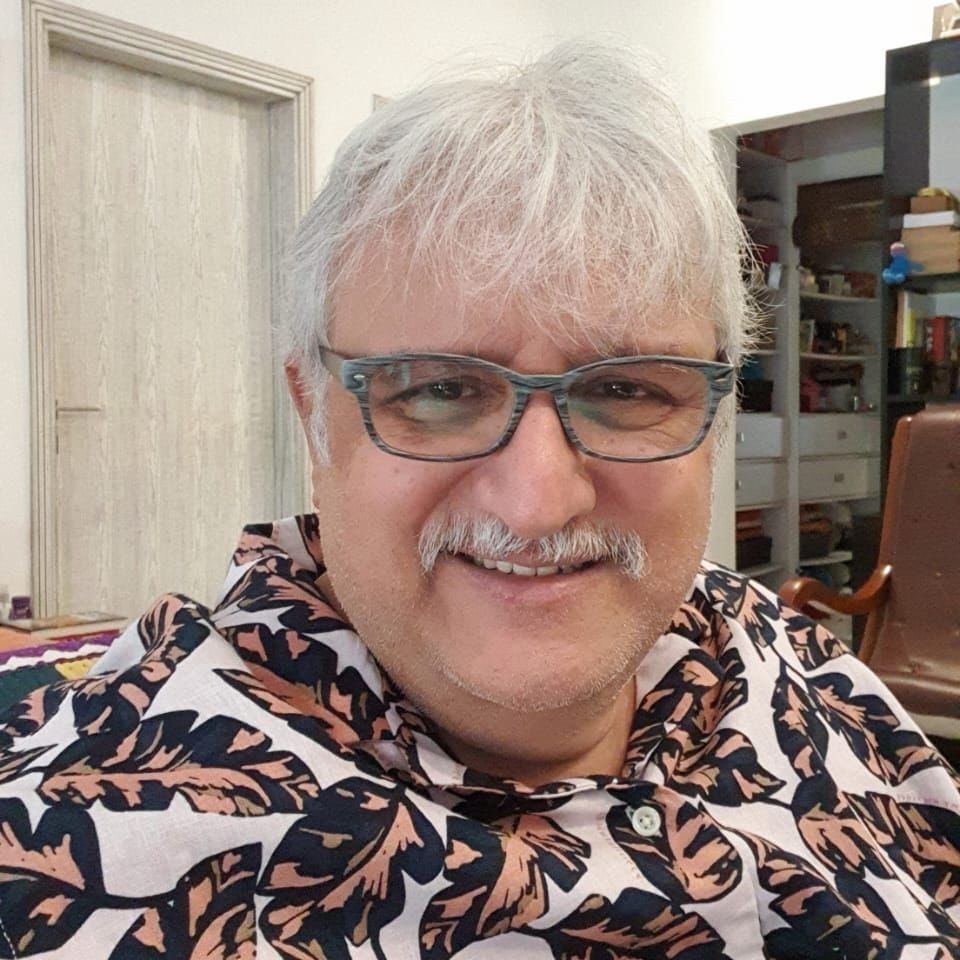
Khaled Anam
Khaled Anam is a singer, actor, songwriter, theatrical producer, radio presenter, and founding member of Grips Theatre Pakistan. He trained with Grips Theatre in Germany and earned his Master’s from Karachi University. He translated and re‑recorded songs for over 100 Urdu episodes of Open Sesame and has performed widely in Pakistan and abroad. He is the author of Bachon Kay Geet and an ambassador for the Children’s Literature Festival. Anam received the Goethe‑Institut Award of Merit and the President’s Pride of Performance.
Khurshid Rizvi
Professor Dr. Khurshid Rizvi is a distinguished scholar of oriental languages. He is fluent in Arabic, Persian, Urdu, English, and Punjabi. In 2008, in recognition of his contributions to literature, he was awarded the Sitara‑i‑Imtiaz by the Government of Pakistan. He is currently associated with Government College University, Lahore, as Professor Emeritus. Dr. Rizvi also holds the distinction of being a member of the Arabic Language Authority in Cairo—an honour previously conferred on only one other Pakistani, Abdul Aziz Memon. He is the recipient of numerous literary awards, including the Ahmad Nadeem Qasimi Award (2005), Ahmad Faraz Literary Award (2012), Khalid Ahmad Award (2013), UBL Literary Excellence Award for Urdu Poetry (2013), and the Majlis‑e‑Farogh‑e‑Urdu Adab Award, Doha, Qatar (2015).
Khusro Mumtaz
Khusro Mumtaz has been a regular opinion columnist for various national newspapers and is an award‑winning film, theatre, and music critic. He has served on the boards of several NGOs and is the founder of the Humsafar Cancer Support Group. To his embarrassment, Khusro also belongs to the world of banking and finance. He will be reading from a set of poems written for his late wife, who passed away from a brain tumour in 2022. Khusro is currently working on a couple of fiction projects.
Kishwar Naheed
Kishwar Naheed is one of Pakistan’s most renowned feminist poets. Her first collection of poems, ‘Lab-i-Goya’ (1968), earned her the prestigious Adamjee Prize for Literature. She is the founder of Hawwa (Eve), an organization dedicated to empowering women economically. Kishwar Naheed has also held the position of Director General of the Pakistan National Council of Arts (PNCA). In recognition of her contributions, she has received numerous awards, including the prestigious Sitara-i-Imtiaz in 2000. Her poetry has been translated into several languages, including English, French, and Italian. Oxford University Press has not only published her original works in Urdu (‘Intikhab-e-Kalam: Kishwar Naheed’ and ‘Pakistan ki Tehzeeb-o-Saqafat’) but also English translations of her works (‘The Distance of a Shout’ [poetry], ‘A Bad Woman’s Story’ [memoirs], and ‘The Culture and Civilization of Pakistan’). In 2022, the Government of Pakistan honored her with the Hilal-e-Imtiaz, the second-highest civilian award, in recognition of her exceptional contributions to literature.

Laline Paull
Laline Paull is a bestselling author whose three novels—The Bees, The Ice, and Pod—have been shortlisted for prizes and critically acclaimed. She is fascinated by the natural world and human psychology, and in her most recently completed manuscript, A Passage to Hendon, she explores themes of colonization, immigration, and inheritance. Her first novel, The Bees, is in development as a hybrid theatrical/VR project, and she has additional storytelling collaborations with tech partners in the pipeline.
Madad Ali Sindhi
Madad Ali Sindhi is a renowned Pakistani writer, columnist, and journalist. He is currently serving as the Federal Minister for Education, National Harmony, and Youth Affairs in the interim government. He has made significant contributions to Sindhi literature and journalism. He has authored several books on the history and culture of Sindh and has been honoured with the Pride of Performance award in 2021 for his services to Sindhi literature.
Madeline Clements
Madeline Clements is Senior Lecturer in English Studies at Teesside University, specializing in postcolonial and South Asian writing, particularly Pakistani literature in English and translation. Her research also engages with visual art from Pakistan and South Asian art in Britain. She earned her PhD at the University of East London (2014) on portrayals of Muslims and Islam in post-9/11 South Asian Muslim fiction. Before joining Teesside in 2015, she taught at Forman Christian College, Lahore, and completed a residency at the National College of Arts. Madeline is the author of Writing Islam from a South Asian Muslim Perspective: Rushdie, Hamid, Aslam, Shamsie (Palgrave, 2015). Her work appears in journals such as Wasafiri, Journal of Postcolonial Writing, and edited collections including Imagining Muslims in South Asia and the Diaspora and Sultana’s Sisters. She has reviewed for the Times Literary Supplement and Dawn, written entries for the Literary Encyclopedia, and curated exhibitions of Pakistani art in Karachi and the UK. Her current research explores minority representation, free speech, and cultural activism in Pakistan. She has led projects including Women Writing Pakistan (QR-GCRF), Editing Women (QR-Participatory Research), and Editing Women in the Archives (Impact Acceleration Account, ongoing), and was Principal Investigator on the AHRC-funded network World Making Words (2024–2025). Madeline supervises PhDs on African literary websites, women’s life-writing in Kerala, and curatorial diversity. She welcomes proposals on postcolonial and South Asian writing, Pakistani literature and art, literary activism, and cultural representations of religious minorities.
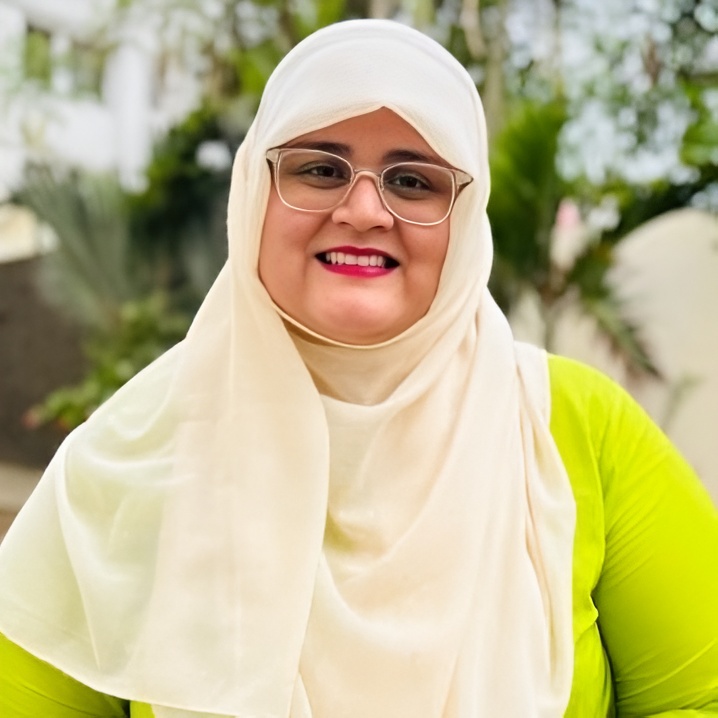
Madiha Shaikh
Madiha Shaikh is an educator and changemaker whose journey with Kiran Foundation began in 2015 with a simple act of seeking better education for her support staff’s children—an act that evolved into a lifelong calling. Born and raised in Lyari, she found deep purpose in driving transformation through education and emotional well‑being alongside Saze Khatri, the founder of Kiran Foundation. From teacher to Deputy to the Chairperson and now Head of Education, Madiha has grown into a compassionate leader shaping the next generation of learners and educators. With degrees in Biosciences and Education from SZABIST, along with further studies in Leadership and Quranic and Hadith Sciences, she blends intellect with empathy. Today, she stands as a proud protégé of the Kiran mission, nurturing empowered mothers, inspired youth, and a movement of transformation across Pakistan.
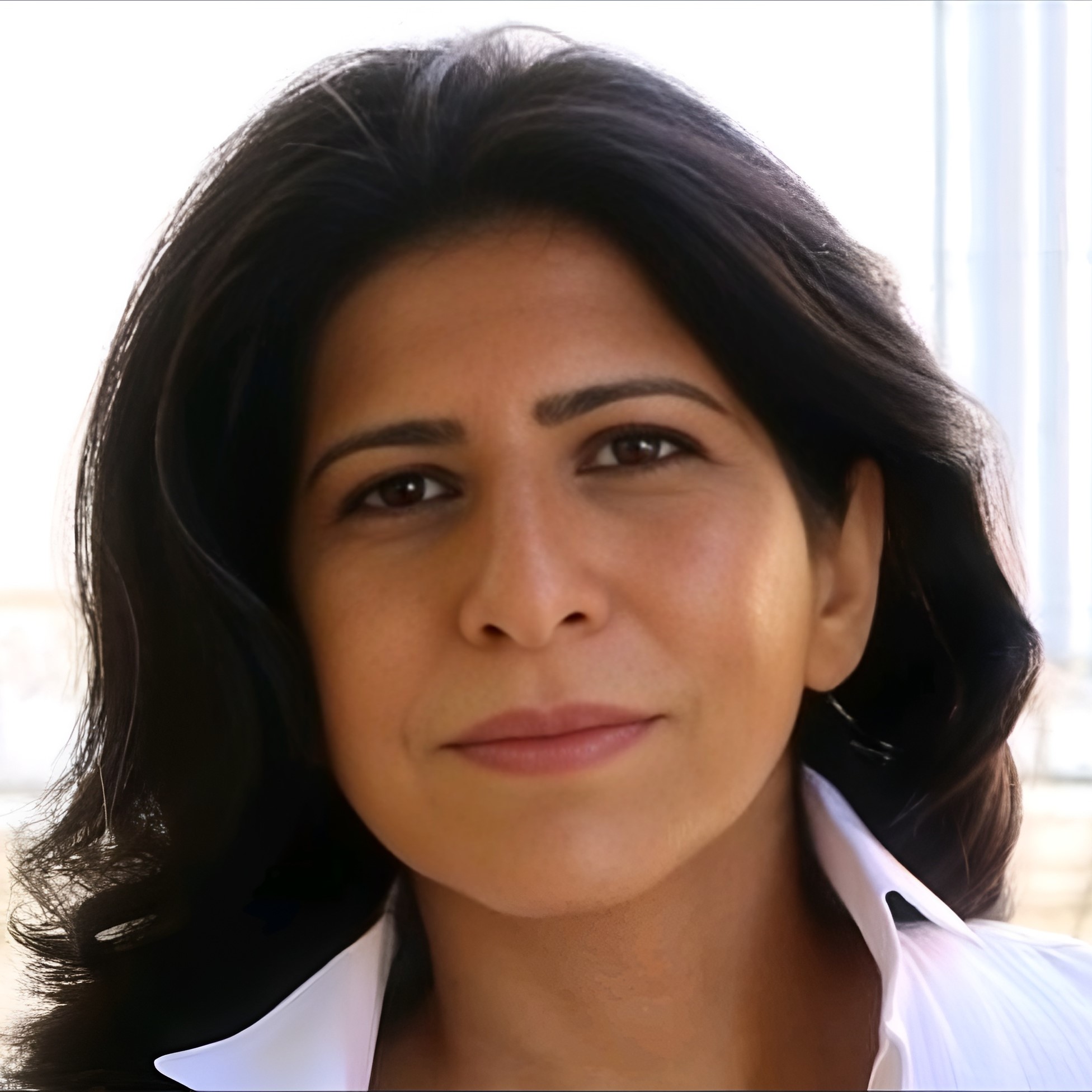
Mahnaz Malik
Mahnaz Malik serves as one of seven judges on the World Bank Sanctions Board, the independent tribunal responsible for making final decisions in contested cases of sanctionable misconduct across World Bank Group projects. A barrister and arbitrator at Twenty Essex Chambers in London, she made history as one of the youngest arbitrators ever appointed to the World Bank’s ICSID Annulment Committee—and the youngest woman to hold this distinction. A Cambridge graduate called to the Bar in England and Wales and in New York, she has been recognized as the Financial Times Legal Innovator of the Year. Alongside her legal career, Mahnaz is an acclaimed author whose work has been featured on BBC World Service. Her children’s book ‘Mo’s Star’, published by Oxford University Press, has been translated into Urdu by celebrated poet Fahmida Riaz and into Arabic by Fatima Sharafeddine. The audio edition was directed by Michael Radford and narrated by Vidya Balan and Joseph Fiennes. The book garnered praise from King Charles. A Fellow and Trustee at Hughes Hall, Cambridge University, she has established charities that have sent hundreds of children to school and freed over 300 from detention in Pakistan. She plays polo and takes a keen interest in boxing, sponsoring sporting opportunities for underprivileged girls in Lyari and Keamari in Karachi.
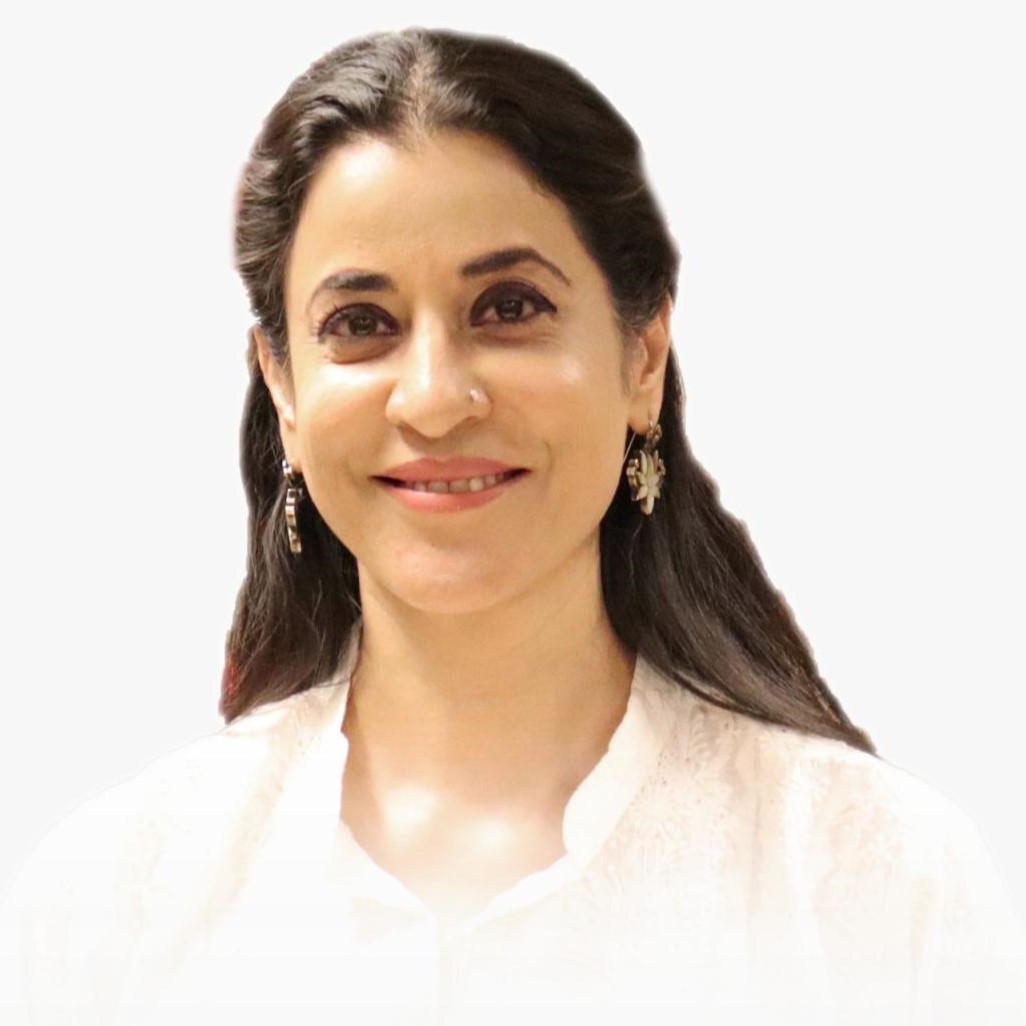
Malahat Awan
Malahat Awan is an experienced professional with nearly 30 years of work in education, corporate relations, and cultural development. She currently serves as Director of Alumni Affairs, Resource Mobilization, and Corporate Relations at IBA Karachi, where she leads initiatives to strengthen engagement with alumni, donors, and corporate partners. Her efforts play a key role in supporting IBA’s mission by building strategic relationships and securing essential funding for the University. She is also the President of the Tehzeeb Foundation, a nonprofit organization dedicated to promoting music, fine arts, and literature in Pakistan. Under her leadership, the Foundation has become an important platform for preserving, showcasing, and celebrating the country’s rich artistic heritage. Through her work at IBA and the Tehzeeb Foundation, she continues to make a lasting impact on both education and the arts.
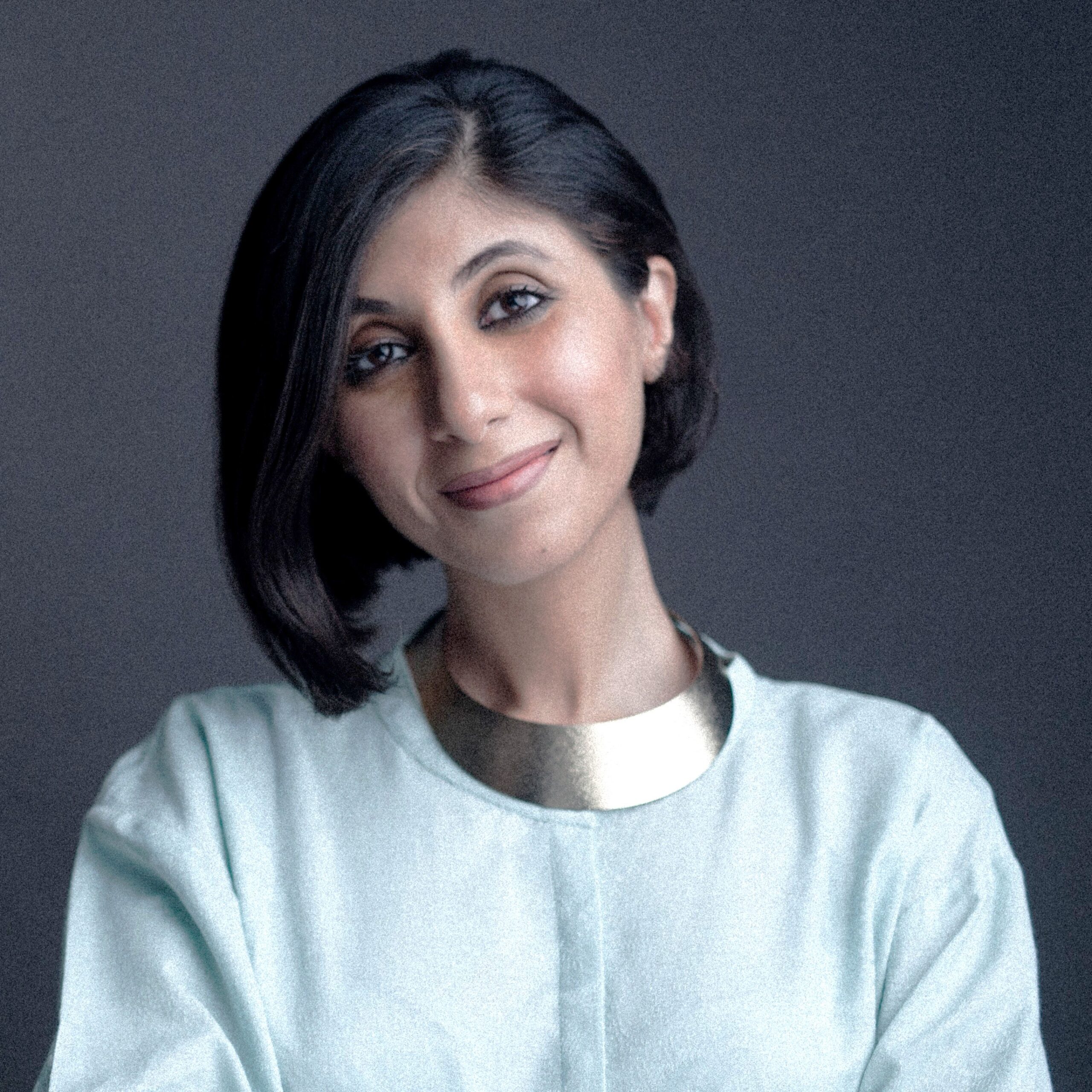
Maliha Rehman
Maliha Rehman is a fashion and lifestyle journalist with over two decades of experience. She has written for a number of local and international publications, including The Express Tribune, The News, Hello! Pakistan, Hello! India, The Friday Times, and The Daily Times. She currently writes regularly for Dawn newspaper and for The Business of Fashion, UK. She also has a strong social media presence through her YouTube channel, Gloss Etc by Maliha Rehman, her personal Instagram page, and her website, Gloss Etc. Bridging the gap between traditional journalism and digital media, she is well recognized as a credible voice in her field, known for her honest opinions, forthright analysis, and no-holds-barred interviews. She continues to build her repertoire with consistent write-ups and digital content, covering significant events and projects and interviewing key figures in Pakistani fashion and entertainment.
Maniza Naqvi
Maniza Naqvi is a novelist and short story writer. Her five published novels are Mass Transit, On Air, Stay with Me, A Matter of Detail, and The Inn. Sarajevo Saturdays is a collection of her short stories and poems. Her book, A Guest in the House is a memoir that chronicles her time at the Pioneer Book House in Karachi and provides a lens into the history of the city. Her storytelling from this memoir was featured on The Moth Radio Hour. Her short stories have been included in several anthologies. She is the Founder and CEO of The Little Book Company (www.littlebookcompany.net), a start‑up e‑book platform and print‑on‑demand service for readers, publishers, authors, and booksellers. She has 30 years of experience in Social Protection at the World Bank. She is also visiting faculty at IVS, Karachi, where she teaches a course she designed titled ‘Approaching the City through Literature and Creative Writing.’
Masroor Pirzado
Masroor Pirzado is a poet and writer who works in both Sindhi and Urdu. Five collections of his poetry have been published. He has also translated selected works of renowned poets such as Rumi, Mansur Hallaj, Pablo Neruda, Nizar Qabbani, Nazim Hikmet, Rasul Gamzatov, and Sheikh Ayaz, among others. Pirzado is also a television and YouTube host and has conducted interviews with several poets and writers. By profession, he is a veterinarian and is currently working in Karachi.
Mazhar Abbas
Mazhar Abbas is a prominent Pakistani journalist, analyst, and long‑time advocate for press freedom. With twenty‑seven years of experience in the field, he has worked with leading news organizations and served in key roles, including Secretary‑General of the Pakistan Federal Union of Journalists (PFUJ) and Deputy Director of ARY News. A regular presence on television talk shows and in national newspapers, he is widely respected for his incisive commentary on political and social issues. His commitment to journalists’ rights has earned him multiple honours, including the prestigious CPJ International Press Freedom Award.
Mehboob Zafar
Mehboob Zafar is one of the renowned poets, writers, researchers, and translators of Urdu. He was born on 4 January 1956 in Talagang, a tehsil of District Chakwal, and spent his early years in Sindh, where his father served in the police service. After completing his matriculation in Jacobabad, he moved to Karachi for higher studies and earned a master’s degree in Urdu literature. Very few literary figures excel simultaneously in creativity, research, and translation; Mehboob Zafar is among those rare individuals. He has distinguished himself as a poet while also undertaking demanding work in research and translation. His contributions have been widely appreciated both nationally and internationally, and serious critics of Urdu literature have acknowledged his work as a valuable contribution to the field. In addition to Urdu, he has a strong command of Hindi, Sindhi, Punjabi, Chachi, and Hindko. He has written poetry in Urdu and Punjabi and translated poetry into Hindi and Sindhi, with several of these translations published in book form. His published works include Meray Bhi Hain Kuchh Khawab, Jadeed Sindhi Afsanon Se Intikhab, Jadeed Hindi Adab Se Intikhab, Ahmed Faraz – Shakhsiat Aur Fan, Modern Urdu Ghazal, Modern Urdu Nazam, Ghazal Asasa, Nazam Asasa, Intikhab-e-Kalam Mirza Muhammad Rafi Saudā, and Intikhab Pakistani Adab. Four additional books are currently in print. Beyond his work as a poet, writer, researcher, and translator, he heads the well-known literary organization Zawya and plays a key role in organizing literary activities in the twin cities. He hosted and edited Radio Pakistan’s programme Ifkar from Islamabad for fifteen years and conducted numerous literary programmes and poetry sessions on Pakistan Television and private channels. He has also represented Pakistan as a poet in several countries. Mehboob Zafar began his career in the Pakistan Navy and was later deputed to serve at Pakistan’s embassies in India and the United Kingdom, where he further refined his literary and creative abilities. In recognition of his contributions to literature and poetry, he has been honoured with the Ghalib Adabi Award, the Bahadur Shah Zafar Adabi Award, and the Ahmed Faraz Adabi Award.
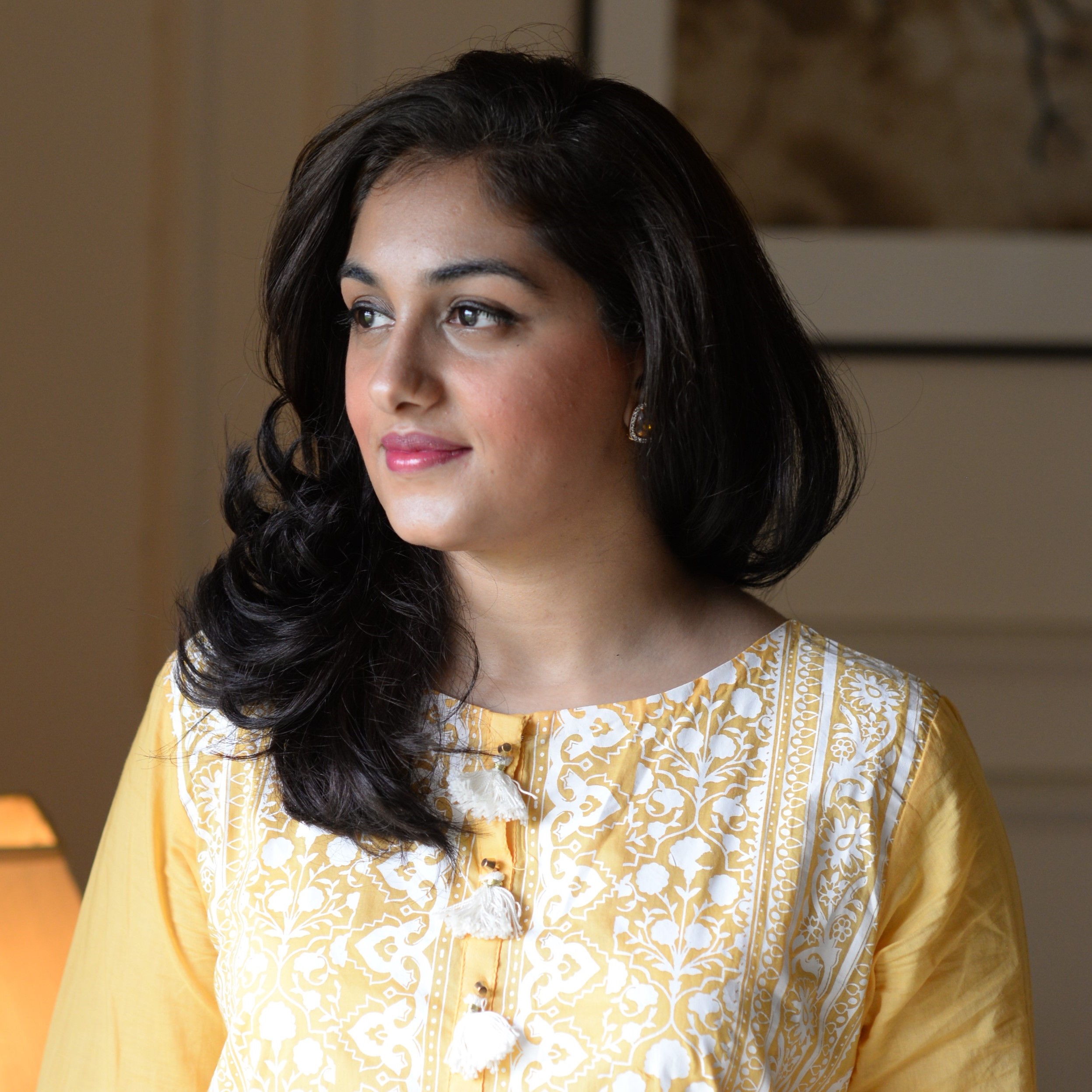
Mehr Husain
Mehr Husain is the founder of ZUKA Books and ZUKA Accessories, sustainability-oriented publishing and design houses that advocate for literature, local craftsmanship, and gender-inclusive creative models. Both organisations are members of the UN Publishers Compact and the UN Fashion & Lifestyle Network for sustainable practices. Mehr has authored Pakistan: A Fashionable History and is recognised as a UN Women Asia-Pacific SME Champion Award nominee. She is also the first Pakistani woman to be shortlisted for the Prix Voltaire publishing award. In addition, she is an International Publishing Fellow with the British Council and a sustainability advocate appointed by the Swarovski Foundation.
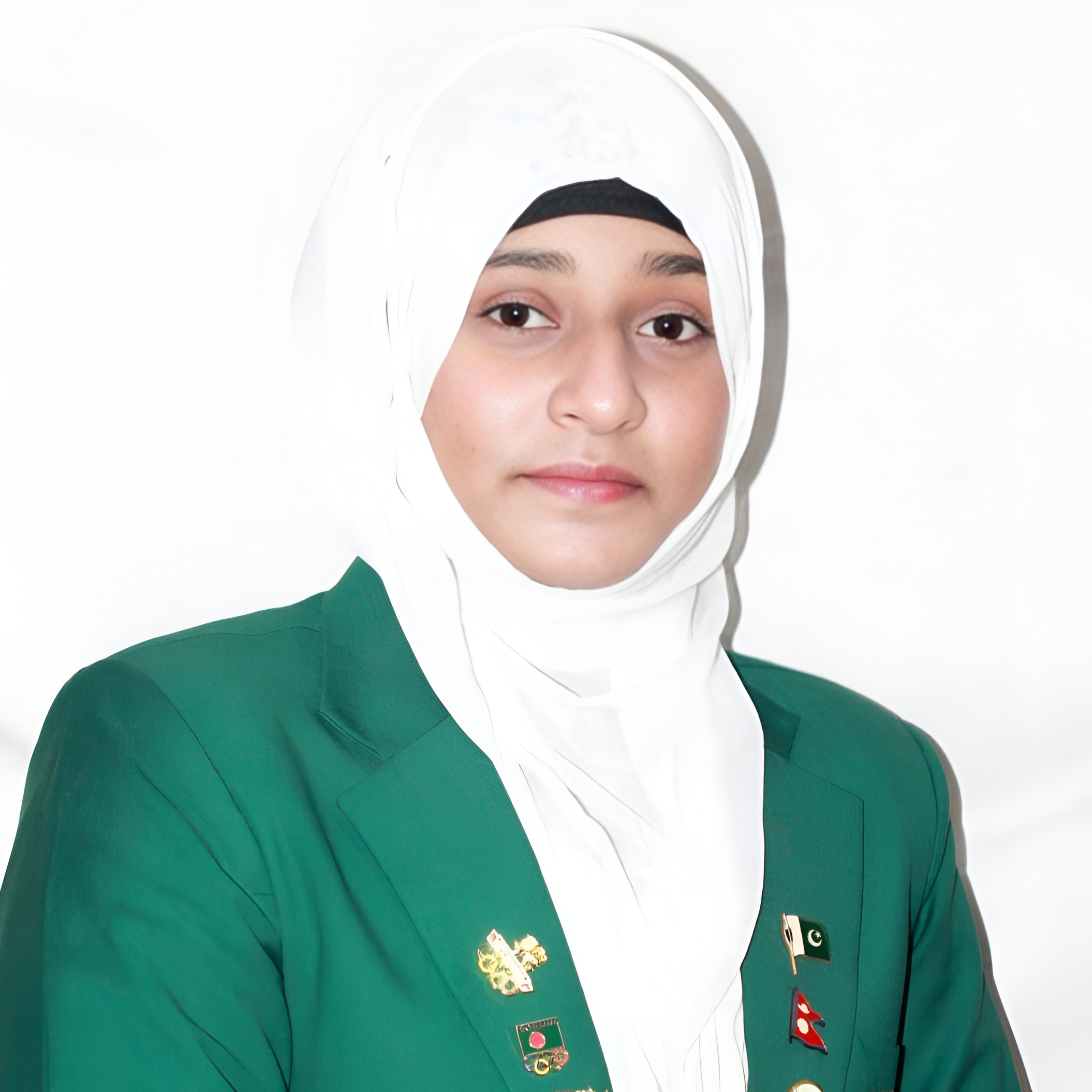
Mehreen Baloch
Mehreen Baloch is an international boxer from Lyari, Karachi, representing Pakistan at both national and international levels. She made history as Pakistan’s first woman boxer to participate in the 2022 Commonwealth Games in Birmingham, United Kingdom. She won a bronze medal at the 13th South Asian Games in 2019 in Nepal. Her achievements include a gold medal at the 33rd National Games 2019 in Peshawar; gold medals at the 2nd Women’s National Championship 2021 and the 3rd Women’s National Championship 2022; a gold medal at the Interdepartmental National Boxing Championship 2023; a silver medal at the 34th National Games 2023 in Quetta; and a gold medal at the 35th National Games 2025 in Karachi.
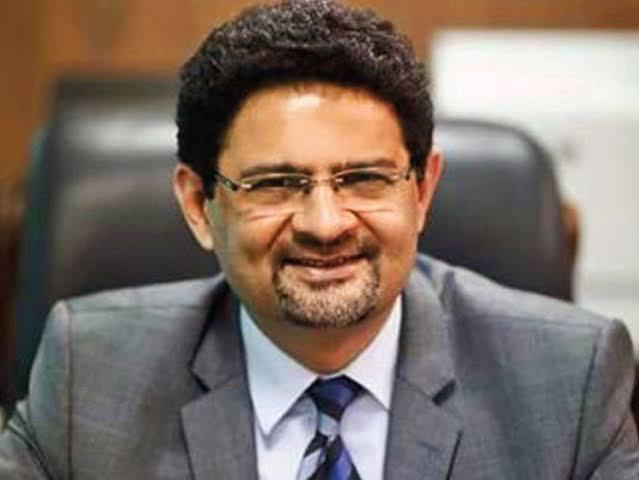
Miftah Ismail
Miftah Ismail served as the Federal Minister of Finance from April 2022 to September 2022. He had previously served in the same office, from April 2018 to May 2018 in Khaqan Abbasi’s cabinet. He has also served as Special Assistant to the Prime Minister, and as Chairman, Board of Investment, the Privatisation Commission and the Sui Southern Gas Company. A professional economist, Dr Ismail worked briefly for the International Monetary Fund (IMF). Later, he became CEO & Director of Ismail Industries Ltd. He has also served as President of Karachi American School and as Visiting Faculty at the Institute of Business Administration. Dr Miftah Ismail holds a bachelor’s degree from Duquesne University, Pittsburgh, a master’s degree in public policy and administration from the Wharton School, University of Pennsylvania, and a PhD in Public Finance and Political Economy from the Wharton School of Business, University of Pennsylvania.

Moeen Faruqi
Moeen Faruqi is an artist and English language poet living in Karachi. His paintings have been exhibited widely within Pakistan and internationally in Canada, Italy, Singapore, Bangladesh, UK and India. His poems have been published in various literary journals in Pakistan and abroad, including ‘Poetry from Pakistan: An Anthology’ (1997), ‘Dragonfly in the Sun: An Anthology of Pakistani Literature’ (1997), and ‘The Poetry of Men’s Lives’ (2004). His poems have also appeared in Aleph (Pk.) Verse, Orbis, The Rialto (UK), Rattle (USA), Cyphers (Ire.) and in Vallum (Canada).
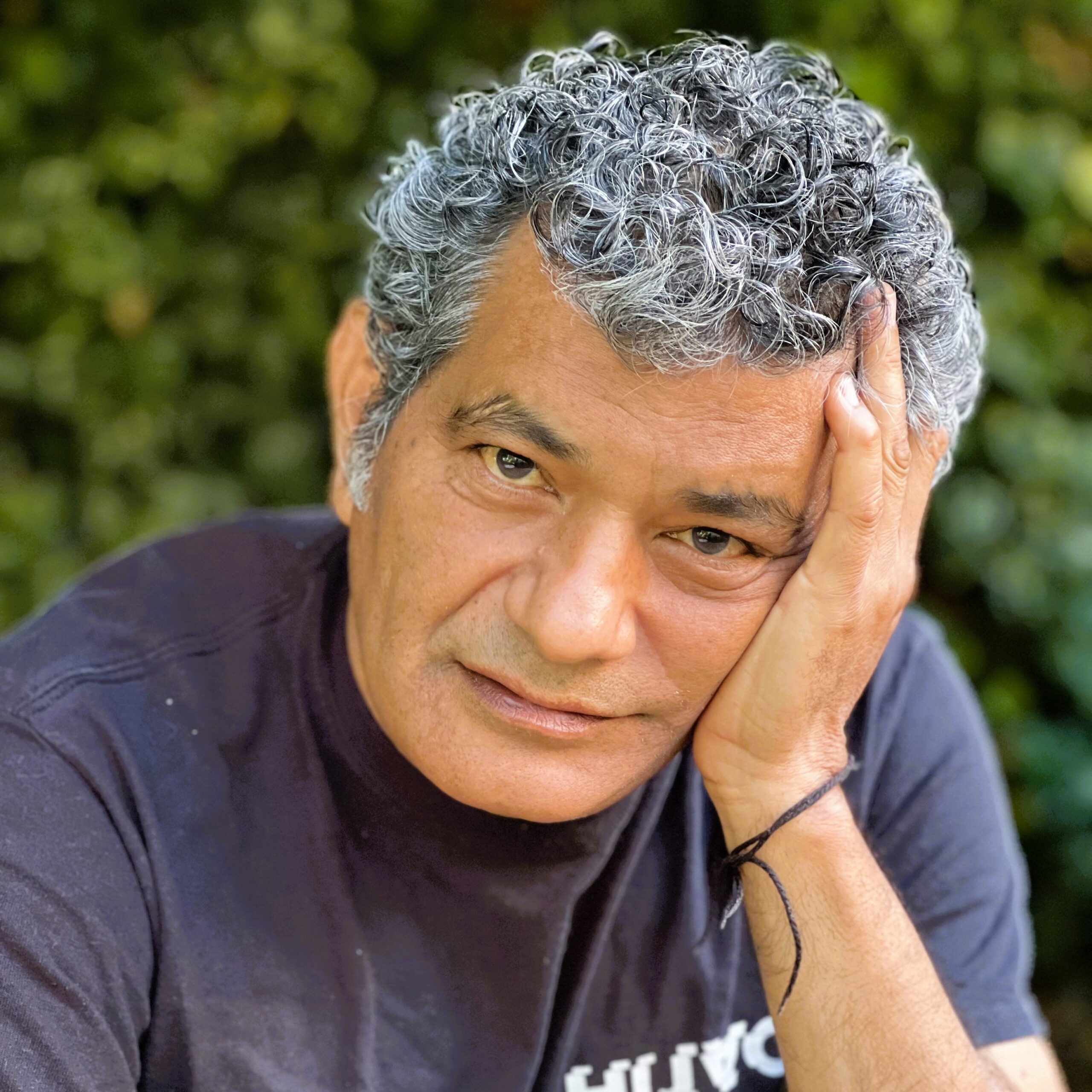
Mohammed Hanif
Mohammed Hanif is the author of the novels A Case of Exploding Mangoes (2008), which was longlisted for the Booker Prize and shortlisted for The Guardian First Book Award; Our Lady of Alice Bhatti (2011), shortlisted for the 2012 Wellcome Prize; Red Birds (2019); and the recent Rebel English Academy. He also vlogs for BBC Urdu and BBC Punjabi.
Mohsin Sayeed
Mohsin Sayeed is one of the pioneers of fashion journalism in Pakistan, contributing across electronic, print, and digital media. He has worked as a design consultant and adviser to leading designers and multi‑brand stores. He is currently a member of the outreach committee for the Karachi Biennale 2017. In addition, he serves as a cultural and social commentator for various print and online publications as well as television channels.

Muhammad Ali
Muhammad Ali is a senior policymaker and corporate leader currently serving as Adviser to the Prime Minister with the status of Minister of State, overseeing Pakistan’s privatisation agenda and chairing the Privatisation Commission. He previously served as the country’s Caretaker Minister for Energy, Power & Petroleum, bringing to government more than 30 years of diverse domestic and international experience across finance, technology, digital media, real estate, manufacturing, and public‑sector reforms.
Muhammad Azfar Ahsan
Muhammad Azfar Ahsan is a former Minister of State and Chairman of the Board of Investment, Government of Pakistan. He is the Founder of Corporate Pakistan Group (CPG). He is the Founder & CEO of Nutshell Group (Nutshell Communications, Nutshell Consulting & Nutshell Conferences. He has hosted more than 500 national and international conferences, seminars, training workshops, webinars, and group discussions in Pakistan; Singapore; Malaysia; Sri Lanka; Dubai; and Bahrain. He is the thought leader behind Pakistan’s biggest corporate gathering leaders in Islamabad Summit. He is a board member of the Institute of Financial Markets of Pakistan, RYTS Global, and an advisory board member of Shaukat Khanum Cancer Hospital Karachi. Azfar is the President of the Marketing Association of Pakistan. Azfar is working on investment projects with the governments of Saudi Arabia and Uzbekistan.
Mujahid Barelvi
A leading journalist, analyst, and commentator, Mujahid Barelvi has been appearing on television without a break, for the last two decades. He has written articles for political journals and newspapers, and has authored books on Afghanistan and Balochistan, as well as a book in memory of Habib Jalib. An avid globetrotter, he has also penned a travelogue “Khuwahish-e-Safar main Rahay” about his traveling experience with all the heads of state and participation in numerous conferences. Currently he is hosting program ‘Live with Mujahid’ on GTV News.
Muneera Alavi
Muneera Alavi is an experienced educator with over 30 years of service as a teacher and trainer. She brings strong expertise in school administration and plays a key role in supporting the school community. Muneera works closely with parents, teachers, and students to build positive, trusting relationships. She believes schools thrive through collaboration and open communication, and she is known for fostering supportive, inclusive learning environments where students feel valued and supported.
Muneeza Shaikhali
Muneeza Shaikhali brings over three decades of dedicated experience in the field of education. Her professional journey began in the classroom and has since evolved through roles in pastoral care, academic coordination, and school leadership. A committed lifelong learner and mentor, Muneeza has worked closely with hundreds of students and an equally wide range of education professionals. These interactions have shaped her educational philosophy, sharpened her insights, and enriched her perspective on teaching, learning, and leadership.
Muneeza Shamsie
Muneeza Shamsie (Sitara-e-Imtiaz) is the author of Hybrid Tapestries: The Development of Pakistani Literature in English and editor of four anthologies of Pakistani English writing, including the 2025 publication In the New Century: An Anthology of Pakistani Literature in English. She received the Gold IPPY and Bronze Foreword Awards in the US for the American edition of her third anthology, And the World Changed: Contemporary Stories by Pakistani Women. She is an Area Editor for the online Literary Encyclopedia, Bibliographic Representative (Pakistan) for Literature, Critique and Empire Today, and serves on the advisory boards of The Journal of Postcolonial Writing, the DSC Prize for South Asian Literature, and the International Centre for Pakistani Writing in English. She has served on various literary juries and was the Regional Chair (Eurasia) of the Commonwealth Writers’ Prize (2009–2010). Based in Karachi, she contributes regularly to the Pakistani press. [Photograph credit: Zain Mustafa]
Muqaddas Abdul Rasheed
Muqaddas Abdul Rasheed is a dedicated footballer from Karachi with a strong academic and athletic background. She completed her matriculation from Bahria College NORE-1 and her intermediate education from DHACSS Degree College Phase-6. She aims to pursue higher education in sports sciences. In 2024, she played in the National Seventh Women’s Club Championship hosted by the Pakistan Football Federation (PFF) and received national certification. She is the Team Coordinator and a key visionary behind Kiran Foundation’s football team, and she is also a former player of the prestigious Jafa Soccer Academy in Lyari. Additionally, she trained with the professional squad of Paris Saint-Germain in Doha, Qatar, and received certification as a trained football player.
Murad Moosa Khan
Dr Murad Moosa Khan is Professor Emeritus in the Department of Psychiatry and a Senior Scientist at the Brain and Mind Institute at the Aga Khan University. He is a Member of the Royal College of Psychiatrists (UK), holds a PhD from the University of London, and is a former President of the International Association for Suicide Prevention (IASP). He has conducted seminal research on suicide and mental health in Pakistan and other Islamic countries. His clinical and research interests include socio-cultural factors in suicide, the mental health of women and the elderly, and medical ethics. He is the co-editor of five books and a frequent contributor to the lay press on social and mental health issues.
Mushk Kaleem
Mushk Kaleem is a leading Pakistani supermodel and entrepreneur who has used her platform to champion body positivity and mental health awareness. After graduating with a BBA from IBA Karachi, she rose to international prominence, representing Pakistan at Milan Fashion Week and earning multiple Lux Style Awards.
Nadia Naqi
Nadia Naqi is a Senior Broadcast Journalist, currently working with Dawn News, where she hosts the prime-time show InFocus every Friday and Saturday at 8 pm. She has previously worked with CNBC Pakistan, Business Plus TV, Aaj TV, and NewsOne TV. She also contributes to the NayaDaur Digital platform. Nadia has worked as an RJ in London, Dubai, and Pakistan. She is the winner of the 2013 ICFJ Award.

Naina Adil
Naina Adil was born on 26 December in Karachi. A novelist, short story writer, essayist, and children’s author, she is also deeply engaged in fashion design, cooking, dance, and digital art. She has a keen interest in Urdu, Persian, English, and various Western literary traditions, and her ongoing scholarly and creative work centres on the Persian master poet Hafez Shirazi. After completing her Master’s in Urdu, she earned an MA in English with First Division from the Federal Urdu University of Arts, Science and Technology. Naina’s literary journey began with her debut poetry collection Shabd, published in Delhi in 2018 and later issued in a Lahore edition in 2021. She went on to publish her first novel, Muqaddas Gunah, in 2023. Her second novel, Kokh, is currently in press, along with her forthcoming second poetry collection Gulbaang, both of which continue to develop her distinctive voice and thematic concerns.
Najam Butt
Najamul Sahar Butt is a Lahore-based surgeon and literary translator with a unique blend of medical expertise and cultural contribution. A graduate of Peoples’ Friendship University, Moscow, he completed his MD in 1981. Certified as an interpreter in Russian and English, he co-authored several publications in leading Soviet medical journals before returning to Pakistan. Dr Najam Butt is celebrated for his Urdu translations of Russian classics, including Master aur Margarita by Bulgakov, Behar-e-Tanhai by Belyaev, and collections of stories by Gogol, Dostoyevsky, and Sholokhov. His ongoing work includes the Urdu translation of Dostoyevsky’s Crime and Punishment. In recognition of his literary contributions, he was awarded the Pushkin Medal on 4 November 2017 by Russian Foreign Minister Sergei Lavrov and was invited to a reception hosted by President Vladimir Putin.
Najeeba Arif
Prof. Dr. Najeeba Arif is a distinguished scholar, writer, and cultural leader with over three decades of experience in higher education, literary research, and cultural diplomacy. Currently serving as Chairperson of the Pakistan Academy of Letters, she has played a pivotal role in promoting literature, translation, and cross-cultural dialogue at both national and international levels. Formerly Dean of the Faculty of Languages and Literature at the International Islamic University Islamabad, her academic leadership reflects a rare synthesis of rigorous scholarship and creative vision. An accomplished author and editor, Prof. Dr. Arif has published and edited nineteen books spanning fiction, poetry, memoir, literary criticism, translation, and research. Her work explores questions of identity, cultural memory, and the intellectual history of Urdu and South Asian literature. She has also made significant editorial contributions by founding and leading influential academic journals and research platforms. Her engagement with UNESCO’s World Atlas of Languages, the Iqbal Academy Pakistan, and international academic networks underscores her commitment to linguistic diversity and cultural exchange. A recipient of several prestigious literary awards, Prof. Dr. Najeeba Arif continues to shape contemporary literary discourse while fostering meaningful connections between Pakistan’s literary traditions and the wider world.
Naseer Soomro
Naseer Soomro is a distinguished Pakistani poet, writer, and journalist, celebrated for his contributions to Sindhi and Urdu literature. Born in Hingorja, District Khairpur, Sindh, he holds a Bachelor of Engineering in Metallurgy from Mehran University of Engineering & Technology and began his career as an engineer at Pakistan Steel Mills before dedicating himself to literature and journalism. Author of five acclaimed poetry collections, Soomro’s work blends classical Sindhi themes with modern rationalist and individualist perspectives. His poetry has been featured in the Revised Scheme of Syllabus for Sindhi in Pakistan’s CSS Competitive Examination, and he has participated in numerous national and international literary events, including official mushairas honoring visiting poets. Currently based in Karachi, Soomro continues to inspire readers with his thought-provoking verse and critical insights into language and culture.
Nasir Abbas Nayyar
A scholar, author, and short story writer, Nasir Abbas Nayyar is the former Director General of the Urdu Science Board, Lahore, and Professor of Urdu at the University of the Punjab, Lahore. He is also the editor of LUMS’ research journal Bunyaad. His book Mabad Nauabadiyat: Urdu kay Tanzur men (OUP, 2013) introduced postcolonial studies into Urdu literature. His book Urdu Adab ki Tashkeel-e-Jadid (OUP, 2016) won the Best Urdu Book Prize at KLF 2017 and the Baba-e-Urdu Maulvi Abdul Haq Award (2016) for Urdu prose from the Pakistan Academy of Letters. His book Us Ko Ik Shakhs Samjhna to Munasib hi Nahi (OUP, 2017) was awarded the UBL Literary Prize (2019) for Best Urdu Non-Fiction. His book Nazm Kaisay Parhain is the first of its kind in Urdu. Aik Zamana Khatam Howa Hae is his fourth collection of short stories. In Jadeediat aur Nauabadiyat (OUP, 2021), Dr. Nayyar explores the complex relationship between modernity and colonialism. Naiy Naqqad kay Naam Khatoot is his most recent publication. He regularly writes on literary issues in The News and Dawn.
Nasira Zuberi
Nasira Zuberi is the author of four poetry collections: Shagoon, Kaanch ka Charaagh, Teesra Qadam, and Be‑Mausami Khwahishein. She is also a well‑known columnist, contributing regularly to several online platforms including Independent Urdu and HumSub. She has participated in literary conferences across Karachi, Islamabad, Lahore, Faisalabad, and Bahawalpur, and has represented Pakistan internationally at events such as the Houston Literature Festival and the Bonn Media Conference, which she attended multiple times. Recently, Alhamd Islamic University in Islamabad published an MPhil thesis on her poetry. A senior journalist and media professional, she has over twenty‑five years of experience in print and electronic media. She has worked with leading organisations such as Daily Business Recorder, Aaj News, Geo News, and NewsOne. She is the only female journalist credited with the successful launch of two news channels—Aaj News and NewsOne. She has served as Controller News at Aaj TV, Director News and CEO at NewsOne, and Editor Business at Geo News, becoming the first woman to hold the position of DN/CEO at a mainstream news channel. Born and raised in Lahore, she holds a master’s degree in economics from the University of the Punjab.
Nasreen Jalil
Nasreen Jalil, born in Lahore in 1944, is a Senator and Deputy Convener of the Muttahida Quami Movement (MQM) from Sindh. Daughter of ICS officer Zafarul Ahsan, she studied English Literature at Karachi University and also holds a Commercial Pilot License. She joined MQM in 1988, rising from grassroots work to leadership roles, including heading the party’s Research and Information Cell. Elected to the Senate in 1994, she was one of only two women in a House of 87 and chaired the Senate Functional Committee on Human Rights. Throughout her career, she faced arrests and political challenges, including imprisonment in 1994 and protests against the Kala Bagh Dam in 1999. She also represented Pakistan abroad, notably in South Africa for a conflict resolution study. In local politics, she served as Deputy Mayor of Karachi (2005) and later as Chairperson of the City Council (2010).
Nazia Zuberi Hassan
Nazia Zuberi Hassan is a vocalist known for her versatile repertoire and deep commitment to preserving Pakistan’s musical traditions. She began her artistic journey as part of Sohail Rana’s renowned music show, an experience that shaped her lifelong passion for singing. Trained in semi-classical music, Nazia has developed a distinctive style rooted in the nuances of Ghazal and Geet. Her work reflects a dedication to keeping the tradition of live vocal performance alive in an era dominated by digital soundscapes. Over the years, she has performed widely in Pakistan and abroad, lending her voice to diverse ensembles and cultural platforms. She has also used her music to support philanthropic causes, including The Citizens Foundation, The Indus Hospital, the International Committee of the Red Cross, the Kiran Foundation, and the Imkaan Welfare Organization. Nazia continues to honour the timeless legacy of Ghazal and Geet while introducing these genres to new audiences. Her performances pay homage to the great artists and compositions that have shaped South Asia’s musical heritage, and she remains committed to inspiring a deeper appreciation of these traditions in contemporary listeners.
Nazish Brohi
Nazish Brohi conducts research in the social sector with a dual thematic focus: women’s rights, violence, and marginalization; and conflict, democratization, and social change. For two decades, she has worked in research, evaluation, policy, community development, and service delivery in Pakistan, Iraq, and Afghanistan. Most recently, she drafted Pakistan’s first proposed national policy on violence against women. Earlier, her research was cited by the Supreme Court of Pakistan to regulate community justice systems. As visiting faculty, she has taught at the Aga Khan University in Karachi, Quaid-e-Azam University in Islamabad, and Salahadin University in Erbil. She was also a Charles Wallace Fellow at the University of Oxford’s Department for International Development.

NEDA MULJI
Neda Mulji is Senior Manager, Professional Development, Oxford University Press, Pakistan. Before joining OUP, Neda taught communication skills and English courses as a university lecturer in Dubai. She has an MA in Postcolonial Studies literature and culture from Goldsmiths, University of London, a Cambridge Certificate of English Language Teaching to Adults (CELTA) and a Postgraduate Certificate in Higher Education (PGC-HE) from Middlesex University. Neda writes regularly for Dawn on education and has authored a book on parenting titled, The Love Connection. She has recently written a children’s story titled, ‘Little Jimmy’, published by OUP.
Neha Mankani
Neha Mankani is a midwife and maternal health and climate specialist working at the intersection of climate justice, humanitarian response, and women’s health. She is the founder of the Mama Baby Fund, which provides free maternal and newborn health services in climate‑affected coastal communities around Karachi, supporting families with birth preparedness, emergency care, and financial assistance amid increasing climate shocks. With extensive experience in maternal and neonatal care, program leadership, and midwifery advocacy, Neha’s work focuses on strengthening health systems in humanitarian and climate‑vulnerable settings. Her contributions have been internationally recognized, including being named a BBC 100 Women climate hero (2023) and being included in the TIME100 Climate list (2025). She currently serves as Humanitarian Engagement and Climate Support Advisor at the International Confederation of Midwives.
Niaz Panhwar
Niaz Panhwar is a distinguished figure in Sindhi poetry, prose, and journalism, whose name commands respect and recognition across literary circles. He began his literary career nearly five decades ago, initially writing for children. At a remarkably young age, he was appointed Editor of the children’s monthly magazine Balak. During this formative period, his poetry collection for children, Kod–o–Sapoon, was published and subsequently honored by Sindhology as the Best Children’s Book of the Year (1981). Concurrently, under the mentorship of the eminent teacher and journalist Khan Muhammad Panhwar, he worked in various editorial and literary capacities for the monthly magazines Nawan Niyapo and Paras. Alongside his editorial work, he remained actively engaged with several children’s literary organizations, serving in key central positions. In 1983, Niaz Panhwar joined the daily newspaper Mehran as a Sub-Editor, working closely with the renowned poet and journalist Janab Shamsher-ul-Haidri. This marked the beginning of a journalistic career spanning more than four decades. Over the years, he also served with distinction at the daily Kawish and contributed professionally to Sindhi television channels, where he undertook a range of editorial and media responsibilities. As a creative writer, Niaz Panhwar occupies an important place in modern Sindhi literature. His published works include two collections of poetry and five books of prose, reflecting both literary depth and sustained commitment to Sindhi language and culture.
Nicolas Engel
Nicolas Engel holds a master’s degree in Afghan archaeology from the EHESS and has served as curator of the Afghanistan–Pakistan collections at the Musée Guimet since 2022. He previously worked as curator at the Cernuschi Museum from 2003 to 2009, before serving as Deputy Director of the French Archaeological Delegation in Afghanistan (DAFA) from 2009 to 2013, contributing to field missions and the preservation of Afghan heritage. From 2014 to 2017, he was curator of religious and civil artworks (COATC) for the City of Paris, followed by a role as museum advisor at the Regional Directorate of Cultural Affairs (DRAC) Île‑de‑France from 2018 to 2021. He was co‑curator of the exhibition The Sasanian Persians: The Splendor of a Forgotten Empire (2006), curator of Luristan Bronzes: Enigmas of Ancient Iran (2008), and most recently of Afghanistan: Shadows and Legends at the Guimet Museum (October 26, 2022 – February 6, 2023). He also led the publication of the accompanying book, highlighting Afghan archaeological treasures and the challenges of their conservation, while contributing to expert committees with UNESCO and the Aga Khan Trust for Culture.
Niilofur Farrukh
Niilofur Farrukh is an art interventionist based in Karachi. Her prolific five-decade career focuses on decolonizing ways of viewing, reading, practicing, and writing about art and culture in Pakistan. In 2016, she co-founded the Karachi Biennale Trust and, as its CEO, led four acclaimed editions of the Karachi Biennale through 2025. Since the 1990s, Niilofur’s art criticism—published across numerous platforms—has brought modern and contemporary South Asian art, along with complex political ideologies from Pakistan, into global view. She has three books to her credit: A Beautiful Despair—The Art and Life of Meher Afroz (Lé Topical Printers, 2020), Pioneering Perspectives (Ferozsons, 1998), and Pakistan’s Radioactive Decade: An Informal Cultural History of the 1970s (Oxford University Press, 2019), co-edited with John McCarry and Amin Gulgee. She also co-established NuktaArt: Pakistan’s Contemporary Art Magazine. Currently, she is writing her fourth book on the early art histories of Karachi. As a curator, Niilofur approaches exhibitions as provocative spaces. In 2025, she curated ‘…connecting internal and external time…,’ the first retrospective of Meher Afroz. Her global engagements include serving as the current chair of the ‘Censorship and Freedom of Expression Committee’ and as a juror for the AICA Young Critics Award at the International Association of Art Critics (AICA). She is also a member of the International Institute of Public Art Prize at Shanghai University.
Noel I. Khokhar
Ambassador General (R) Dr. Noel I. Khokhar is a distinguished Pakistani military officer, academic, and diplomat whose career spans more than four decades. As one of the highest‑ranking Christian officers in the history of the Pakistan Army, his professional journey reflects the values of service, merit, and inclusion. Commissioned into the Corps of Artillery, he held several key command and instructional appointments. He served as General Officer Commanding 23 Division and later as Chief Instructor at the National Defence University, Islamabad, where he played a central role in shaping and mentoring senior military leadership. He also headed the Institute for Strategic Studies, Research and Analysis, contributing significantly to Pakistan’s strategic and security scholarship. Dr. Khokhar holds master’s degrees from Quaid‑e‑Azam University and King’s College London, as well as a PhD in International Relations. He is a graduate of the Royal College of Defence Studies (UK) and the Inter‑Arms Defence College (France). His international service includes participation in the United Nations peacekeeping mission in the Democratic Republic of Congo. For his exemplary military service, he was awarded the Hilal‑e‑Imtiaz (Military). Following his retirement, he was appointed Pakistan’s Ambassador to Ukraine, where he led the safe evacuation of hundreds of Pakistani families and students—including some international students—when war broke out in 2022. He later contributed to higher education as the Dean of the Centre for Public Policy and Governance at Forman Christian College (A Chartered University), Lahore, where he continues to inspire youth through leadership, service, and an ethos of inclusion. His life and career send a powerful message to Pakistan’s Christian youth: that through character, competence, and courage, they can rise to serve the nation with honour and purpose. His example demonstrates that faith and patriotism can coexist, and that minorities can break barriers across the military, diplomacy, and academia. His legacy encourages young Christians to strive for excellence and contribute meaningfully to Pakistan’s progress, proving that no dream is beyond reach in the service of the nation.
Noorul Huda Shah
Noorul Huda Shah is a well-known and respected short story writer, playwright, poet, columnist, and broadcaster. Presently, she is Joint Secretary of the Pakistan Arts Council Karachi. She writes both in Urdu and her native language Sindhi. A familiar name in the Pakistani drama industry, she is famous for very popular serials including Jungle, Marvi, Bebak, Meri Adhuri Mohabbat, Ajaeb Khana, Adhoora Milan, and Ishq Gumshuda. She now works as a freelance consultant with a few broadcasting houses. Ms Shah is working on an Urdu translation of Shah Abdul Latif Bhittai’s poetry. She also has four collections of short stories and one collection of poetry in Sindhi. Nowadays she is working on an Urdu novel.
Nusrat Khawaja
Nusrat Khawaja is an independent researcher, writer, landscaper, award‑winning art critic, and curator. Her most recent curatorial project, undertaken on behalf of the Karachi Biennale Trust, was the conception and curation of the art film The River Sublime – A Film Trilogy on the River Indus, which was screened at the Richmond Arts and Ideas Festival in June 2025. She has contributed critical essays to the Literary Encyclopedia and regularly writes on art for Pakistan-based journals, including Dawn, Architecture Design Arts (ADA/Iconica), and The Karachi Collective. She is a graduate of Mount Holyoke College, where she majored in Cultural Anthropology.

Omar Shahid Hamid
Omar Shahid Hamid is a celebrated Pakistani novelist known for his gripping crime thrillers that draw heavily from his experiences as a police officer. His debut novel, ‘The Prisoner’ (2013), became a bestseller in both India and Pakistan and was longlisted for the DSC South Asia Literature Prize. The book, inspired by his time in the police force, is being adapted into a feature film. Hamid’s second novel, ‘The Spinner’s Tale’ (2015), is loosely based on the kidnapping of Wall Street Journal reporter Daniel Pearl and won the Karachi Literature Festival’s fiction prize in 2017. His third book, ‘The Party Worker’ (2017), explores the dark underbelly of Karachi’s political landscape and also received critical acclaim. This novel was contracted for a Netflix adaptation, highlighting its widespread appeal. In 2019, Hamid released ‘The Fix,’ which delves into the world of cricket match-fixing, and ‘Betrayal,’ a thriller about espionage and political intrigue. His novels are known for their gritty realism and unflinching portrayal of corruption and violence, making him one of Pakistan’s most popular English-language authors. Omar Shahid Hamid’s latest novel, ‘The Election’ (2024), is a satirical take on the political landscapes of both the United States and Pakistan. The novel is a sharp spoof of geopolitics, highlighting the absurdities and machinations of political campaigns. It has been praised for its well-defined characters and engaging plot, making it a must-read for those interested in political satire.
Onaissa Imtisal Abbasi
Onaissa Imtisal Abbasi is Head of the Literature in English & Drama Department at Karachi Grammar School and Faculty Patron of Dramatica, the school’s longstanding theatre club.
Owais Tohid
Owais Tohid has served as Senior Advisor for the South & Central Asia Division at Voice of America (VOA) in Washington, D.C., where he oversaw news, analysis, and editorial content spanning South Asia, the Middle East/Western Asia, and broader global affairs. With decades of broadcast experience and a distinguished record of editorial leadership, he has headed Pakistan’s leading TV news channels and previously worked with the BBC World Service in London, Agence France-Presse (AFP), and the Christian Science Monitor. Over the course of his career, he has reported extensively from major conflict zones, covering events from the war in Afghanistan to the Israel–Palestine crisis. His writings have appeared in prominent international publications, including Dawn, The Wall Street Journal (WSJ), Arab News, The Guardian, TIME, and TRT World. As a sought-after analyst, he has been featured on numerous international broadcast platforms, such as the BBC, CNN, NPR, C‑SPAN, TRT World, DAWN News, WION, and NDTV.
Palwasha Badar Jalalzai
Palwasha Badar Jalalzai is a senior education professional recognized for leading major reforms in Balochistan’s public education system. She has driven large-scale improvements in teacher professional development, assessment systems, and institutional capacity, working closely with the Government of Balochistan through her role at UNICEF. Her key contributions include pioneering promotion-linked teacher training, introducing digital and blended learning models, and developing system-wide frameworks that strengthen classroom practice. She also engages in research and writing on education, governance, and systemic reform.
Peerzada Salman
Peerzada Salman is a Karachi-based journalist and the Special Correspondent for Art & Culture at Dawn, Pakistan’s largest English-language newspaper. He has been associated with the publication for the past 22 years. Peerzada Salman is the pen name of Mohammad Salman. From 2009 to 2013, Salman wrote a column on Karachi’s colonial buildings titled Stone Age. In 2015, a selection of these articles was compiled into a coffee table book, Karachi – Legacies of Empires. He published his first collection of English poems, Bemused, in 2017, followed by a book of Urdu poems, Waqt, in 2018. In 2021, a collection of his English short stories, Ephemera, was released as an e-chapbook, followed by his second poetry collection, Nonplussed, and a collection of Urdu short stories, Kirdar, also as e-chapbooks. His English poems have been included in In the New Century – An Anthology of Pakistani Literature in English and Poetry in English from Pakistan – A 21st Century Anthology. In November 2025, his book of fiction — a novella and 13 short stories — titled Fever Log and Other Stories was published. Salman earned his MA in English Literature from the University of Karachi in 1995.
Pervez Hoodbhoy
Dr Pervez Hoodbhoy is a Pakistani nuclear physicist, public intellectual, and education reform advocate. An MIT alumnus with undergraduate degrees in electrical engineering and mathematics, an M.S. in solid‑state physics, and a Ph.D. in nuclear physics, he taught for decades at Quaid‑e‑Azam University and later served as Distinguished Professor of Physics and Mathematics at Forman Christian College University; he has also held visiting appointments at MIT, Carnegie Mellon, and the University of Maryland. Hoodbhoy is the author of Islam and Science: Religious Orthodoxy and the Battle for Rationality (Zed Books, 1991), a landmark critique of the relationship between scientific inquiry and religious orthodoxy in Muslim societies, and Pakistan: Origins, Identity and Future (Routledge, 2023), a wide‑ranging history and analysis of the Pakistani state and society. Internationally recognised for promoting scientific literacy and public reason, he received the Abdus Salam Prize (1984), UNESCO’s Kalinga Prize for the Popularization of Science (2003), and the American Physical Society’s Joseph A. Burton Forum Award (2010). In 2011, Foreign Policy named him among the ‘Top 100 Global Thinkers.’ He later served on the UN Secretary‑General’s Advisory Board on Disarmament (2013–2017) and is a sponsor of The Bulletin of the Atomic Scientists. Beyond academia, Hoodbhoy founded Mashal Books, a leading Urdu translation initiative for modern thought and human rights, and helped establish The Black Hole, a community space in Islamabad for science, art, and culture.
Qamar Ahmed
Qamar Ahmed is the former captain of Hyderabad in first-class cricket. He played for Sindh, South Zone, and in league cricket in England. A graduate in English Literature, he has covered 453 Tests, 743 ODIs, 9 ICC World Cups, 3 Women’s World Cup finals, and 1 Women’s T20 World Cup final. He was a TVNZ commentator during the 1992 World Cup. He has reported on international cricket for the BBC, The Times, The Guardian, The Daily Telegraph, Dawn, Reuters, AFP, and numerous other outlets. He has also worked as a commentator for BBC, TVNZ, ESPN, ABC, SABC, and PTV. Qamar Ahmed contributed to the OUP Encyclopaedic Dictionary of Cricket and World Cricket. His autobiography, Far More Than a Game, has been published in both Pakistan and England. He is the author of 14 books on cricket and is a Life Member of the Cricket Writers’ Club of England and the Karachi Press Club.
Qamar Bharoocha Bana
Qamar Bharoocha Bana was born in Mumbai and grew up across Pakistan, India, Burma, and Bangladesh. Her journey as an artist began in her early teens when she received a Rolleiflex box camera—a gift that opened up a lifelong passion for image‑making. What started as photographing family, travel, and everyday moments gradually evolved into a serious artistic practice. Her work has been exhibited in solo and group shows in Delhi, Germany, Istanbul, and Nairobi, and in 2015 her photograph The Hand appeared on the cover of the New York–published book Framing Peace. She has also been invited to present her work at the Florence Biennale. Both narrative and documentary in spirit, Qamar’s photography is shaped by her sensitivity to color, form, texture, and emotional resonance. A contributing artist to the Karachi Biennale’s Karachi Art Directory, Qamar focuses on people, faces, and environments—capturing not just subjects but the atmosphere of fleeting moments. Whether photographing a musician during Holi celebrations in Rajasthan or the everyday rhythms of Karachi’s streets, she transforms ordinary scenes into visually compelling, immersive experiences for the viewer.

R.J. Davidson
R.J. Davidson is a poet and scholar. His first book, Under What Stars, was published in the summer of 2009 by Ampersand Books. His second collection, Statues Need Stories, was published in 2019 by Cyberwit Books. He is an assistant professor of writing, rhetoric, and world literature at Al Akhawayn University in Ifrane, Morocco.
Raju Jamil
Karachi-based TV personality, Zulqarnain Jamil Aali, popularly known as Raju Jamil, was a banker by profession, and retired as Senior Vice President/Head Social Media at UBL after 40 years’ service. He debuted on TV for the first time in 1967, appearing in a PTV play. He has acted in over 210 serials, 55 single plays, and 20 English stage plays. He successfully anchored the famous and well-known Weekend with Raju Jamil, a late-night TV show. While with UBL, he worked on deputation as GM Media, Pakistan Cricket Board for Pak Test Series in Australia in 1999–2000. Raju Jamil, since his teenage, has been an ardent admirer and supporter of Pakistani Cricket and Cinema. He has not only watched almost every Pakistani film since 1958 but remembers most of them; since 2005 he has been researching and writing about the famous Pakistani movies and lamenting on the lost original charm of Pakistani Cinema. In view of Pakistani cinema today, he doubts that it can maintain the norms to match the values and needs of the country regarding environment, religion, and society. In October 2015 Raju, as a member of the Governing Body, was elected as President of Anjuman Taraqqi e Urdu Pakistan. He was nominated by Aftab Ahmed whose tenure ended.
Rauf Parekh
Rauf Parekh is a distinguished lexicographer, linguist, and literary scholar, widely recognized for his contributions to Urdu language and literature. Born in Karachi in 1958, he earned his MA and PhD in Urdu from the University of Karachi and went on to shape the field of Urdu lexicography through his pioneering work. As Chief Editor of the Urdu Dictionary Board from 2003 to 2007, he oversaw the publication of volumes 19, 20, and 21 of the monumental Urdu Lughat. In 2020, he was appointed Director General of the National Language Promotion Department, Islamabad, further cementing his role as a leading advocate for Urdu. Parekh has authored more than 50 books spanning lexicography, literary criticism, humor, and linguistics, and has contributed to major works such as the Oxford Urdu–English Dictionary. His writings, which appear regularly in DAWN and other publications, reflect his deep engagement with language, culture, and society. For his outstanding services to literature and language, he was honored with the Presidential Pride of Performance award in 2018. A passionate scholar and cultural commentator, Rauf Parekh continues to influence contemporary discourse on Urdu literature and language, making him an essential voice in Pakistan’s literary landscape.
Raza Naeem
Raza Naeem is an award‑winning Pakistani writer, researcher, dramatic reader, and translator. He studied Political Economy at the University of Leeds (UK) and Middle Eastern History at the University of Arkansas in Fayetteville (USA). He is the recipient of the prestigious 2013–2014 Charles Wallace Trust Fellowship in the UK for his translation and interpretive work on Saadat Hasan Manto, and was a runner‑up/finalist for the inaugural 2017 Jawad Memorial Prize for Urdu–English Translation (India) for his translation of “Bahaar” (Spring), a short story by Abdullah Hussein. He has written the foreword to the reissued edition of Abdullah Hussein’s classic Partition novel The Weary Generations (HarperCollins India, 2016). His work has been widely anthologized nationally and internationally, and translated into several South Asian languages, including Urdu, Tamil, Bengali, and most recently Gurmukhi (Punjabi). It has also been selected for presentation at major international literary festivals such as the Winnipeg International Writers Festival (Canada) and the Lucknow and Delhi Literature Festivals (India). In August 2024, he was selected as an emerging translator from Pakistan to attend the pioneering, fully funded, week‑long South Asian Literature in Translation (SALT) Summer School in Colombo, mentored by acclaimed Urdu–Hindi translator Daisy Rockwell—one of only 41 translators chosen from around the world. Based in Lahore, he serves as the President of the Progressive Writers Association (Anjuman Taraqqi Pasand Mussanifeen). He was recently awarded the prestigious 12th Anjum Roomani Pride of Performance Award for Literary Services for 2024–25. He is currently working on a manuscript on Maulana Hasrat Mohani for his 150th birth anniversary, as well as English translations of legendary Progressive writer Khatir Ghaznavi’s Urdu novella Phool Aur Patthar (for his birth centenary) and acclaimed contemporary Urdu feminist poet Ishrat Afreen’s forthcoming poetic collection Jang Ki Diary.
REHAN SHEIKH
Rehan Shaikh served five years as Senior Executive Vice President for HBL Bank. He also built HBL Asset Management from inception in 2006 and remained CEO till 2016. His 20-year career in mutual funds includes a decade at State Street Corporation in Boston, Massachusetts. Rehan also remained Chairman of Mutual Funds Association of Pakistan. Rehan is Founder and CEO of JEETAH Sports working towards development of cricket at grassroots level in Pakistan through establishing cricket academies and sports libraries.

Richard Susskind
Professor Richard Susskind CBE KC (Hon) is Special Envoy for Justice and AI to the Secretary-General of the Commonwealth. He is President of the Society for Computers and Law, and for 25 years, from 1998 to 2023, was Technology Adviser to the Lord Chief Justice of England and Wales. The author of 11 books, his work has been translated into 16 languages and he has been invited to speak in over 50 countries. He wrote his doctorate on AI and law at Balliol College, Oxford in the mid-1980s. He is a Fellow of the British Computer Society and of the Royal Society of Edinburgh. © Photograph by Will Coban.

Rizwan Beyg
Rizwan Beyg is a renowned Pakistani fashion designer known for his “Pakistan Modern” aesthetic, which blends contemporary fashion with traditional, indigenous, and rural craftsmanship. Since establishing his brand in 1989, he has focused on bespoke bridal wear, luxury couture, and ready‑to‑wear, with a strong emphasis on empowering rural artisans.
Rizwan Ullah Khan
Rizwan Ullah Khan is an educator, musician, and artist, and the founding coordinator of the Islamic Arts Programme at the Department of Visual Studies, University of Karachi. He has taught art history as well as Girah, the traditional Islamic geometric design system, at various institutions. In addition, and particularly relevant to the subject of this book, he is closely associated with South Asian and North African Sufi traditions.
Rumana Husain
Rumana Husain is a Karachi-based writer, artist, and educator known for her two acclaimed coffee-table books: Karachiwala – A Subcontinent within a City (2010) and Street Smart – Professionals on the Street (2015). She has authored or illustrated more than 90 children’s books, several of which have received awards in Pakistan, Nepal, and India. Husain began her career teaching art at Karachi Grammar School and later taught illustration at the Indus Valley School of Art & Architecture. She headed the CAS School from 1986 to 1996, helping shape its educational philosophy. In 1988, she co-founded the Bookgroup and later served as its Director. She worked with the Children’s Museum for Peace and Human Rights from 2000 to 2008, continuing as a consultant until 2022. From 2020 to 2024, she led the Pakistan Literacy Project at Idara-e-Taleem-o-Aagahi, mentoring writers and illustrators and overseeing hundreds of children’s books. She has conducted workshops nationwide and writes regularly for Dawn and The News on Sunday. A co-founding Senior Editor of NuktaArt (2004–2014), she has also created major fabric appliqué installations for institutions in Pakistan and abroad.
Saabhiyan Sangi
Saabhiyan Sangi is a distinguished Sindhi and Urdu poet, writer, and academic. She holds a master’s degree in Sindhi Literature and an MPhil for her research on “Resistance and Aesthetics in the Poetry of Khalifo Nabi Bakhsh Qasim.” Currently, she serves as Associate Professor of Sindhi Literature at a government college in Karachi, with nearly three decades of teaching experience. A prolific literary voice since 1988, Saabhiyan has written extensively in both Sindhi and Urdu, earning acclaim for her ghazals and prose poetry. Her work spans essays, research articles, short stories, and literary sketches. Her correspondence with Shaikh Ayaz, compiled and published, holds a special place in Sindhi literary history. Her writings have appeared in leading journals and newspapers since the 1990s, and her research papers feature in academic publications. She is the author of two celebrated poetry collections: Anjaan Kaa’inaat Jee’ari Aa (The Universe is Still Alive, 2007) and Khamoshi Gaalhaa’e thee (Silence Speaks, 2024). New works—including poetry collections and research volumes—are forthcoming. Saabhiyan actively participates in literary festivals and academic conferences across Pakistan, presenting papers and moderating sessions. Her contributions have earned her prestigious honors, including the Shahbaz Award and the Ghulam Rasool Ghamnaak Award, securing her a prominent place in Pakistan’s literary landscape.
Saba Karim Khan
Saba Karim Khan is an author, award-winning filmmaker and educator, who read Social Anthropology at the University of Oxford and works at NYU Abu Dhabi. Khan’s debut novel, Skyfall, was published by Bloomsbury and she is a contributor to the anthology, Ways of Being: Creative Non-fiction by Pakistani Women. Her latest book, Home #itscomplicated, is an anthology exploring people’s messy yet meaningful relationship with ‘home’, which in this case is Pakistan. She is a columnist for Khaleej Times and her writing, interviews and talks have appeared in The Guardian, BBC, The Independent, the Wimbledon Book Fest, Emirates Literature Festival, Karachi Literature Festival, Lahore Literary Festival, NYUAD Institute, Gulf News, The National, Wasafiri, Huff Post, Verso, LUMS, Think Progress, DAWN, The Friday Times and Express Tribune. Khan’s doc-film, Concrete Dreams: Some Roads Lead Home, produced by the Doha Film Institute (DFI), secured official selections and won awards at film festivals in NYC, Paris, Berlin, Toronto, USA, Sweden and India. Her latest film, W.R.A.P. explores the lives of three underground hip-hop artists in Karachi and has won awards and official selections in Sweden, Germany, the United Kingdom and India so far. Before joining the Academy, Khan worked as Country Marketing and Corporate Affairs Head at Citigroup. Born in Karachi, she now lives in Abu Dhabi with her husband and two daughters. She can be reached at www.sabakarimkhan.com.
Sabeer Ahmed
Sabeer Ahmed is a community development professional, cultural practitioner, and social entrepreneur based in Karachi. He is the Founder of the Dreams of Youth Welfare Society, an organization dedicated to education, the arts, youth engagement, and community empowerment in Lyari and other underserved neighbourhoods. With extensive experience designing and facilitating literary, educational, and social‑impact initiatives, he collaborates actively with schools, artists, writers, and civil‑society organizations. Sabeer also serves as a Community Liaison Officer at GoRead.pk, promoting reading culture and storytelling among children and youth. His work bridges literature, community narratives, and inclusive dialogue.
Sabiha Imani
Sabiha Imani is a Bombay‑bred, Karachi‑based graphic designer who has shaped the visual identity of numerous publications, cultural platforms, art events, university programs, and corporate projects in Pakistan and abroad. Her portfolio includes work for Asna, the Leather Show 2002, Oxford University Press, British Council Pakistan, the University of Wollongong in Dubai, and AICA International. Over a career spanning twenty‑seven years, her design practice has been deeply rooted in the arts. An editorial designer at heart, she conceptualized the look and layout of NuktaArt Magazine as part of its founding team. She has collaborated closely with leading artists and writers on major publications, including A Beautiful Despair: The Art and Life of Meher Afroz (2020), Rasheed Araeen: Homecoming (VM Art Gallery, 2014), and Between Dreams and Reality: The Art of Tabinda Chinoy (FOMMA, 2013). Her most recent work is the catalogue design for Connecting Internal and External Time…, the 2025 retrospective of Meher Afroz curated by Niilofur Farrukh. In addition to her design practice, Sabiha has contributed to arts education, teaching design and typography at the Indus Valley School of Art and Architecture, SZABIST University, and the Central Institute of Arts and Crafts.
Sahar Imdad Hussaini
Dr Sahar Imdad Hussaini is an award-winning poet, writer, research scholar, critic, journalist, translator, and educationist. She is the wife of a renowned Urdu and Sindhi poet, Imdad Hussaini. She did her PhD at the University of Sindh, Jamshoro where she also taught as a professor for more than 35 years (1976–2012). She worked as Associate Professor at the School of Art, Humanities and Social Science, Habib University, Karachi for seven years from 2015. She has worked at PTV and Radio Pakistan, Hyderabad and has ten books to her credit. Dr Sahar has received many awards and crests from local literary, social, and educational organizations. In recognition of her services towards literature, the Government of Pakistan bestowed upon her Tamgha-e-Imtiaz in 2009.
Saif Mahmood
Saif Mahmood, PhD, is an international commercial lawyer with a distinguished profile spanning law, literature, and culture. He is the author of the bestselling Beloved Delhi: A Mughal City and Her Greatest Poets (first published in 2018; revised edition 2023). A globally sought-after public speaker, Saif works to showcase Urdu poetic traditions, emphasizing poetry as a vital cultural document. A former Visiting Academic at the University of Oxford, he currently serves as Vice President of Urdu Culture London and Trustee & Chair of Anjuman Taraqqi Urdu UK. He divides his time between London and New Delhi.
Saife Hasan
Saife Hasan has been in the performing arts for more than 20 years. He started his journey as an actor with the acclaimed theatre group Tehrik-e-Naswan. He has since then directed many television plays, serials and short films as well. He has won the best director award at Lux Style Awards and TV One Global Awards. He is also a founding member of the group Zambeel Dramatic Readings. His memorable directorial works include Victoria ka ticket, Achchay mian, Bari Apa, Sange Mar Mar, Sammi, and Belapur ki Dayan.
Salma Ahmed Alam
Salma Ahmed Alam is a teacher by her professional qualification and is presently the CEO of Durbeen, a non-profit organization that is striving to raise the bar of public schools in Pakistan. Salma started her education career at the S.M.B. Fatima Jinnah government school in Karachi, where she volunteered with Zindagi Trust for 4 years. After graduating from Harvard University in 2013, Salma spent two years consulting with the World Bank. In 2016, after returning from Singapore with a primary teaching qualification, Salma was appointed as the CEO of Durbeen, to lead a public-private partnership in the Government Elementary College of Teacher Education, Hussainabad in Karachi.
Salman Faridi
Prof. Salman Faridi is a senior surgeon and the CEO/Medical Director of Liaquat National Hospital and Medical College. A passionate sports enthusiast, he writes a regular sports column for The News and contributes widely on current affairs. Beyond medicine and writing, he has hosted television chat shows on healthcare and nurtures a parallel creative life as a part‑time poet in both English and Urdu. He is an avid reader with a large personal library housing over 7000 books.
Salman Sarwat
Dr Salman Sarwat is an emerging voice among the younger generation of Urdu poets. He has developed a distinctive style in Urdu free verse, with poems such as Selfie, Middle Class, and Traffic reflecting his sharp urban sensibility. Holding a PhD in Finance Management, he teaches Philosophy and also writes literary criticism, essays, and short stories. He has presented his work at various literary festivals, carrying forward the legacy of his father, the celebrated poet Sarwat Hussain. Dr. Sarwat is currently associated with Barrett Hodgson University, Karachi.
Salman Tarik Kureshi
Salman Tarik Kureshi is a Karachi-based English-language poet, writer, and columnist. Born in Lahore, he has lived most of his adult life in Karachi. Following a distinguished career as a corporate executive and marketing consultant, he has been associated with Oxford University Press since 2013 as a freelance Editorial Consultant. He is married with two grown children; his wife is an artist and a teacher of Fine Arts. Kureshi’s poems have been published in magazines in the US, Britain, and Pakistan, and have appeared in several anthologies, including Pieces of Eight (Karachi, 1971); Legacy of the Indus (New York, 1974); The Blue Wind (Somerset, UK, 1985); Dragonfly in the Sun (Karachi, 1998); An Anthology (Karachi, 1998); Journal of Postcolonial Writing (London, 2011); Poetry in English from Pakistan: The 21st Century (Lahore, 2024); as well as in two solo collections: Landscapes of the Mind (Karachi, 1998) and Coming of Age (Lahore, 2025). Some of his poems and short stories have also been published in the annual Pakistan Journal of Literature.
Sam Dalrymple
Sam Dalrymple is a Delhi-raised Scottish historian and award-winning filmmaker. He graduated from Oxford University as a scholar of Persian and Sanskrit and also studied at the University of Isfahan and Ferdowsi University of Mashhad in Iran. He has worked across South and Central Asia, including with Turquoise Mountain in Kabul and the Aga Khan Trust for Culture in Hunza and Lahore. In 2018, he co-founded Project Dastaan, a peace-building initiative that reconnects refugees displaced by the 1947 Partition of India. His debut film, Child of Empire, premiered at the Sundance Film Festival in 2022 and received the inaugural XR History Award from the Körber-Stiftung Foundation. His animated series Lost Migrations sold out at the BFI the same year. Dastaan’s work has been exhibited at leading institutions, including the Smithsonian, the Victoria and Albert Museum, the Asian Art Museum, and the Partition Museum, with support from the British Council, the Australia Council for the Arts, and the Ford Foundation. Dalrymple’s writing has appeared in The New York Times and The Spectator, and his work has been featured in TIME, The New Yorker, and The Economist. He is a columnist for Architectural Digest, and in 2025, Travel + Leisure named him ‘Champion of the Travel Narrative.’ He runs the history Substack, @travelsofsamwise. His debut book, Shattered Lands: Five Partitions and the Making of Modern Asia, was a #1 bestseller in India and was named one of ‘the best history books to read in 2025’ by The Week. It has been translated into three languages, shortlisted for the 2025 Eastern Eye Award for History, and longlisted for the Ramnath Goenka Sahitya Samman 2025 for Best Debut. [Photograph credit: Akshay Kapoor]
Saman Shamsie
Saman Shamsie is the author of five children’s books: Think of Good Things (OUP UK, 2025), Wali Dad (OUP UK, 2025), Where the Rivers Meet (OUP, 2020), The Magical Woods (OUP, 2014), and The Adventures of Slothful Sloughoff (OUP, 2010). Her story ‘The Heartbeat Tree’ was published in Magic Stories for Eight-Year-Olds (Puffin India, 2011). She was educated at Karachi Grammar School and Allegheny College, USA. In 2013, she earned a master’s degree in education management from King’s College, London. While in London, she was actively involved in the Preston Road Community Library Campaign and was named its Children’s Laureate. In 2016, the library hosted the ‘Saman Shamsie Young Writer’s Challenge’ for children. She also participated in the Alchemy Festival—an art and culture event celebrating South Asia and the UK—at the Southbank Centre in 2016. Saman Shamsie currently teaches at the Junior Section of Karachi Grammar School.
Sameena Nazir
Sameena Nazir is a Karachi‑based writer, actor, and theatre practitioner. A master’s graduate in entomology and a theatre graduate from NAPA, she has been acting, writing, teaching, and performing since 2008. Known for her dramatic literary readings, she has launched her books and appeared as a panelist at KLF, ILF, Ayaz Melo, Aalmi Urdu Conference, Lahooti Melo, and Jashn‑e‑Rekhta. A dynamic new voice in Urdu fiction, Sameena’s stories have long been shaped in her creative world before formally entering print. Her debut collection Kallo (Maktaba‑e‑Daniyal, 2021) gained immediate recognition; its title story was translated internationally and recently won the Muzi Award (2024). The book has also been published in English by Hachette. Her story Beetle Leaf was selected for a Bangladesh anthology marking 70 years since partition. As a playwright, she has written and directed numerous plays across Pakistan and at NAPA. Her groundbreaking debut novel Siyah Heerey (2023)—the first Urdu novel set in Africa—was launched at Jashn‑e‑Rekhta Dubai (2024). Her upcoming collection Jazoo Bhayya is forthcoming from Book Corner, Jhelum (2025). She currently teaches storytelling, acting, and scriptwriting at NAPA, Karachi.
Samya Kadri Paracha
Samya Kadri Paracha is a Karachi-based ghostwriter who specializes in biographies and memoirs, with a focus on capturing personal, political, and cultural histories in Pakistan.
Sanam Maher
Sanam Maher is indeed a prominent Karachi-based journalist and author. Her acclaimed book The Sensational Life and Death of Qandeel Baloch (2018) explores the life and tragic murder of Qandeel Baloch, Pakistan’s first social media celebrity, and examines themes of gender, fame, and morality in Pakistani society. The book received international recognition and was listed among the best books of 2018 by The New York Times and The New Yorker. Maher’s journalism spans major global outlets, including BBC, The Guardian, and Al Jazeera, where she often writes on issues related to gender, culture, and social change in South Asia.
Sara Malkani
Sara Malkani is an advocate of the High Courts of Pakistan with nearly 15 years of legal practice. Her expertise spans constitutional litigation, family law, criminal litigation, and international human rights law. She has served as a legal adviser to the international human rights organization, the Center for Reproductive Rights. The Sindh High Court has appointed her as amicus curiae in several cases concerning the implementation of laws for the protection of women and children. Sara began her legal career in Los Angeles, California, where she worked at a labor law firm representing teacher and port-worker unions in litigation and arbitration proceedings. Her book, Progressive Laws in Patriarchal Societies: Lessons from Pakistan, was published by Bloomsbury in July 2025. She holds a Juris Doctor from the University of Michigan Law School at Ann Arbor and a B.A. with high honors from Princeton University.
Sarwat Mohiuddin
Sarwat Mohiuddin is a celebrated Pakistani poet, translator, painter, and prose writer whose work spans Punjabi, Urdu, and English. Author of twenty‑five books, she writes across poetry, children’s literature, and translation, engaging deeply with cultural identity, social themes, and the human experience. Her research on Punjabi Sufi poets, regional legends, and folk traditions is widely recognized. A frequent visiting lecturer, she has represented Pakistan internationally and received numerous national and international awards.
Shabbir Hussain Baloch
Shabbir Hussain Baloch holds M.A. degrees in Urdu and Political Science. A renowned educationist, he has served for more than 28 years as a senior teacher in Karachi, teaching Urdu in various institutions alongside his government service. He has dedicated his career to empowering youth from underserved and marginalized communities, and is also known as a local historian and community leader. During periods of violence in Karachi, he mentored young people and mobilized communities to help restore peace among diverse groups. He has built a strong network of youth across different communities locally and globally, who remain active in voluntary work during times of crisis. A writer as well, he has contributed numerous articles on education and the history of Urdu literature to various publications. He is currently working on his forthcoming book on youth role models from Lyari, expected to be published soon.
Shahid Siddiqui
Shahid Siddiqui is a renowned educationist, linguist, teacher, researcher, academic administrator, and prolific writer. He currently serves as Dean of the Faculty of Social Sciences, Media Studies, Art and Design at the Lahore School of Economics. He earned his PhD in Applied Linguistics from the University of Toronto, Canada; an M.Ed. in TESOL from the University of Manchester, UK; and completed postdoctoral research at Oxford University. Dr. Siddiqui has held academic and administrative positions at several prestigious institutions, including AKU, LUMS, GIKI, and NUML. He also served as Vice Chancellor of AIOU from 2014 to 2018. His books include Rethinking Education in Pakistan: Perception, Practices, and Possibilities; Education, Inequalities, and Freedom: A Sociopolitical Critique; Language, Gender, and Power: The Politics of Representation and Hegemony in South Asia; Education Policies in Pakistan: Politics, Projections, and Practices; Reimagining Education in Pakistan: Contemporary Challenges and Critical Choices; Aadhay Adhooray Khwab (Urdu novel); Zair-e-Aasmaan (Urdu); Mausam-e-Khush Rang (Urdu); Potohar: Khitta-e-Dilruba (Urdu); Ad Pora Khawab (Sindhi); Neem Ghari Khaboona (Pashto); Pakistan, Education and the 21st Century; and Toronto, Dubai, and Manchester (Travel Stories in Urdu).
Shahnawaz Ghoto
Shahnawaz Ghoto was born in Ghotki and received his early education there, later completing his higher and secondary education in Sukkur. A graduate of the Pakistan Military Academy, Kakul, he holds a master’s degree in international relations from the University of Karachi, an MBA in Human Resource Management from PIMSAT Karachi, and a Diploma in Administration and Management from IBA Karachi. A prolific poet, Shahnawaz has published more than 500 poems in various Sindhi literary magazines. He currently resides in Karachi.
Shama Askari
Shama Askari has been associated with the performing arts for the last twenty-five years. She began her acting career in theatre in 1999 with Tehrik-e-Niswan and then moved on to television, film, and dramatized readings, performing across Pakistan as well as in India. In 2021, Shama was selected to be part of the Transforming Narratives – Cultural Leadership Programme, supported by the British Council, which provided a platform for collaboration between creatives from the UK, Bangladesh, and Pakistan. She worked with the Adab Festival Pakistan and completed the project Producers of the Future: From Keighley to Karachi, led by the Bradford Literature Festival in 2021. She served as Project Director for Adab Festival Pakistan in 2022. Shama worked with Dr. Asif Farrukhi on compiling and collecting Ibn-e-Sa’id’s work, which was published by Oxford University Press in 2017. A collection of Ibn-e-Sa’id’s writings titled Hiroshima and Other Stories was translated into English and published by Lightstone Publishers in 2022. She was the runner-up for the translation award at the Jawad Memorial Prize.
Her translation titled Queen Zarqa was published by Lightstone Publishers in 2024. She looks forward to further exploring the realm of translation as a means of connecting with and communicating to a wider audience.
Sharif Awan
Sharif Awan is a writer, culture revivalist, and curator/producer of classical, folk and world music of Pakistan. He has recorded and preserved indigenous Pakistani music and produced a number of quality audio and video albums. He has also written, produced, edited, and published a number of books on Pakistani culture. Indus Raag, produced by him, was internationally acknowledged as a premier project on Pakistani music. Story of Gulsher (a tribute to the martyred APS school children), produced by him, was used in an international album on world peace supported by UNESCO. Sharif has won several international awards including the Global Music Awards (USA) Gold & Silver Medals and Independent Music Awards (USA). Sharif Awan is the Founder/Director of Tehzeeb Foundation of Pakistan, an organization working for the promotion, preservation and archiving of classical heritage, music, literature, and fine arts.
Sharjil Kharal
Sharjil Kharal is a senior officer of the Police Service of Pakistan, currently serving in Grade 21 as an Additional Inspector General of Police. He has held multiple key leadership roles within the Sindh Police, including positions as Deputy Inspector General (DIG) South Karachi, Hyderabad, and Sukkur plus other strategic assignments focused on Operations, Intelligence, Investigations, and law enforcement modernization. Kharal has a strong academic background, holding an LLB from the University of London, a BS in Business Administration from Pennsylvania US, and an LLM from the University of Nottingham, UK. His scholarly work includes research and writing on human rights, criminal justice, and forensic investigation, and he has authored a handbook on forensic investigation used for police training. Sharjil Kharal has also served internationally in the UN Peace Support Operations in Liberia and Kosovo. He was promoted to BPS 21 in 2025, receiving the rank of Inspector General of Police, an acknowledgment of over two decades of dedicated public service. Known for his focus on modernizing policing systems, Kharal has been especially active in strengthening integrated communication systems, enhancing forensic capacity, and improving operational readiness across Sindh’s police force. He was awarded the Quaid-e-Azam Police Medal for his contribution in leading an operation which defended the Pakistan Stock Exchange in 2020 from a terrorist attack.
Sharmeen Obaid-Chinoy
Sharmeen Obaid-Chinoy is a two-time Academy Award–winning filmmaker whose work sits at the intersection of storytelling, social impact, and global culture. Since 2001, she has directed more than two dozen critically acclaimed films across 16 countries—projects that have not only garnered international recognition but also sparked tangible legislative and social change. In 2022, Obaid-Chinoy brought the emotional rigor and authenticity of her nonfiction work to narrative storytelling with her directorial debut for Marvel Studios on Ms. Marvel. The series received widespread critical acclaim, with the episodes she directed named among The New York Times’ Best Television of the Year. Most recently, she directed a feature documentary chronicling the life of iconic fashion designer Diane von Fürstenberg, which received an Emmy nomination in 2025. She is currently developing Brilliance, based on the Marcus Sakey novel, alongside Academy Award–winning writer Akiva Goldsman, with Academy Award–winning actor Will Smith attached to star. Obaid-Chinoy is the recipient of multiple Emmy Awards, the Knight International Journalism Award, two Alfred I. duPont Awards, the Robert F. Kennedy Journalism Award, and the Tällberg/Eliasson Global Leadership Prize. She was named one of Time magazine’s 100 Most Influential People in the World. In 2013, she received the Queen Elizabeth II Diamond Jubilee Medal from the Canadian government for her contributions to filmmaking and was later honoured with the Crystal Award by the World Economic Forum at its annual Davos summit.

Shayan Haqqee
Shayan Haqqee is a retired airline captain. He graduated from St. Patrick’s College and later travelled to Montreal, Canada, where he completed his professional flying and aviation training. He subsequently worked in Canada as both a flight and ground instructor. He joined PIA in 1988 as a pilot took an early retirement in 2013. He later moved to Saudi Arabian Airlines and retired at superannuation age.He served for 25 years as Captain, flight instructor, and simulator instructor in PIA. During his tenure at PIA, he received several citations, awards, and letters of appreciation. Since retirement, Shayan Haqqee has dedicated himself to literary preservation, focusing on printing unpublished manuscripts and reissuing out‑of‑print works of his illustrious father, Shanul Haq Haqqee, for a new generation of readers.
Sheema Kermani
Sheema Kermani is a pioneering Pakistani classical dancer, theatre practitioner, and social activist whose work has reshaped the cultural landscape of Pakistan. Born in Rawalpindi, she grew up in a family rooted in Lucknow and Hyderabad Deccan, moving across various cities due to her father’s military career. These early experiences—and frequent visits to her maternal grandparents in India—nurtured her interest in the performing arts. Sheema began learning Western classical music at age eight and transitioned to classical Indian dance at thirteen, training under renowned instructors Mr. and Mrs. Ghanshyam in Karachi. She later joined their institute as both performer and teacher. A dedicated student of the arts, she studied fine arts in London, earned a BA from the University of the Punjab, and completed postgraduate degrees in History at the University of Karachi. As the founder of Tehrik‑e‑Niswan Cultural Action Group, established in 1979, Sheema has used dance, theatre, and activism to champion women’s rights, peace, and cultural expression. She remained Pakistan’s sole performing dancer during General Zia‑ul‑Haq’s martial law, defying restrictions that targeted dance as immoral. Her contributions have earned national and international acclaim, including the Pride of Performance (2023).
Shehzad Ghias Shaikh
Shehzad Ghias Shaikh is a Fulbright scholar, holds a Masters in Theatre from Brooklyn College, New York, and is one of the foremost stand-up comedians in Pakistan. Apart from multiple national tours, Shehzad has also performed in Dubai, Germany, Canada and toured the United States, including a one man special at the Broadway Comedy Club in New York. Shehzad also hosts the podcast, The Pakistan Experience and writes for multiple news publications.
Sher Mehrani
Dr Sher Mehrani is an Assistant Professor in the Department of Sindhi at the University of Karachi. He is a scholar of Sindhi language and literature, holding a PhD on ‘Aestheticism in the Poetry of Shah Latif.’ Recognized by the HEC for PhD and MPhil supervision, he has guided fifteen scholars to complete their research. Dr Mehrani has authored over thirty research papers and sixteen books, including Aestheticism in the Poetry of Shah Latif, Modern Study of Shah Latif, and Critical Analysis of the Poetry of Shah Latif. He has received several awards, including the Shah Latif Award, Sachal Sarmast Award, Shehbaz Award, and CSR Global Award.
Sherry Rehman
Senator Sherry Rehman is the Parliamentary Leader of the Pakistan Peoples Party in the Senate and Chair of the Senate Standing Committee on Climate Change and Environmental Coordination. She is President of the Pakistan National Group of Parliamentarians for Global Action (PGA), a former Federal Minister for Climate Change, Pakistan’s first woman Leader of the Opposition in the Senate, former Ambassador to the United States, and former Federal Minister for Information and Broadcasting, with additional portfolios in Health, Women Development, and Culture. A fourth-term parliamentarian, diplomat, journalist, and civil society leader, she is the Founding Chair of the Jinnah Institute and Founder of The Centigrade Collaborative. Rehman has received Pakistan’s highest civil honours, the Nishan-e-Imtiaz and Hilal-e-Imtiaz, and has been globally recognised—ranked among TIME’s 100 Most Influential People of 2023, the Financial Times’ 25 Most Influential Women of 2022, and featured in Forbes’ 50 Over 50: Asia 2023. She has been named a Top Global Thinker by Foreign Policy and profiled by Newsweek Pakistan as “Pakistan’s Most Important Woman.” A former editor of the Herald and an award‑winning journalist, she has authored Womansplaining and co‑authored the award-winning Five Hundred Years of the Kashmiri Shawl.
Shireen Haroun
Shireen Haroun comes from a family of writers. She holds a degree in Law from the University of Warwick, UK. After retiring from corporate life, she devoted herself fully to writing—especially poetry—while also teaching English Literature for the Cambridge board, with a focus on O and A Levels. Over the years, her poems have been published in various anthologies and journals not only in Pakistan but also in the UK, US, and Canada, including the Journal of Postcolonial Literature, Vallum, and others. In 2006, she won first prize for poetry in Pakistan. She is also a regular reader and contributor at the Karachi Literature Festival, including panel discussions.
Shueyb Gandapur
Shueyb Gandapur is the author of Coming Back, a memoir recounting his sojourn in India as a Pakistani visitor. The book offers a refreshing and intimate perspective on the enduring cultural and human connections between the two countries, despite the political divisions that continue to keep them at odds. A restless traveler who has visited 114 countries, 86 of them on a Pakistani passport, Gandapur observes landscapes and everyday life across the world, reflecting on questions of borders, belonging, and identity. A chartered accountant by training, he writes about travel, politics, and literature, and paints in his free time. His work has been published by Writer’s Mosaic, The News on Sunday, The Friday Times, The Aleph Review, Quint, and National Herald.
Sibtain Naqvi
Sibtain Naqvi is an independent researcher and focuses on institutional and cultural history. A frequent contributor to Pakistan’s English newspapers, Naqvi’s research has been presented in Oxford, Cambridge, Columbia, and other institutions. His essays have been published by Oxford University Press in Pakistan’s Radioactive Decade. He has been heavily cited in Through the Eyes of Tiger Cubs: Views of Asia’s Next Generation published by Time Magazine, Asia Business Council, and the Lee Kuan Yew School of Public Policy at National University of Singapore. He has authored Unravelling Gordian Knots: The Works and Worlds of Dr. Ishrat Husain, Chronicling Excellence: A History of IBA, Cobwebbed World of Sadequain: A Retrospective, Ghalib: Call of Angel, Sadequain: Drawings 1970, Surah-e-Rehman: Calligraphy and Rubaiyaat-e-Kuliyaat–Sadequain.

Sorina Zainea
Sorina Zainea is a Romanian writer and scholar whose international academic and professional trajectory has shaped her distinctive poetic voice. Originally from Bucharest, she pursued advanced studies in Germany and Portugal, earning a master’s degree in history and political sciences—an accomplishment that underpins her nuanced understanding of society, culture, and identity. She began her career in journalism, later taking on influential roles in communications, education-for-development initiatives, and democracy research. These diverse professional experiences cultivated her ability to observe, interpret, and give language to complex human interactions and social landscapes. Sorina’s deep appreciation for poetry that illuminates ordinary life—while engaging with themes of adversity, perseverance, identity, and belonging—has guided her own creative evolution. This sensibility comes to the forefront in her debut poetry collection, Misspelled Constellations: A Poetic Cartography of Karachi. In this work, she transforms her decade-long relationship with Pakistan’s largest metropolis into an intimate poetic tapestry, weaving together personal encounters, urban textures, and emotional geographies. The collection stands as both a literary achievement and a testament to her ability to translate lived experience into resonant, contemplative art.

Stephan Andrew
Stephan Andrew is a professional photographer who currently heads White Star Photos at the Dawn Media Group. His work has been published and exhibited in Pakistan and internationally, spanning a professional career of 20 years. His photographs have been shown at the Delhi Photo Festival, Asia House Gallery in London, the PNCA in Islamabad, and numerous galleries in Karachi. His work has appeared in Art, Violence & the State in the Killing Fields of Karachi, Private Photo Review (Italy), Dawn, Herald, The National (UAE), and various other Pakistani and international publications. He also works commercially as a portrait, architectural, and product photographer, and is commissioned internationally for weddings and aid‑sector assignments. He is currently working on a photo and video documentary on the railway workers of Pakistan Railways. His portfolio can be viewed at: https://www.stephanandrew.com/
Syed Amir Ali
Syed Amir Ali is an experienced Islamic banking professional with qualifications in finance, accounting, business, and law. With over 20 years of experience in Finance, Treasury, Investment, and Corporate Banking, he has worked with major domestic and international organizations including A.F. Ferguson & Co., Shell, BankIslami Pakistan Limited, and Meezan Bank. He is a Chartered Financial Analyst (CFA) from the CFA Institute (USA), a Chartered Certified Accountant from ACCA (UK), and a Chartered Accountant (Gold Medallist) from the Institute of Chartered Accountants of Pakistan. He also holds an MBA (Gold Medallist) from Hamdard University, Karachi, and an LL.B. from the University of Karachi. Mr Ali first joined Meezan Bank in 2006, leading the Corporate and Investment Banking Group before moving to BankIslami in 2018 as President & CEO. He rejoined Meezan Bank in 2023 as Deputy CEO and currently serves as its President & CEO.
Syed Aqeel Abbas Jaffri
Dr. Syed Aqeel Abbas Jaffri is a renowned Pakistani researcher, writer, and poet. He has authored several books on Pakistan’s political history and biographical stories, including Pakistan Chronicle, Pakistan Ke Siasy Wadery, and Pakistan Ki Nakaam Sazishen. He translated Kanji Dwarkadas’s rare book Jinnah, Rutti aur Main. Dr. Jaffri earned his PhD with a dissertation on Pakistan ki Urdu Filmi Sana’t. As a poet, he compiled Talluq and Farsh e Aza. He has participated in Mushairas and seminars globally. His accolades include the Tamgha-e- Imtiaz, ‘Best Naat Go’, and ‘Best National Song Writer’ awards. He serves as Secretary of Halqa-e- Arbab-e-Zouq, Karachi Chapter, and was Chief Editor at the Urdu Dictionary Board, Karachi.
Syed Jaffar Ahmed
Dr Syed Jaffar Ahmed is Dean, Faculty of Social Sciences, Sohail University, and Director, Institute of Historical and Social Research, Karachi. He is also a former Director of the Pakistan Study Centre, University of Karachi. After doing his master’s in political science with first class first position from the University of Karachi, he was appointed as a lecturer at the Pakistan Study Centre. He did his M.Phil. (Pakistan Studies) in 1987. In 1993, he did his PhD from the Faculty of Social and Political Sciences, University of Cambridge. Dr Ahmed teaches Government and Politics in Pakistan, the History of the Freedom Movement, Research Methodology, and Contemporary Socio-political Issues of Pakistan. He is the author of 30 books and has also compiled books on history, politics, and literature. His authored books include ‘Federalism in Pakistan: A Constitutional Study’, and ‘Pakistan: Historical Legacies, Contemporary Issues’. His research articles have been published in international and national journals and anthologies. Dr Ahmed has participated in and presented papers at numerous international and national conferences. He delivered lectures and conducted seminars on an international sea voyage from Singapore to Sri Lanka on the famous ship, Peace Boat. He regularly works with civil society organizations on issues of Peace and Human Rights.
Syed Kashif Raza
Syed Kashif Raza is a poet, novelist, and translator. He has authored several works, including three poetry collections and the celebrated novel Char Darvesh aur Aik Katchwa, which won the 9th UBL Prize for Best Fiction in Urdu. The novel was also shortlisted for the KLF Prize for Urdu Literature in the same year. Its German translation was published by Draupadi Verlag and launched in several German cities in May 2025. His poetry collections Muhabbat ka Mahall-e-Wuqu and Mamnu Mausamon ki Kitab were published in 2003 and 2012, respectively. His third collection, Gul-e-Dogana, was published by Maktaba-e-Daniyal in 2025. His poems have been translated into English, Arabic, Hindi, and Sindhi, and have appeared in the prestigious Portland Review. He has taught courses on world literature and scriptwriting and mentored young poets through the Youth Poet Laureate Programme in New York. Raza has translated notable works by authors such as Noam Chomsky, Arundhati Roy, Muhammad Hanif, Eqbal Ahmad, and Frances Hodgson Burnett into Urdu. He has also translated stories by Milan Kundera, James Joyce, Jorge Luis Borges, and Isabel Allende. Additionally, he co-compiled a bilingual anthology with Naila Mehmood that explores the COVID-19 experience in literature and the arts. Kashif Raza has written socio-political articles, literary essays, and book reviews for Dawn, The News International, Jang, and various literary magazines. He also edited six volumes of Karachi Review, a journal of book and art reviews. Professionally, he is a broadcast journalist and currently serves as Executive Producer at Geo News.
Syed Salim Raza
Syed Salim Raza is a British Pakistani banker and financier who served as the 15th Governor of the State Bank of Pakistan. Currently, he is serving as director of Habib Bank Limited. In September 2018, Raza was appointed to the Pakistan Prime Minister’s Economic Advisory Council. Mr. Raza also served as the Chief Executive Officer of the Pakistan Business Council (PBC) from February 2006 to December 2008. He had been with Citibank, in various positions that included Country and Regional Management across the Middle East, Africa, UK, Central and Eastern Europe. Based in London from 1989 to 2006, his business experience covers credit and corporate finance, real estate and global asset (bonds & equities) management. He was also the Country Head for Citibank in Pakistan from 1983 to 1987. He also serves as the Trustee of the organization, LRBT (Layton Rehmatullah Benevolent Trust) which provides free eye care to people.
Syeda Tehseen Fatima
Syeda Tehseen Fatima is a prominent broadcaster known for her refined diction, intellectual depth, and unwavering commitment to the promotion of Urdu as well as other languages of Pakistan, along with her advocacy for human rights. Through her long-standing association with radio, she has consistently raised a thoughtful and principled voice for civic and human rights, while simultaneously nurturing public interest in language, literature, and cultural consciousness. Her exceptional command of Urdu and her deep engagement with lexicography have earned her a distinctive place in the literary and academic landscape. Most notably, the complete 22-volume Urdu Dictionary published by the Urdu Dictionary Board has been recorded in her voice—an achievement that stands as a landmark contribution to the preservation and dissemination of the Urdu language. Beyond broadcasting, Syeda Tehseen Fatima remains actively involved in promoting knowledge and literature among young people, encouraging critical thinking, reading habits, and linguistic awareness. She has also served as a compiler for several books, contributing meaningfully to literary documentation and intellectual discourse. Her work reflects a rare synthesis of eloquence, scholarship, and social responsibility, making her a highly respected figure in media, literary, and cultural circles.
Tarib Ahmed
Tarib Ahmed is an EdTech entrepreneur, author, and product innovator with more than nine years of experience in developing future‑ready educational solutions. As Co‑Founder and Chief Operating Officer of TechTree, he has led nationwide initiatives in STEM education, including curriculum design, teacher training, and the development of educational kits and robotics products. His work has enabled over 300 teachers across Pakistan to integrate STEM learning into their classrooms. Tarib is also the Director and COO of NexGenClass, an emerging EdTech platform offering courses for Kindergarten to Grade 8, with a focus on Artificial Intelligence for kids, Financial Literacy, Personal Grooming, Prompt Engineering, and other future‑centric subjects. He plays a key role in curriculum development, strategic planning, and investment pitching for the venture. As an author, he has contributed to multiple Oxford University Press Pakistan publications, including curriculum mapping and series development for the New Computer Whiz books and co‑authoring the Keyboard series for Grades 6–8. An electronics engineer by training, Tarib is known for his visionary approach to education, his commitment to building innovative learning ecosystems, and his belief in collaboration, optimism, and continuous growth.
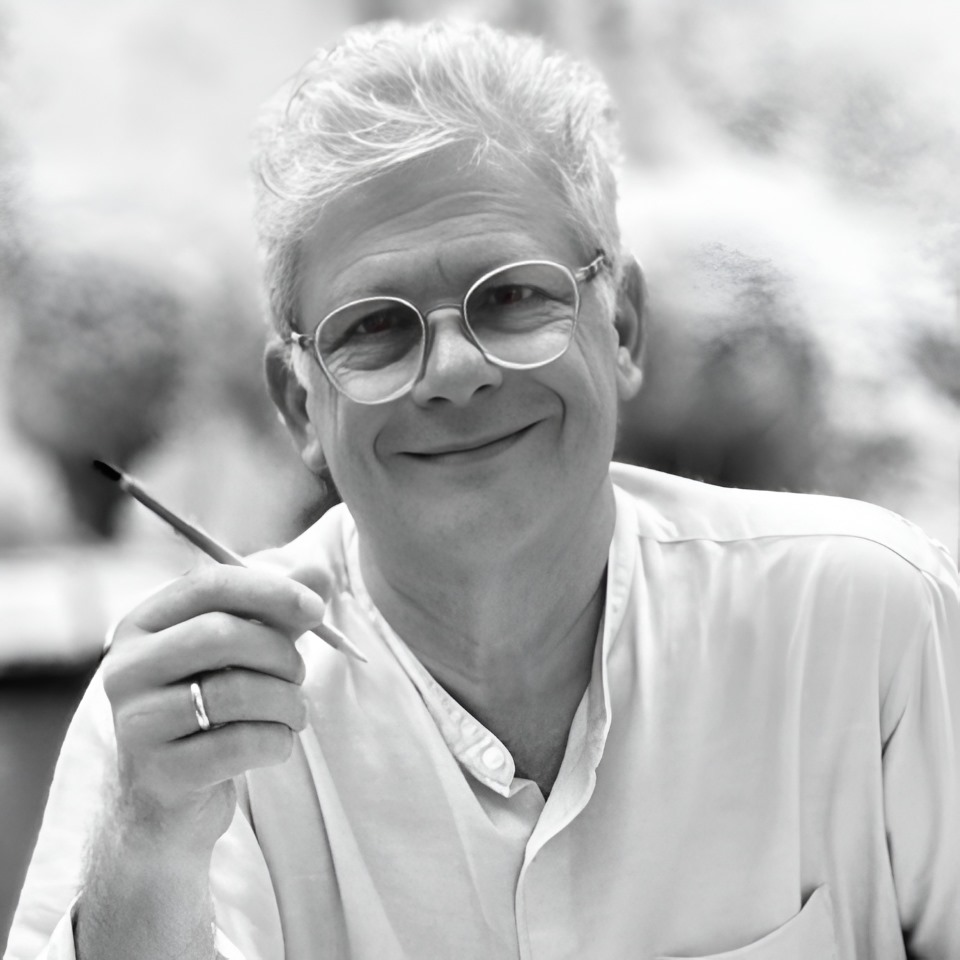
Tariq Alexander Qaiser
Tariq Alexander Qaiser is a Karachi‑based architect and the founder of TAQ Architecture & Interior Design (est. 1990), a firm known for its award‑winning work in hospital and school design. A founding member of the Indus Hospital, he has also served as visiting faculty at the Harvard School of Public Health (2009–2017), lecturing on airborne infection control and healthcare design. He has led final‑year studios at the Indus Valley School of Art and Architecture and has spoken widely in Pakistan and internationally. Beyond architecture, Tariq is deeply engaged in environmental advocacy, especially Karachi’s coastal and marine ecologies. Through his EDGE OF DELTA initiative (2019–present), he has championed mangrove conservation, designed public walkways, and produced over 300 short environmental films. His film A Story of Survival was presented at COP27, and Time magazine’s July 2022 Oceans Issue carried an eight‑page feature on his mangrove campaign. Tariq is also a poet, photographer, and artist, with four bilingual books and multiple exhibitions, including participation in Lahore Biennale 03 (2024). He has been a speaker at the Karachi, Lahore, Islamabad, and Pakistan/London Literature Festivals.
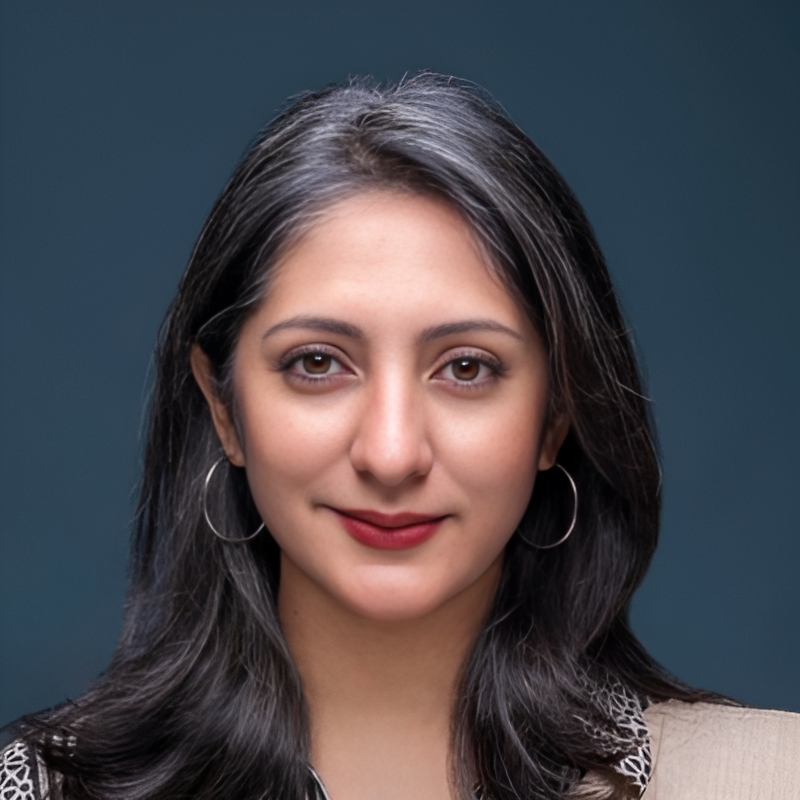
Tazeen Hussain
Tazeen Hussain is an Associate Professor of Practice in the Department of Communication and Design at Habib University. She previously served as Head of the Department of Communication Design and the Foundation Program at IVS, and as visiting faculty in the Department of Visual Studies at Karachi University and the Department of Media Sciences at SZABIST. She also maintains an active media practice as an actor and voice-over artist. As a design academic, Hussain has published and presented her research nationally and internationally. She served as Chair of Design for the ADA Awards Fourth Cycle and actively contributes to the Boards of Studies of various design institutions across Pakistan. Additionally, she is a member of the Advisory Board for the Gandhara Film Festival. Hussain earned a bachelor’s degree in communication design from the Indus Valley School of Art and Architecture and a Master’s in New Media and Society from the University of Leicester, UK.
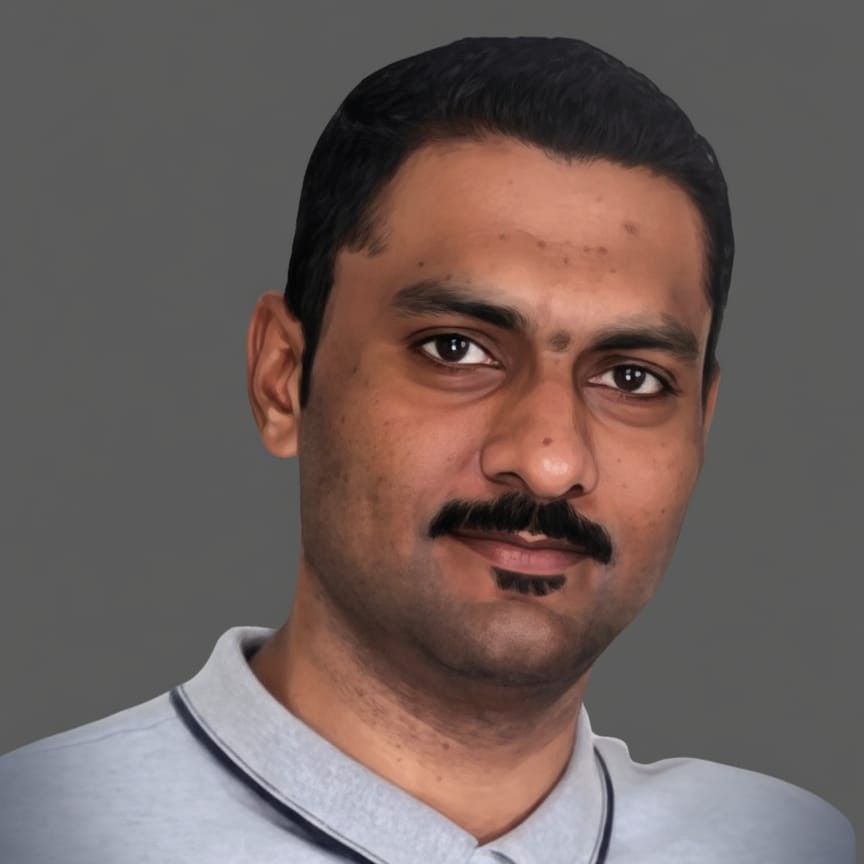
Umair Razzaq
Umair Razzaq is a writer, citizen journalist, youth advocate, and educator whose work centers on amplifying young voices and promoting socially conscious storytelling. Through his writing and community engagement, he highlights pressing social issues, nurtures dialogue, and empowers youth to participate meaningfully in civic life. His commitment to education and advocacy reflects a deep belief in the transformative power of informed and engaged communities.
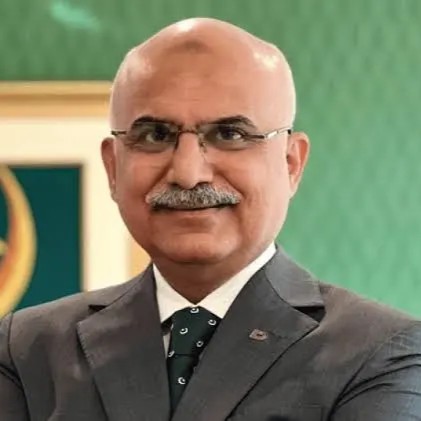
UMAR AHSAN KHAN
Umar Ahsan Khan is the Chief Executive Officer of Dawlance, having taken on this role in 2019. He has over 35 years of experience in finance, strategy, and operations, with a strong background in national and multinational corporations. Umar holds an MSc and BSc in Accounting & Finance from the London School of Economics and has previously served as the CFO and Director Finance at Dawlance, where he played a key role in restructuring and growth initiatives. His leadership has significantly contributed to Dawlance’s position in the home appliances sector, focusing on innovation and operational excellence.
Urooj Mirza
Urooj Fatima Mirza is a poet and writer from Karachi. She holds a B.A. in English from the Lahore University of Management Sciences. Her work has appeared in The Aleph Review and Poetry in English from Pakistan: A 21st Century Anthology (Alhamra Publishing). Everything she is today is because of her Abba.
Usman Qureshi
Usman Qureshi is a co-founder of Ain Adab and a devoted custodian of South Asia’s literary and cultural traditions. Guided by a deep love for literature and the performing arts, his practice spans poetry, music, and performance, shaped by a lifelong engagement with language. Known for emotional nuance, dramatic balance, and rhythmic sensitivity, his stage presence creates intimate, immersive experiences at Ain Adab gatherings and at literary festivals and conferences across Pakistan.
Veera Rustomji
Veera Rustomji is a multidisciplinary artist from Karachi. Her practice focuses on uncovering historiographical power structures through materials that explore geographical influences, religious iconography, and archival methods. She holds a BFA from the Indus Valley School of Art and Architecture (IVS) and an MA from Chelsea College of Arts at the University of the Arts London (UAL), where she was awarded the UAL Postgraduate International Scholarship. Veera is the recipient of the 2021–2022 Mead Fellowship, during which she produced a body of documentation capturing the erasure of island life and coastal heritage within the Indus Delta. Her site-specific investigations coexist with literary and community-based archives from public and private collections that examine the Zoroastrian diaspora. Veera is also the co-director of the Urban Repository Archive (URA), housed within the Department of Fine Art at IVS, which explores how student-led research responds to the changing landscape of Karachi.
Waheed Noor
Waheed Noor is a lawyer by profession and a former member of the managing committee of Karachi Bar Association. A social and human rights activist from Lyari, Karachi, he writes poetry in Urdu and in Balochi and is the author of Sukoot Bol Para.
Wajid Jawad
Wajid Jawad is the President of the Anjuman-e-Taraqqi–i-Urdu Pakistan, the organization that strives to promote Urdu language and literature across the world. He is a renowned industrialist, a former Federal Minister of State and Chairman of the Export Promotion Bureau, and a distinguished alumnus of IBA Karachi. He has a wealth of experience and expertise in various fields, ranging from public service to Urdu language promotion.
Walid Iqbal
Walid Iqbal is a Pakistani legislator, corporate lawyer, and academic known for championing democracy, human rights, and transparency. Before entering public service, Walid built a distinguished legal career as co‑founder of Lexium – Attorneys at Law, one of Pakistan’s leading corporate law firms. He has also taught law and economics for over a decade at top institutions, including LUMS, Government College University Lahore, Harvard University, and the Punjab Group of Colleges. A grandson of Allama Muhammad Iqbal, he comes from a family deeply rooted in public service and legal scholarship.
Wusatullah Khan
Wusat Ullah Khan is a senior journalist. A graduate of Karachi University in International Relations (1982–83) and a Diploma holder in Theatre Arts from the National Academy of Performing Arts (NAPA), Wusat has been a working journalist for the last thirty six years. He has been attached with the BBC Urdu Service since 1991 and covered the 2003 Iraq war from Baghdad, Cairo, Amman, and Istanbul. He was in Beirut during the 2006 Israel-Hezbollah war in Lebanon. Wusat reported the 2004 and 2009 Lok Sabha elections while touring 13 states of India. He travelled extensively in the aftermath of the 2005 Pakistan earthquake. His work on the 2010 floods has been published as Sailab Diaries by the Pakistan Study Centre, University of Karachi. Wusat writes a weekly column Baat say Baat for the BBC Urdu Service (online/radio). He has produced documentaries for BBC Urdu TV and has also contributed a weekly column to the Daily Express, Pakistan. He is a co-host of the Dawn News daily talk show Zara Hut Kay.
Yasmeen Sultana Farooqui
Prof. Dr. Yasmeen Sultana Farooqui is a distinguished academician, media scholar, and literary intellectual. She is currently serving as Dean, Faculty of Media and Design at ILMA University, and has previously held senior academic leadership positions at Jinnah University for Women and Sindh Madressatul Islam University. She holds dual master’s degrees in business administration and mass communication, along with a PhD, reflecting her multidisciplinary academic strength. A significant phase of her career includes ten years of teaching and research at the Department of Mass Communication, University of Karachi, where she contributed to the advancement of media education and a research‑oriented academic culture. She is the Editor‑in‑Chief of the HEC‑recognized Y Category Journal of Media and Communication, Associate Editor of the HEC‑recognized journal Urdu, and Editor of Qaumi Zaban, published by Anjuman Taraqqi‑e‑Urdu Pakistan. She has authored four books, published more than 35 research papers, and contributes regularly to national newspapers. Her notable book, FM Radio: A Tool of Community Awareness – A Case Study of Quetta, published by the Ministry of Culture, Government of Balochistan, highlights the pivotal role of community media in social development.
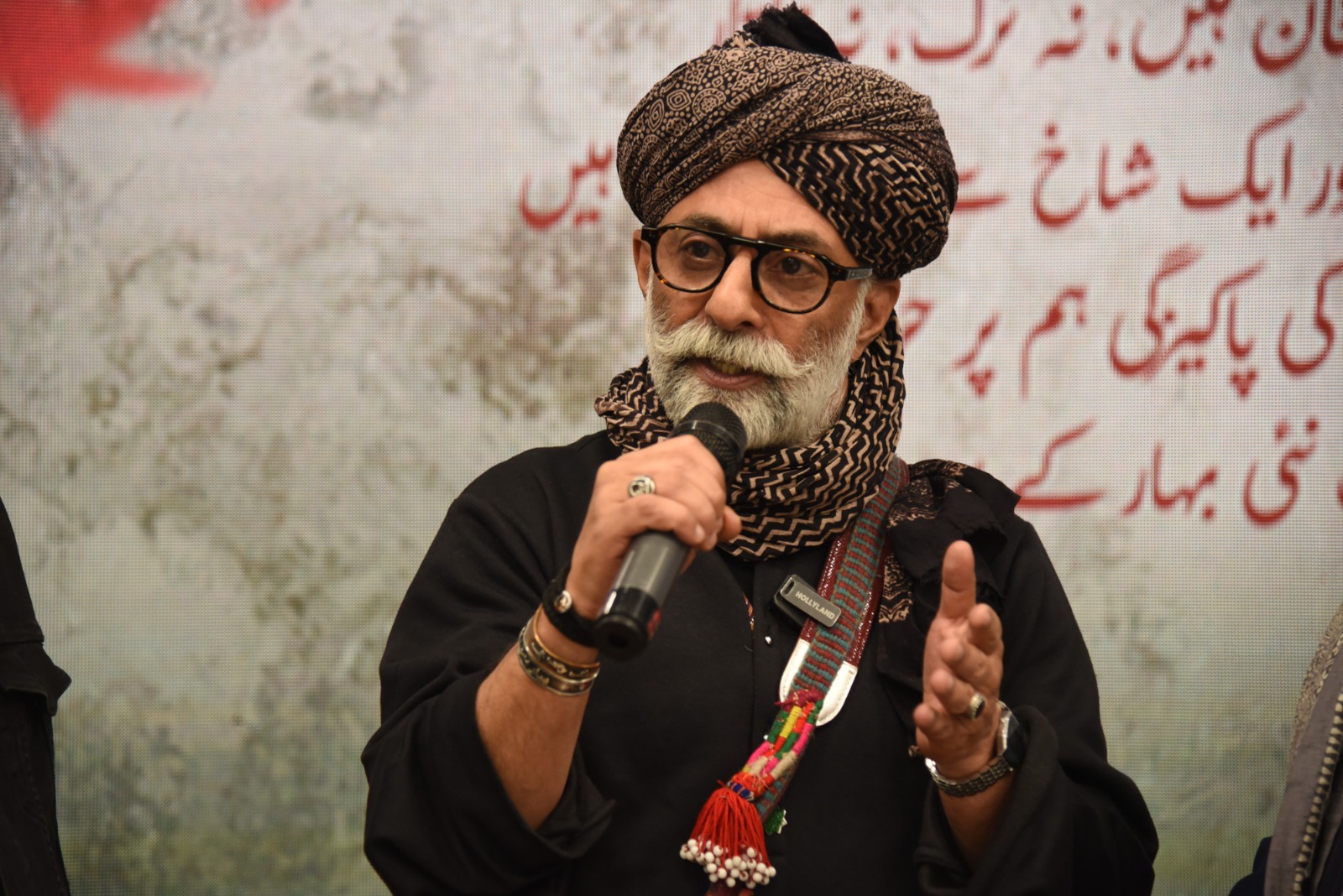
Yousuf Bashir Qureshi
Yousuf Bashir Qureshi, fondly known as YBQ, is a luminary whose work spans multiple creative disciplines. As a fashion designer, artist, photographer, and actor in Pakistani dramas, he embodies versatility and artistic passion. He founded the Commune Artist Colony in Karachi, creating a vibrant platform for artistic expression. A master storyteller, YBQ brings the subcontinent’s cultural heritage to life through performances that blend history, folklore, and tradition. His distinctive style—featuring traditional music, expressive gestures, and evocative language—offers audiences a deep connection to South Asian identity. Beyond his artistic achievements, YBQ is a respected mentor and lecturer who inspires young minds through motivational talks at institutions worldwide. His work continues to preserve and celebrate the diverse narratives of the subcontinent, ensuring they resonate with future generations.
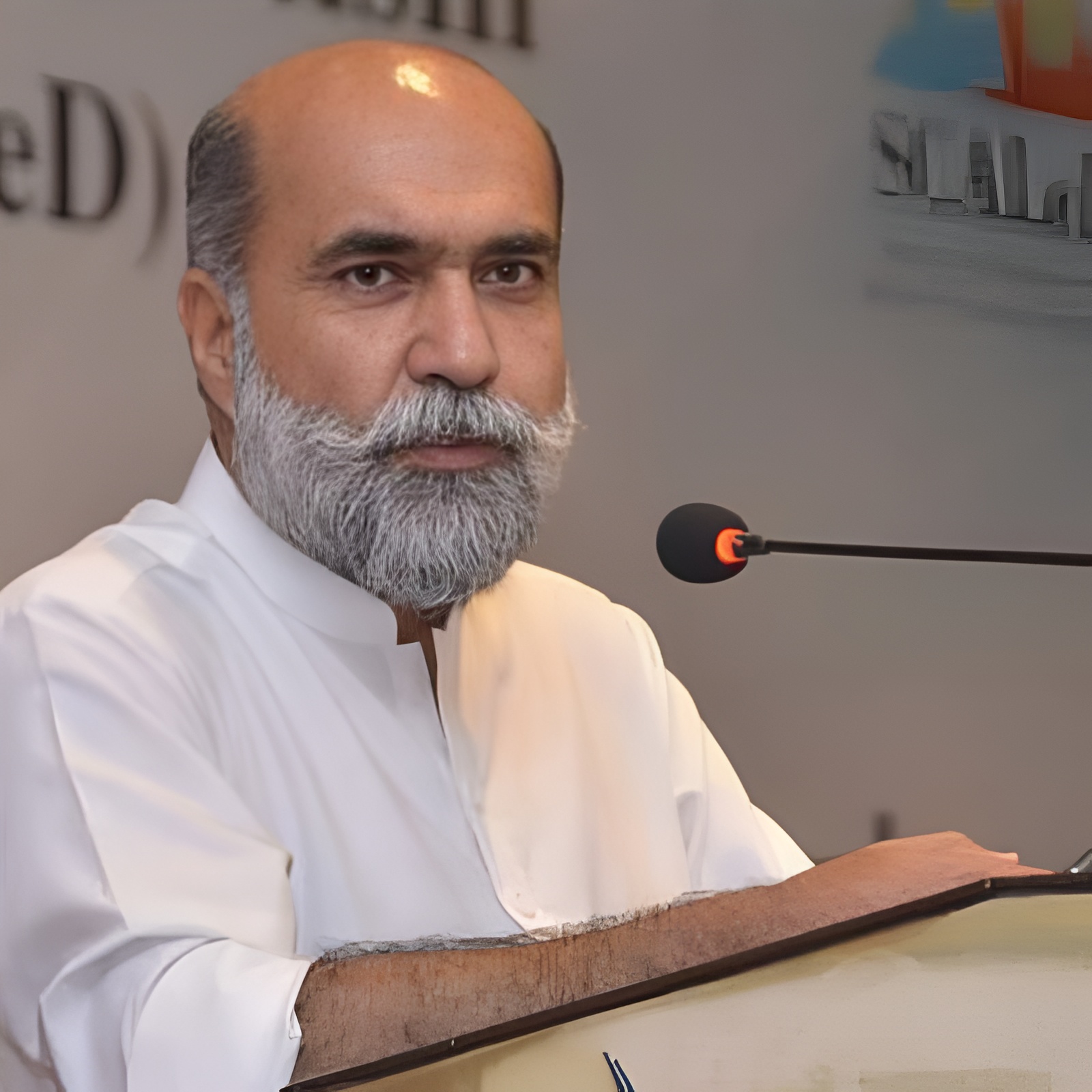
Zafar Mairaj
Zafar Mairaj is a distinguished Pakistani playwright, lyricist, and short‑story writer whose work spans more than three decades. Writing primarily in Urdu—while also contributing in Brahui and Balochi—he has authored over fifty drama serials, plays, and telefilms, emerging as one of Pakistan’s most versatile and socially engaged storytellers. Born in Mastung, Balochistan, he began his literary journey while studying civil engineering, publishing short stories and opinion columns before writing his first long‑form play, Amarbail (1991) for PTV. His notable works include Sangat, Inkaar, Kabuli Pulao, Muhabbat Ki Akhri Kahani, and Dil Wali Gali Mein, many of which explore complex emotional and social themes with nuance and authenticity. A recipient of multiple awards, including the Pride of Performance (2018), Mairaj is celebrated for shaping contemporary Pakistani drama with integrity, realism, and a deep understanding of human relationships.
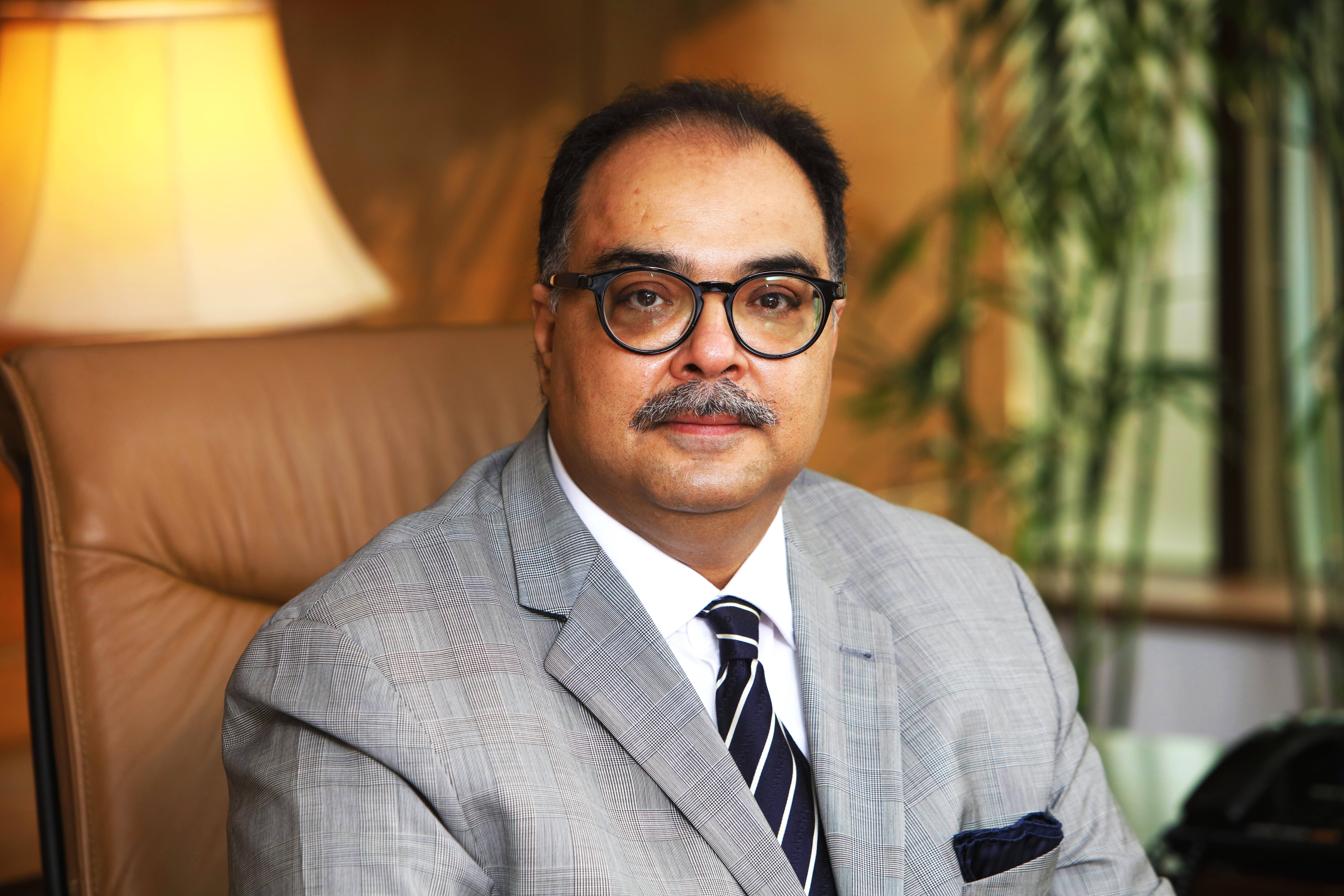
Zafar Masud
Zafar Masud is a development‑focused banker, public‑sector reformer, and author with nearly 30 years of leadership experience across development finance, energy, governance, and management. He has held senior roles in major international banks, including American Express, Citigroup, Dubai Islamic Bank, and Barclays (as Regional Managing Director, Southern Africa). He served on the State Bank of Pakistan’s Board and its Monetary Policy Committee, later becoming Director General, National Savings, where he led key digital‑transformation initiatives and launched major welfare‑oriented savings products. He was the Founding CEO (Interim) of InfraZamin Pakistan, helping establish Pakistan’s first credit‑enhancement company for social‑infrastructure financing. Since 2020, he has been President & CEO of The Bank of Punjab, driving transformative growth in governance, digital capability, and financial inclusion. He also serves as Non‑Executive Chairman of OGDCL and holds leadership roles across prominent boards and national committees. Masud has designed major national financial‑inclusion programs and received multiple international honors, including Hungary’s highest civil award and France’s Prix d’Excellence. He is the author of Seat 1C and Out of the Box and is widely recognized for his thought leadership on economic reform and public‑sector transformation.
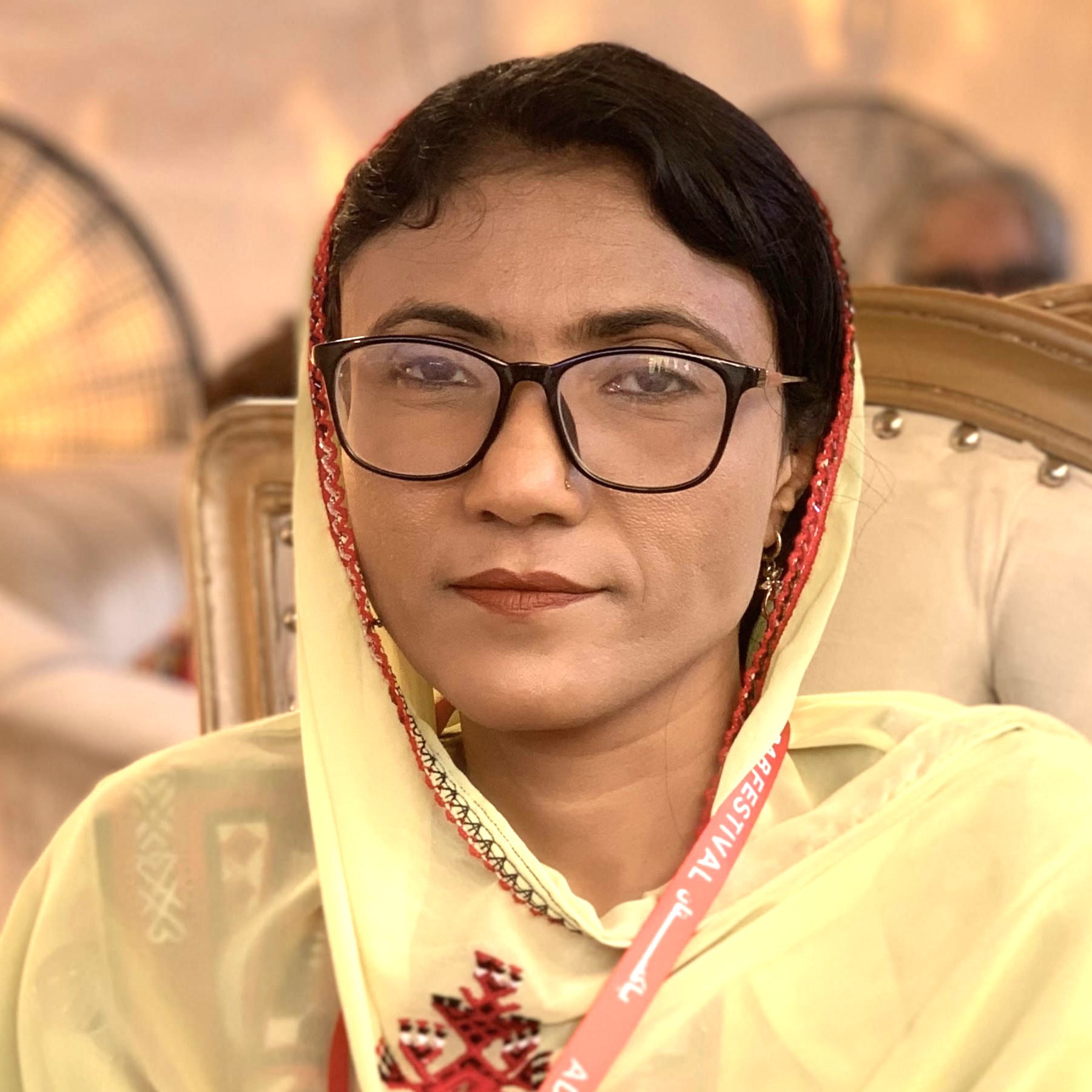
Zahida Raees Raji
Zahida Raees Raji is a celebrated Balochi poetess, novelist, and researcher whose work has enriched contemporary South Asian literature. She is the author of acclaimed novels, short story collections, and poetry in both Balochi and Urdu, alongside influential research on Balochi language and classical poetry. Her published works include Paad e Cheyr e Zimen, Tokah Zind e Darwaray, and Be Kasah Man a Waab Neit, while her translations and critical essays have expanded access to Balochi literature for wider audiences. Zahida has been honored with multiple awards, including the Allama Iqbal Literary Award (2025), and has represented Balochi literature at major national and international festivals and conferences. Through her teaching at the University of Karachi and her pioneering digital initiatives, she continues to inspire new generations while preserving and promoting the richness of Balochi language and culture.
Zahir Rahimtoola
Zahir Rahimtoola, Chief Executive Officer of ECOM PK, is a trailblazer in Pakistan’s fashion retail and eCommerce sectors. Holding Hotel Management certifications from École Hôtelier de Lausanne, Switzerland, and Cornell University, USA, Zahir began his professional journey at Holiday Inn Karachi (now Marriott Karachi) and later served as Corporate Manager, Guest Services at Pearl Continental Hotel. In 1991, he established one of Pakistan’s earliest textile buying houses, representing prominent US and European brands such as Urban Outfitters, Columbia Sportswear, and Capital Mercury Shirt Corporation. His entrepreneurial vision led to the launch of LABELS in 1996, Pakistan’s pioneering fashion retail chain, followed by the country’s first Original Levi’s & Dockers Store under Levi Strauss USA license in 2000. In 2012, Zahir co-founded ECOM PK, introducing Pakistan’s first online fashion retail store and enabling digital solutions for leading brands like Khaadi, Bonanza, Al Karam, and Generation. ECOM PK also spearheaded the Emerging Pakistan digital branding initiative for the Ministry of Commerce and facilitated Pakistan’s debut at Milan Fashion Week in collaboration with Italian designer Stella Jean, showcasing embroidery by women artisans from Kalash, Chitral, and Hunza. During the Covid pandemic, ECOM developed a free-of-cost Covid Portal for the Government of Pakistan and later created an online trade portal for TDAP. Beyond business, Zahir serves on the Governing Body of The Aga Khan Hospital and Medical College Foundation and is an active member of Sind Club and Karachi Boat Club. He has recently been appointed Director of the Thar Coal Rail Connectivity Project by the Government of Sindh as their nominee on the Board of Directors.
Zain Saeed
Zain Saeed is the author of Little America, winner of the Karachi Literature Festival English Fiction Prize 2022, and The Year of Sound and Heat, which was also nominated for the same award. He earned his MFA from the University of Texas at Austin. His work has appeared in several publications, including Glimmer Train, The Kenyon Review, the Home #itscomplicated Anthology, The Hindu BL Ink, and the Freiburg Review. He lives in Ifrane, Morocco, where he teaches creative writing and performance studies at Al Akhawayn University. He can be found on Instagram @zainssaeed.

Zainab Jabbar
Zainab Jabbar is the author of the historical fiction series Diwan‑e‑Ruh, developed over eleven years of dedicated research and writing. Her work engages with Islamic hermeneutics, spiritual philosophy, and the intersections between Buddhist and Islamic thought. Set across the ancient crossroads of Iran, Afghanistan, and Pakistan, her fiction explores lost civilizations and forgotten empires. She draws inspiration from writers such as Edward Rutherfurd, Mary Renault, Amitav Ghosh, William Dalrymple, Amin Maalouf, and Shamsur Rahman Faruqi.
Zainab Masud
Zainab Masud was born in Hyderabad Deccan in 1941 and migrated to Pakistan with her family in 1950. She received her early education in Lahore at the Convent of Jesus and Mary, later studying at Kinnaird College and Government College Lahore (now a university). At Government College, she became the institution’s first woman editor of the college magazine and received the prestigious Role of Honour, conferred by President Ayub Khan. After completing her Master’s degree in English Literature, Zainab moved to Karachi, where she taught English language and literature at St. Joseph’s College for more than 36 years. She also pursued an MPhil at the University of Edinburgh. Together with her sister Zehra, Zainab translated their mother’s Urdu diaries into English, contributing to the preservation of an important personal and cultural record. She is the mother of two children, both accomplished professionals in their fields.
Zanjabeel Asim Shah
Zanjabeel Asim Shah is a Pakistani screenwriter. She is known for writing scripts for television serials and working as head of content for several private network channels. She won the Pakistan International Screen Award for Best TV writer and was nominated three times for the Lux Style Awards.
Zara Mumtaz
Zara Mumtaz is an educator, writer, and pioneer of children’s performing arts in Pakistan. A graduate with honours in English Language and Literature from Kinnaird College (1958), she served as President of the Students Executive, designed the College shield and banner, and wrote the lyrics of the College song. She later co‑founded OAKS and has been associated with education since 1965, promoting the performing arts nationwide as Director of Extra‑Curricular Activities at Beaconhouse. She is the author of four phonics‑based pre‑primary activity books published by Oxford University Press, as well as two collections of folk tales. Her first, Anna Bua Ki Kahanian (OUP, 2012), celebrates oral storytelling traditions. Her second, Agar Nagar Ki Nanhi Nazmein, Khel aur Geet, won the UBL Literary Award for Urdu Children’s Literature in 2020. A sought‑after children’s storyteller at literary festivals and schools, Zara’s poetry has been featured in Zohra Segal’s celebrated one‑woman performances. She has also won a national award for Best Script for the children’s television serial Peeli Kothi. Deeply rooted in the performing arts, she has studied piano with Trinity College of Music (UK), eastern classical music with Ustad Umrao Bundu Khan, and Kathak and Manipuri dance. In 1968, she co‑founded the Arts Council Children’s Theatre in Karachi, later reviving it in Lahore as The Awareness Children’s Theatre in 1992. As playwright and director, she produced more than two dozen stage and television scripts, directed large‑cast children’s productions, choreographed for the International Children’s Festival in Ankara (1995), and directed the Golden Jubilee play at the Alhamra Children’s Library Complex (1997).

Zara Shaheen Awan
Zara Shaheen Awan, a Barrister of Lincoln’s Inn and an Advocate of the High Courts of Pakistan, is a distinguished legal practitioner and academic. She received her education from the Inns of Court School of Law (UK), the University of Kent at Canterbury (UK), Karachi Grammar School, and the Convent of Jesus & Mary, Karachi. With extensive experience in civil, commercial, and arbitration law, Ms. Awan combines legal practice with academia and pro bono service. She has served for over twelve years as Director of the University of London International Law Programmes in Karachi, managing the Foundation in Law, Certificate of Higher Education, and LLB degrees. As a senior faculty member, she has taught a range of subjects, including Constitutional Law. Ms. Awan is a partner consultant at Q&A Consultants, advising and supporting students seeking admission to universities abroad, particularly in the UK. She has also served as an Independent Director for three years at Pakistan Reinsurance Company Limited, a public sector entity under the Ministry of Commerce, and is presently a member of the Appellate Board of the Institute of Chartered Accountants of Pakistan (ICAP). Deeply committed to education and social development, she serves on the General Body of The Citizens Foundation (TCF) and is an active member of the Supporters of The Citizens Foundation (STCF) Group. She has led multiple successful initiatives—such as the Flood Relief Fundraising Drive and the Chand Raat Fundraiser—mobilising schools and young professionals in support of TCF’s mission to provide quality education to underprivileged children. She is also part of the Obhartay Sitarey Fundraiser Team, an initiative of TCF that brings together schoolchildren across Karachi for Obhartay Sitarey, an interschool singing competition hosted by STCF. The event celebrates young voices that inspire awareness and action for children without access to quality education. An Australia Awards alumna, Ms. Awan was recognised under the Women in Executive Leadership Development (Pakistan) programme. Driven by integrity, empathy, and a deep sense of civic responsibility, Zara remains dedicated to contributing to a Pakistan that is educated, equitable, and full of promise.
Zarmina Raza
Zarmina Raza is a poet and essayist whose work explores relationships and possibilities. She co-founded The Crows Karachi, a platform where people share their experiences with a live audience. She is the Head of the Literature Department at Cedar College and teaches at Karachi Grammar School.
Zarminae Ansari
Zarminae Ansari is an architect, cultural tourism consultant, and journalist currently residing in Portugal. She founded Joy of Urdu, an international bilingual, volunteer-run organization that promotes Urdu language, literature, and literary heritage by making it accessible. Since its inception in 2013, the initiative has grown to over 150 volunteers worldwide, offering bilingual resources and reading group chapters. Ansari’s passion for Urdu was sparked during her studies in Canada, the U.S., and Lahore. On the organization’s 10th anniversary, Joy of Urdu Bilingual Publications was launched, and its first book, Three Tales from Gulistan-e-Saadi, won the ADA Award in 2025.

Zeelaf Munir
Dr. Zeelaf Munir is a highly respected business leader and currently serves as the Managing Director and CEO of English Biscuit Manufacturers (EBM). She joined the family-owned company in 2010, bringing more than twenty years of professional experience across various fields, including healthcare. Beyond her corporate role, Dr. Zeelaf is a recognized speaker and is frequently invited to conferences and electronic media discussions in both the US and Pakistan. She earned her medical degree from Dow Medical University and holds a master’s degree in health finance & management from Johns Hopkins University. In addition to her leadership at EBM, Dr. Zeelaf plays prominent roles in several organizations. She serves as Vice Chairperson of the Pakistan Business Council (PBC), is Chairperson of the Pakistan Advertisers Society (PAS), and leads the i‑Care Foundation. She is also a board member of the LUMS Foundation and the IBA Corporate Leaders Advisory Board and contributes as a jury member for the Institute of Bankers Pakistan (IBP) Banking Awards Committee.
Zeeshan Hasan
Zeeshan Hasan is the CEO of Khan Academy Pakistan with over 25 years of experience in senior management roles across education, telecommunications, and financial services, having worked in Australia, Malaysia, UAE, and Pakistan. He founded Grassroots Consultants Pvt Ltd, focusing on online teacher professional development and digital skills development for e-learners in Pakistan. Zeeshan holds an MBA from the University of Technology, Sydney, Australia, and has been an Adjunct Professor at LUMS.
Zehra Ahmad
Zehra Ahmad was born in Oxford, UK, in 1936 and returned to Hyderabad as an infant. After the fall of Hyderabad, her parents migrated to Lahore in 1950. She received her education at the Convent of Jesus and Mary, Kinnaird College, and Government College Lahore, where she completed her master’s degree. After her marriage to Masrur Ahmad in 1958, she lived in Karachi and travelled extensively with him across Europe, North America, and the Far East. While in Karachi, she has been an active member of the Behbud Association for more than 50 years. She has two children, both well‑educated and experienced, having served in senior positions in various banks. Zehra currently lives in Karachi in the home she and her husband built together more than 50 years ago.
Zehra Nigah
Zehra Nigah is one of the foremost Urdu poets of Pakistan. She was one of two female poets to gain prominence in the 1950s. She was born on 14 May 1937 in Hyderabad, India and migrated to Pakistan with her parents during the partition in 1947. Coming from a well-known literary and intellectual family, she counts Anwar Maqsood and Fatima Suraiya Bajia among her siblings. She has three collections of poetry to her credit and recently an omnibus of her works has been published in Lahore. She has received various awards at home and abroad in recognition of her work. She is also a scriptwriter of popular television serials and films. She received the Pride of Performance Award from the President of Pakistan in 2006.

Zhalay Sarhadi
Zhalay Sarhadi is a prominent Pakistani actress, model, and former VJ. She comes from a well‑known artistic family, she is the granddaughter of renowned screenwriter Zia Sarhadi and the niece of actor Khayyam Sarhadi. She began her entertainment career as an actress and later expanded into modeling, appearing in major fashion magazines and runway shows. Over the years, Zhalay has become recognized for her strong, versatile performances on television. Some of her notable dramas include Uraan (2010), Aks (2012), Madiha Maliha (2012), Digest Writer (2014), Rang Laaga (2015), Nazo (2015) and Yaar Na Bichray (2021). She has also appeared in films such as Ramchand Pakistani (2008), Jalaibee (2015), Chalay Thay Sath (2017)—for which she received a Lux Style Award nomination—and Carma – The Movie (2022).
Ziad Bashir
Ziad Bashir has been a Board member since 1999. A graduate of Babson College, he brings extensive experience in the textile sector and has led major initiatives in the company’s IT transformation. He is also a certified director from PICG. He has held key leadership roles in industry bodies including LATI, LIDMC, YPO Pakistan, APTMA, and the Pakistan Board of Investment. He also serves on the boards of the Pakistan Business Council and the Pakistan Retail Business Council and is the Honorary Consulate General of Denmark in Pakistan. He has contributed to multiple Prime Minister’s Economic Advisory Committees and has long supported provincial trade and investment through his involvement with the Punjab Board of Investment and Trade, as well as various FBR committees.